Practical: Food Tests (Edexcel IGCSE Science)
Spec point —
2.9· practical: investigate food samples for the presence of glucose, starch, protein and fat
Practical: Food Tests
-
Food samples can be investigated for the presence of the following biological molecules:
- Glucose
- Starch
- Protein
- Fat
Preparing a sample
-
Before you can carry out any of the food tests described below, you may need to prepare a food sample first (especially for solid foods to be tested)
-
To prepare solid food for a food test:
- Break up the food using a pestle and mortar
- Transfer to a test tube and add distilled water
- Mix the food with the water by stirring with a glass rod
- Filter the mixture using a funnel and filter paper, collecting the solution
- Proceed with the food tests
-
Powdered foods also work really well for this experiment:
- Eg. powdered potato, milk powder, protein powder, powdered egg white and powdered glucose
-
There are several safety precautions to be aware of:
- Wear eye protection
- Wash any splashes from skin quickly
- Do not taste any of the food substances
- Take care to avoid spilling hot water
Test for glucose (a reducing sugar)
-
Add a few drops of Benedict's solution to the sample food solution
- Benedict's solution is a light or bright blue colour
-
Heat in a beaker of very hot water for 5 minutes
-
Observe if there has been a colour change
-
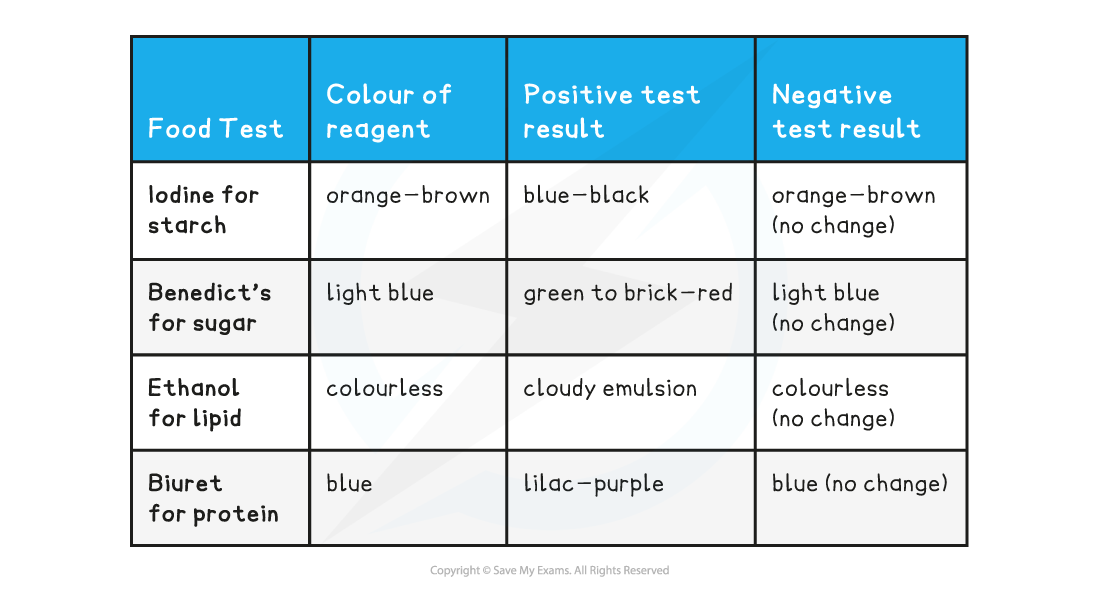
A positive test will show a colour change from a light blue to orange / brick red depending on the concentration of glucose in the food sample
- If there is a colour change, the darker the colour, the higher the concentration of glucose present
-
Safety precautions for this food test:
- Wear safety goggles
- Switch off the Bunsen burner after the water has been heated to almost boiling (or alternatively use a water bath)
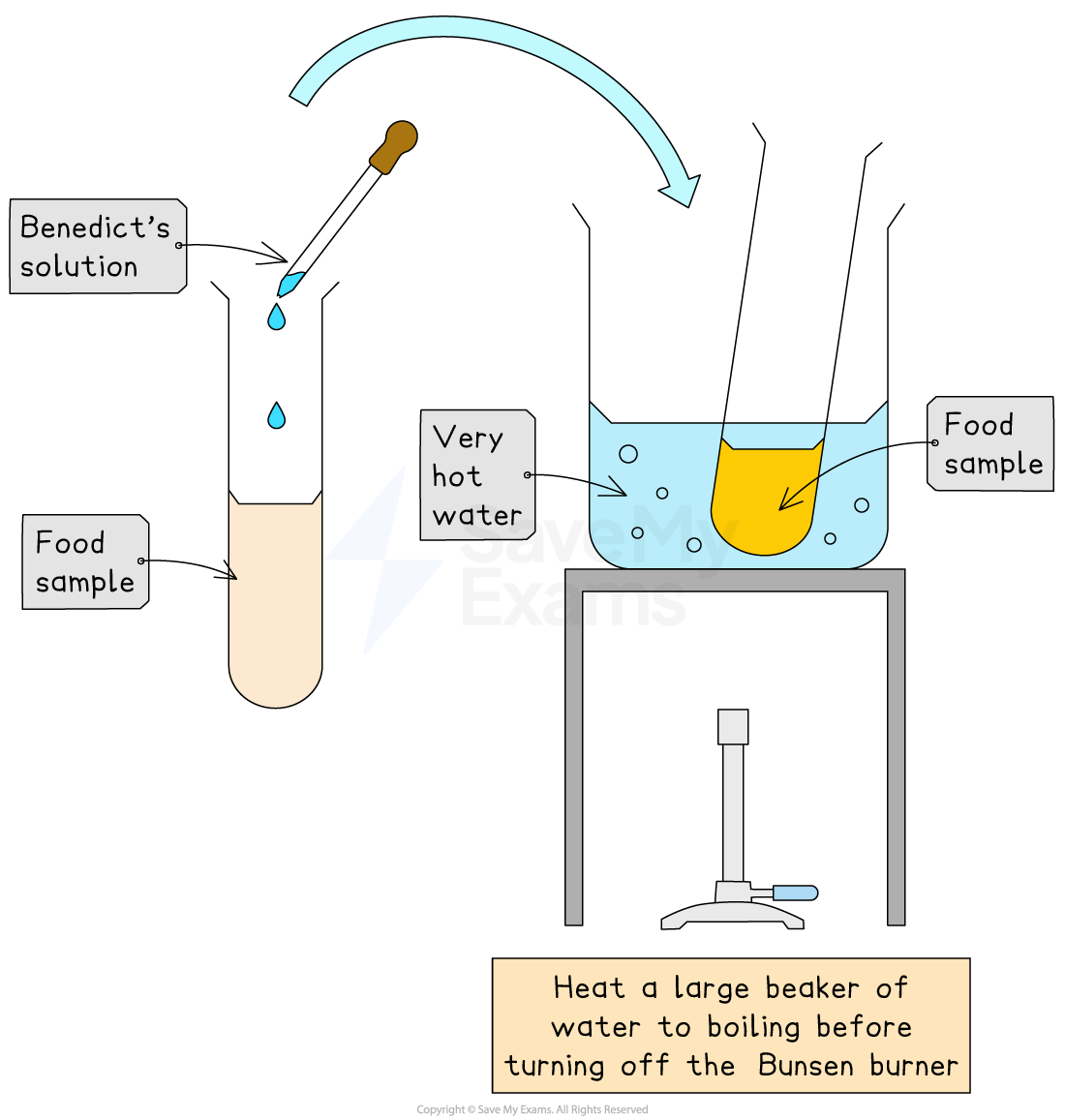
The Benedict's test for glucose
Test for starch using iodine solution
-
Iodine solution is used to test for the presence or absence of starch in a food sample
- Iodine solution is yellow-brown in colour
-
Add several drops of iodine solution to the food sample
-
A positive test for starch is a colour change from yellow-brown to blue-black
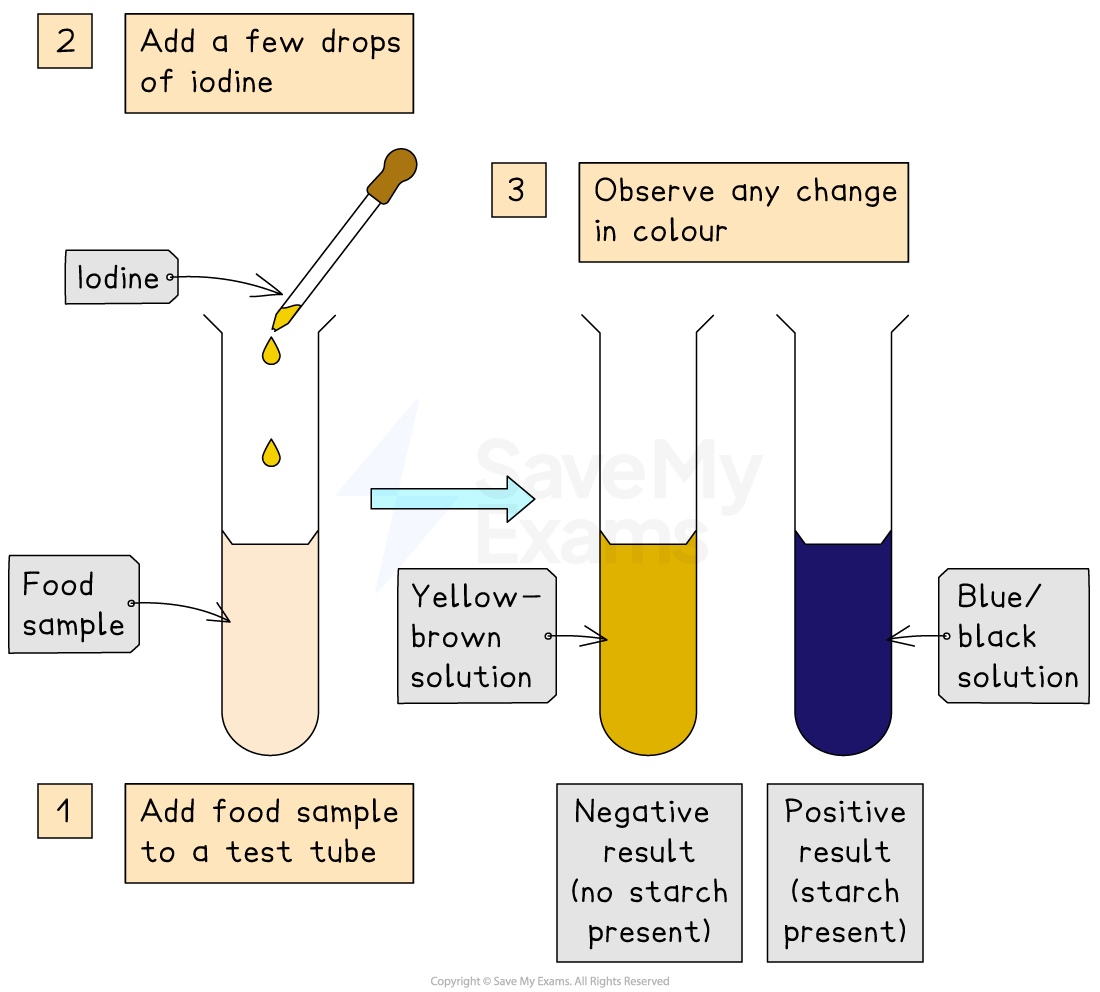
Iodine test for the presence of starch
Protein food test
-
Add a few drops of Biuret solution to the food sample
- Biuret solution is a blue colour
-
A positive test will show a colour change from blue to violet / lilac / purple
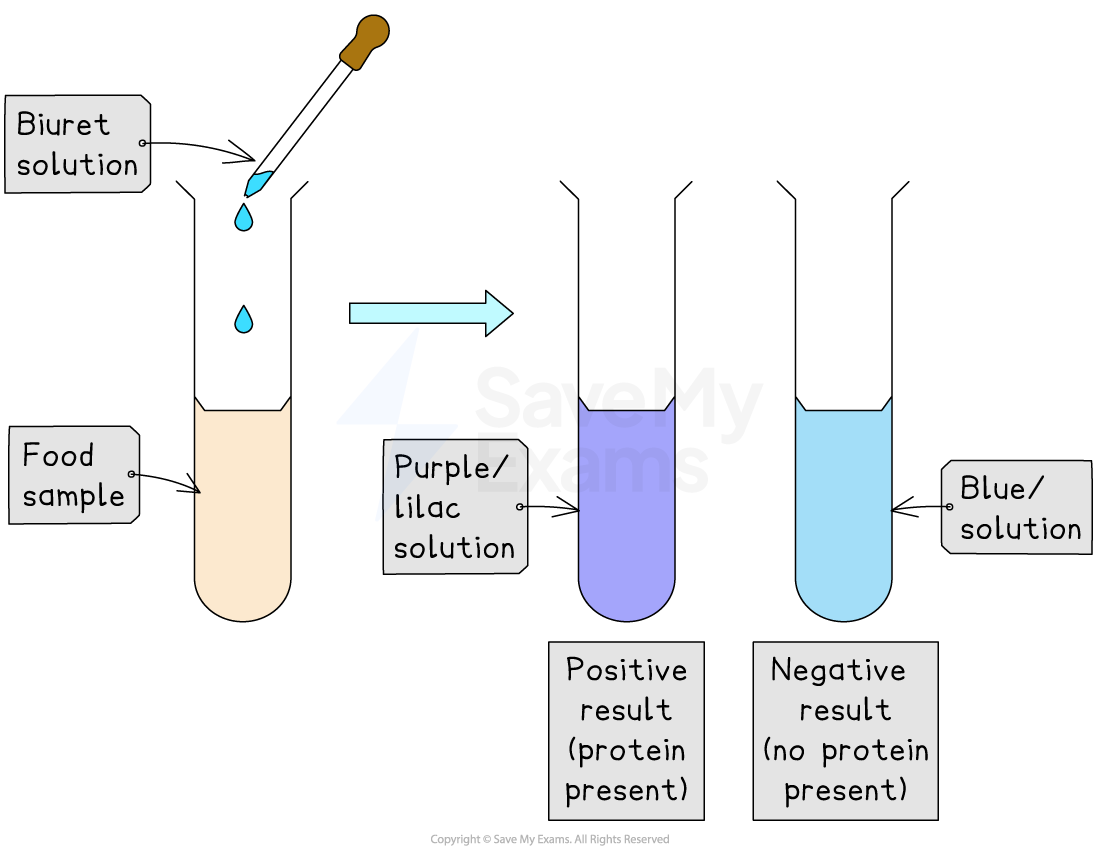
The Biuret test for protein
Test for lipids (fats)
-
Mix the food sample with 4cm3of ethanol
- Ethanol is a clear, colourless liquid
-
Place a bung firmly in the end of the test tube before shaking the tube vigorously
-
Allow time for the sample to settle
-
Strain the ethanol solution into another test tube
-
Add the ethanol solution to an equal volume of cold distilled water (4cm3)
-
A positive test will show a cloudy emulsion forming
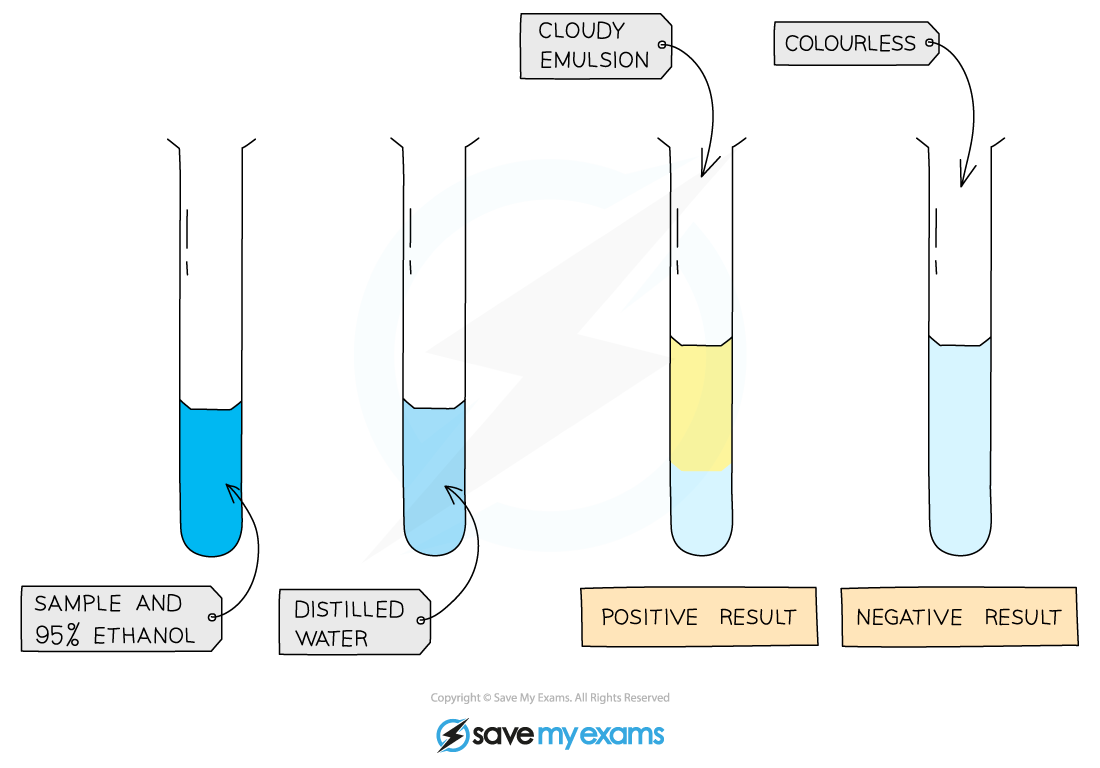
The ethanol test for lipids
Food Test Results Table
Important hazards
-
Whilst carrying out this practical you should try to identify the main hazards and be thinking of ways to reduce harm
- Biuret solution contains copper (II) sulfate which is dangerous particularly if it gets in the eyes, so always wear goggles
- Iodine solution is also an irritant to the eyes
- Sodium hydroxide in Biuret solution is corrosive, if any chemicals get onto your skin wash your hands immediately
- Ethanol is highly flammable; keep it away from any Bunsen burner
- The Bunsen burner itself is a hazard due to the open flame. It should be turned off when not in use
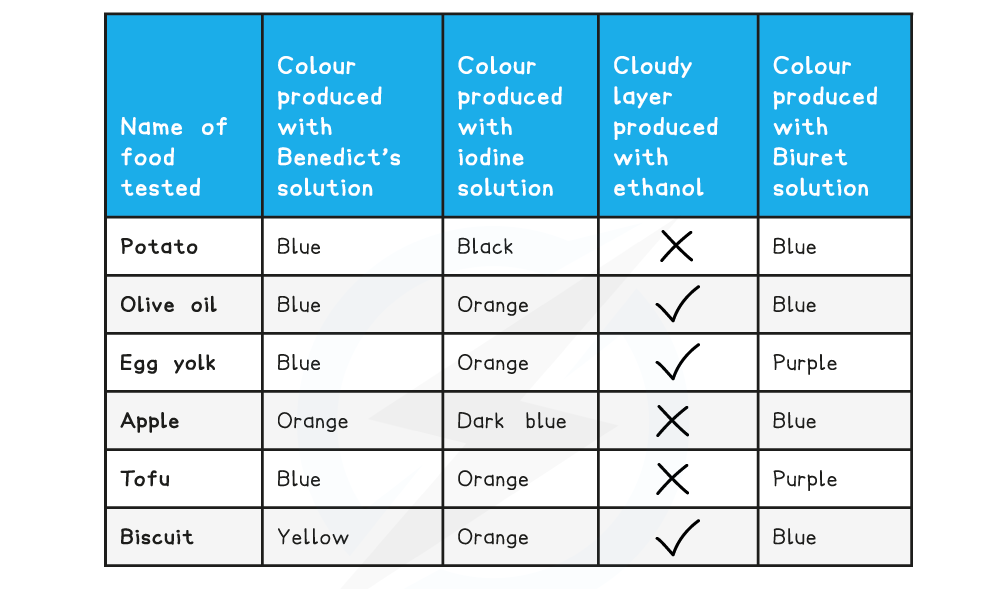
Worked Example A student used several different reagents to test for the presence of different biological molecules within common foods.
a) Which food groups are present in the apple? Explain how you know.
- The apple contained both starch and sugar as it tested positive for both the iodine test (orange → blue - black) and the Benedict's test (blue → orange).
- The apple did not contain protein or lipid (fat) as the Biuret and emulsion tests were both negative.
b) Which foods contained lipids?
- Olive oil
- Egg yolk
- Biscuit
Exam Hint If you're asked to describe how to test for the presence of a biological molecule, make sure you state which solution you would use for the test and the colour change that you would expect to observe if the molecule was present.
Eg. if you're asked to describe how to test for glucose, you need to state that you would use Benedict's solution, add heat and that you would expect to see a red/orange/yellow colour change for a positive result.
Was this revision note helpful?
Build on this topic