Uses & Dangers of Static Electricity
2 guided lessons · 18 checks · 2. Electricity → Static Electricity
Guided lessons for this note
Which concept don't you understand yet?
We'll explain it simply and check your understanding. Pick any lesson — any order works.
0 of 18 checks correct so far
Lesson 1 of 2
Uses: photocopiers & insecticide sprayers
Photocopiers run a five-step charge choreography: project the page, let the lit areas lose their charge, dust the rest with negative toner, transfer it to paper, then heat it fixed. Inkjet printers charge their droplets for steering instead. Sprayers charge their output so droplets repel into a fine, wide-reaching mist.
What you know already
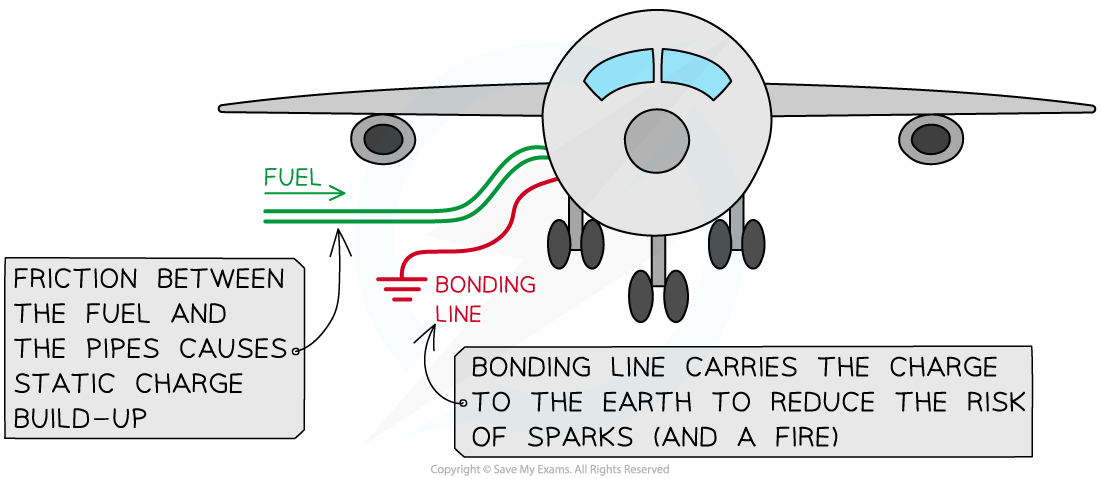
Static electricity is a working tool in some machines and a hidden hazard in others. Photocopiers and inkjet printers steer charged toner and ink with charge forces; sprayers charge droplets so they spread evenly. The same build-up turns dangerous near flammable fuel, which is why aircraft get earthed with a bonding line during refuelling.
Key points of understanding
- Photocopiers project the page onto a positively charged plate.
- Bright areas lose their charge; the dark text areas keep it.
- Negatively charged toner powder sticks to the charged text and is heated onto blank paper.
- Inkjet printers charge coloured ink droplets negatively so they land on the right spot.
- Sprayed insecticide droplets are given like charges, so they repel into a fine mist.
- Those repelled droplets also fall fast, attracted by Earth's opposite charge.
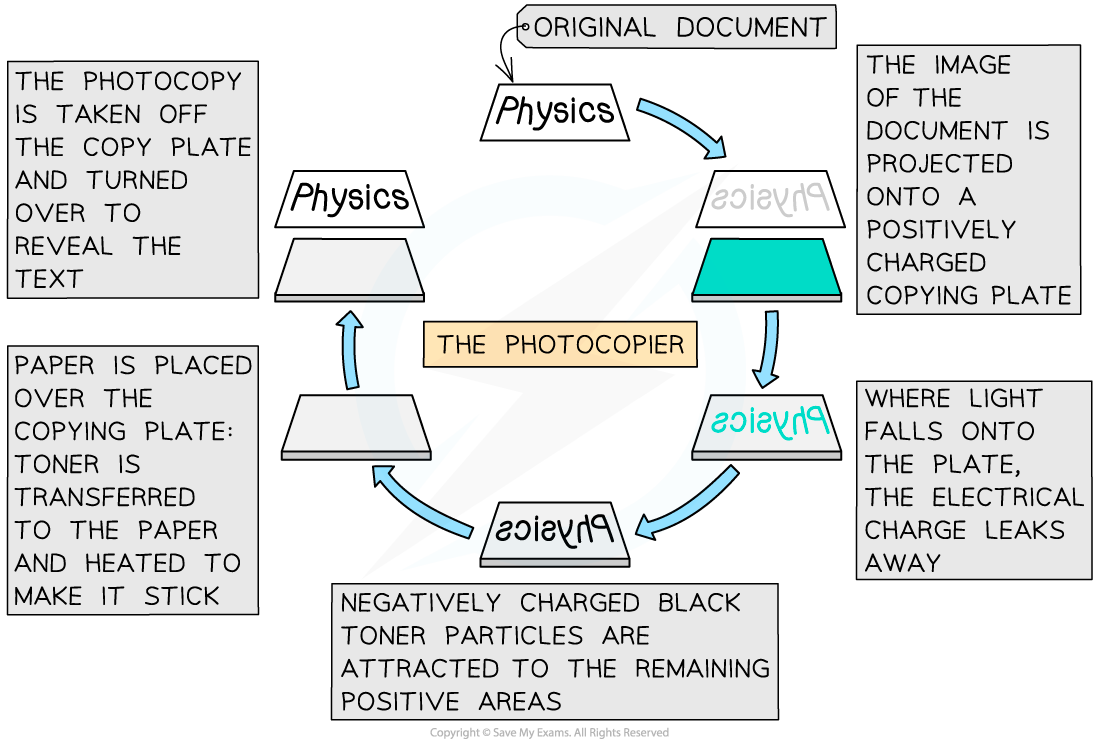
Diagram of the process by which a photocopier prints black text onto paper
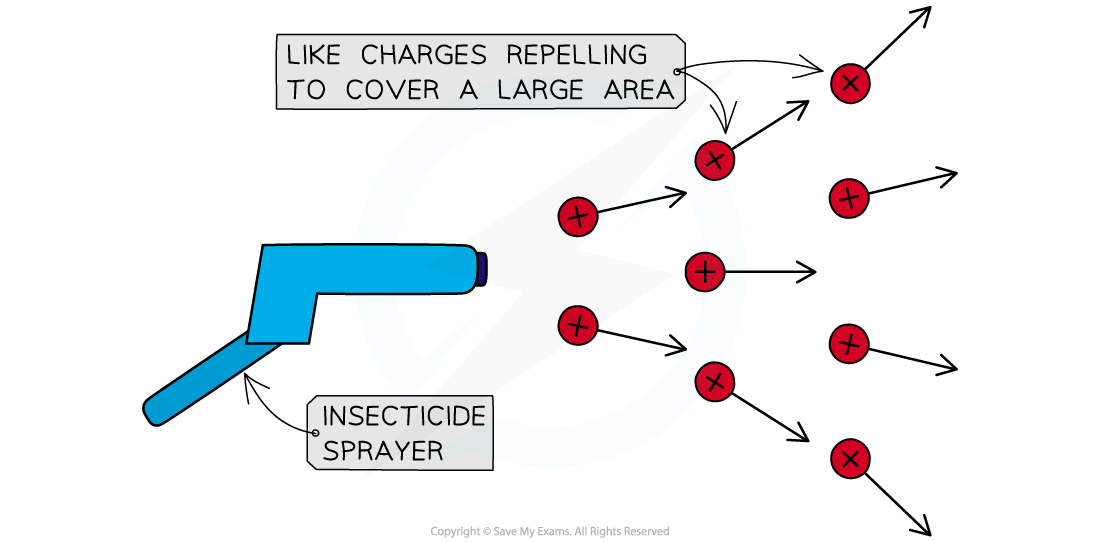
Positively-charged particles leaving the sprayer repel one another, covering a larger area and preventing particles from grouping together.
Choose a confidence level to continue.
Prefer to read it all at once? Show the full lesson as a page
1.Uses: photocopiers & insecticide sprayers
Photocopiers run a five-step charge choreography: project the page, let the lit areas lose their charge, dust the rest with negative toner, transfer it to paper, then heat it fixed. Inkjet printers charge their droplets for steering instead. Sprayers charge their output so droplets repel into a fine, wide-reaching mist.
Diagram of the process by which a photocopier prints black text onto paper
Positively-charged particles leaving the sprayer repel one another, covering a larger area and preventing particles from grouping together.
Key points
Guided content from the SME authoring corpus — note rn_W3QnDKVK9mMQ3Mhg, pinned at 502107a3fcac · promoted SyllabAI/syllabai-resources b3caaaa90c5e