Conflict at the Coast (Edexcel IGCSE Geography)
Conflict Between Development & Conservation
Spec point —
4GE1-S3.043
-
Careful management of coastal regions is necessary for sustainability
-
Coastal environments have multiple uses:
- Development such as homes, shops, roads, etc.
- Nature reserves
- Industry such as ports, fishing and aquaculture
- Tourism
- Agriculture
-
These different activities bring people and ecosystems together
-
This leads to competition for space
-
Conflict arises when coastal development is given a higher priority than coastal conservation
Exam Hint Make sure you consider all the options here. Conflict resolution can be achieved by a mix of strategies, but achieving this is not always straightforward. Therefore, you need to be able to consider the issues that may arise.
Conflict Between Coastal Users
Spec point —
4GE1-S3.043
-
Coastal users and wildlife are referred to as stakeholders
-
Each stakeholder has a different priority or need
- Wildlife want an unpolluted, safe and quiet environment
- Local residents want jobs, clean beaches, affordable housing and schools
- Tourists want beaches, hotels, B&Bs, entertainment, holiday homes, and marinas
- Employers want building space, offices, and factories
- Developers want areas by the sea for tourists—hotels, duplexes, golf courses
- Fishermen want harbours, unpolluted waters, and ease of access to the sea
- Farmers want well-drained land, sheltered from prevailing winds
- Government and Councils want to build offshore wind farms and coastal defences
- Transport companies want good road networks, well-connected ports and terminals
Relationship between stakeholders and coastal zone issues
- The different needs of stakeholders often conflict as they compete for the same resources
Agriculture
-
There are several consequences of increased agriculture in coastal areas including:
- Fertiliser and pesticide overuse
- Increased livestock density
- Overwater abstraction
- Animal waste disposal
- Land reclamation
-
The likely outcomes of this land use are:
- species and habitat loss
- eutrophication
- water pollution
- coastal squeeze
Urbanisation and transport
-
Increased populations in coastal areas lead to:
- change of land use (car parks, ports etc.)
- waste disposal
- fuel spillages
- change of land use
- water abstraction
- sewage disposal
-
These consequences can lead to:
- increased flooding
- congestion
- pollution
- loss of habitats
- increase weeds and invasive species
Tourism and recreation
-
Tourism and recreation activities are increasing in coastal areas, which leads to:
- the building of harbours and marinas
- waste disposal
- fuel spillages
- change of land use
- water abstraction
- sewage disposal
-
The consequences of this include:
- congestion
- pollution (noise, light, visual and smell)
- loss of habitats
- loss of species
- litter
- fuel spills
Fisheries and aquaculture
-
Fisheries and aquaculture lead to:
- the building of ports and fish processing facilities
- road networks
- increased transport
- fish farm pollution
- water abstraction
-
The consequences of this include:
- overfishing
- pollution on beaches
- habitat damage
- pollution (water, smell, visual and noise) pollution
- increased seagull activity
Industry
-
The increase in industry in the coastal zone leads to:
- land-use change
- change in tidal range
- power stations (nuclear and gas)
- natural resource extraction
- road networks
- cooling water/abstraction
- waste pollution (chemical, biological, nuclear, etc.)
-
The consequences of this include:
- thermal pollution
- habitat destruction, change and loss
- water eutrophication
- water pollution
- visual eyesore
Conflict matrix
- The level of conflict varies depending on who and what the needs are
- This can be shown in a conflict matrix
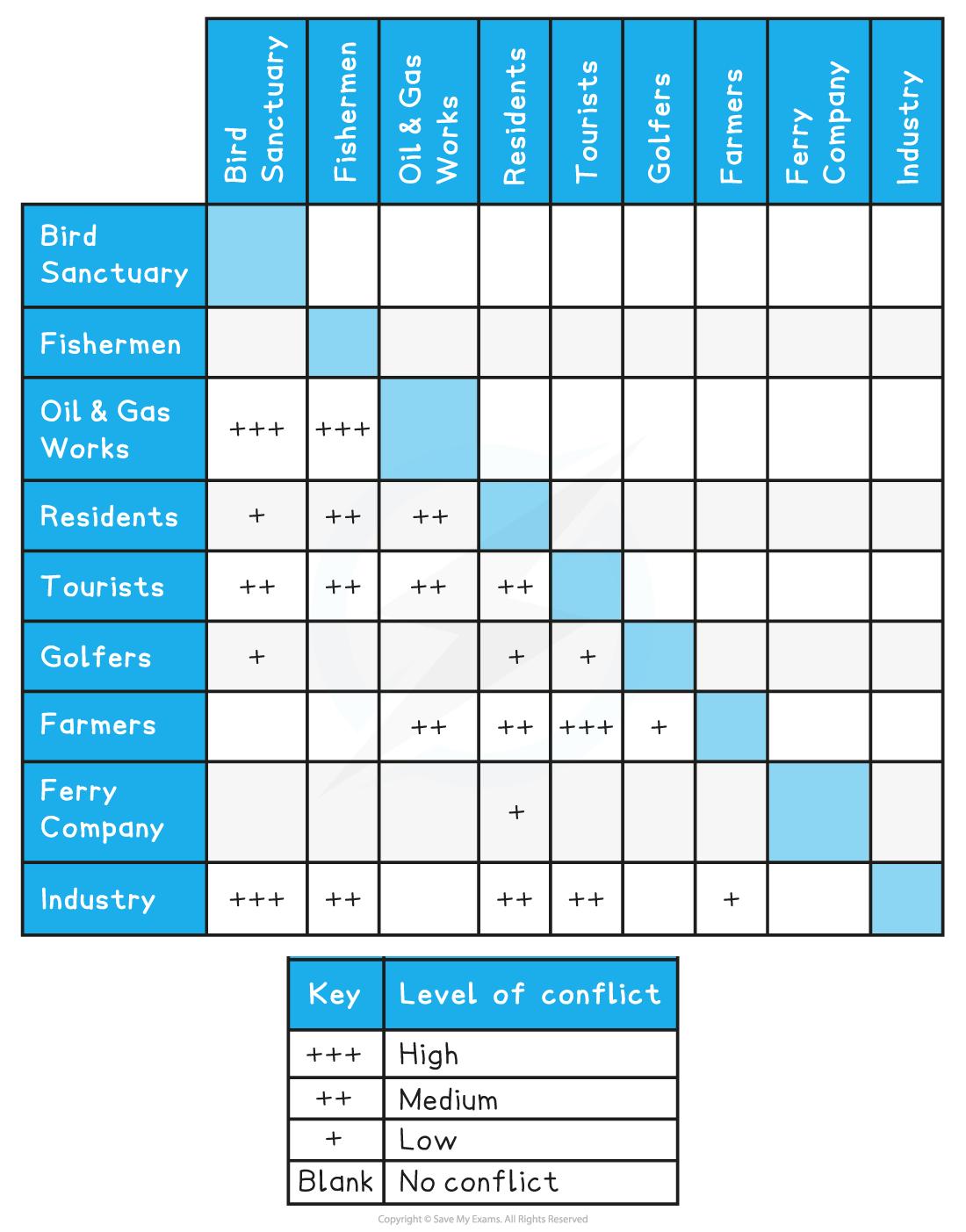
*Conflict Matrix *
Exam Hint A conflict matrix is just one way to display information & is subjective in its response. You may not agree with the above levels of conflict, that is fine, so long as you can justify why you disagree or agree.
Was this revision note helpful?