Pattern of Uneven Development (Edexcel IGCSE Geography)
Pattern of Uneven Development - Countries
Spec point —
4GE1-S3.066
Differences between countries
- Every country's level of development situation is unique
- Each country can be placed into one of the four categories as identified by the UN
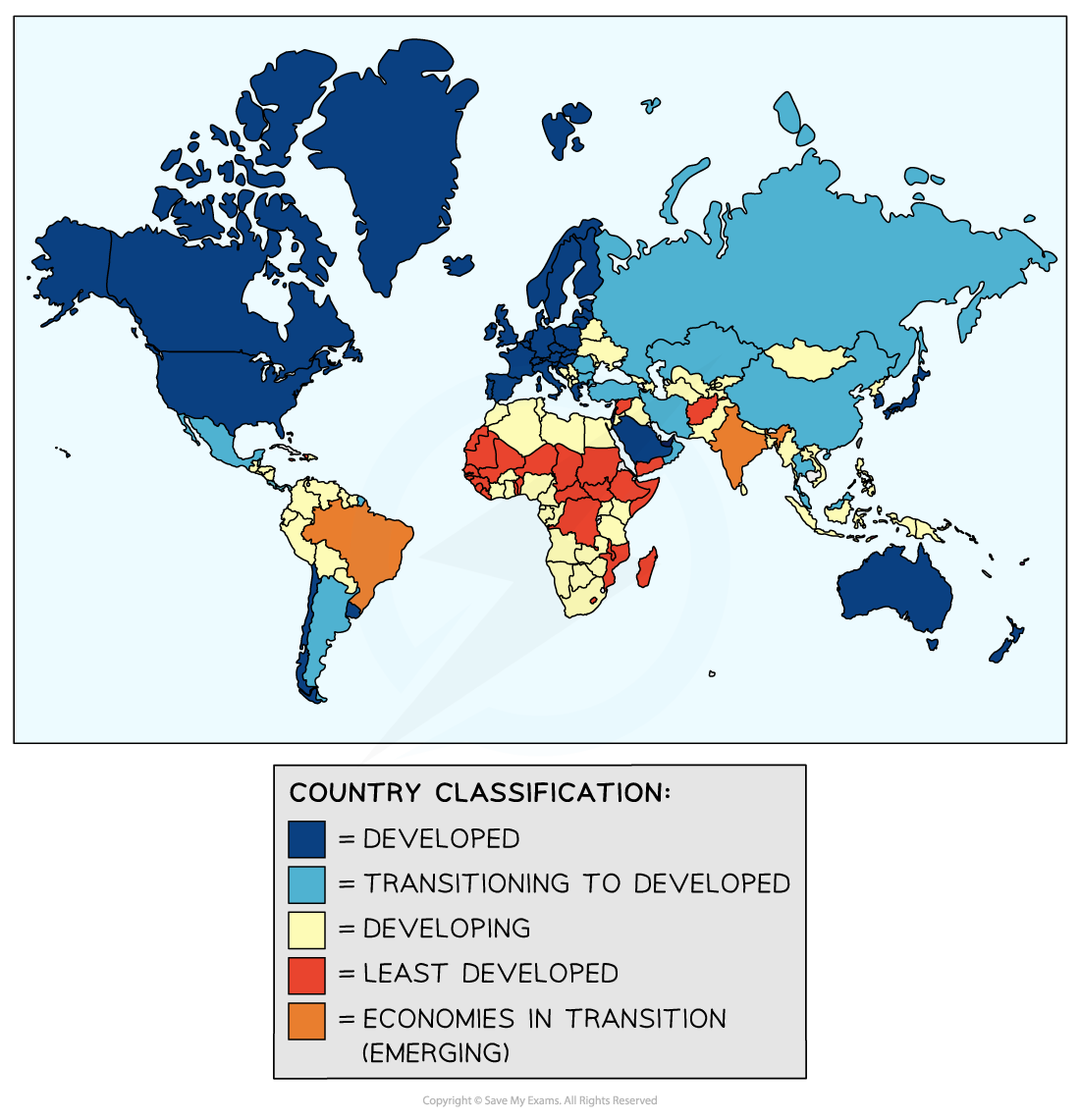
World Stages of Development
- As well as the reasons outlined for the development gap, there are other reasons why countries are at a certain level of development
Pattern of Uneven Development - Historic Factors
Spec point —
4GE1-S3.066
Historic factors
Colonialism
-
Colonialism hindered many countries' development
-
European countries exploited countries they colonised in the 1700s and 1800s
- The European countries colonised the countries and then took the resources of those countries to sell for profit
- There was an investment in colonies, but this was focused on products and infrastructure that would help the European country exploit the country and its people
-
Borders were often decided by the European countries with no regard for the boundaries set by the Indigenous communities
-
This led to future tensions and conflicts
Neocolonialism
-
Neocolonialism describes how developed countries dominate the least developed and developing countries today
-
**'Land grabbing', **where wealthier countries buy large areas of farmland in the least developed and developing countries, is of increasing concern
-
In 2012, it was estimated that** 200 million hectares** of land, mainly in Africa and Asia, had been bought by wealthier countries to grow food for their populations
-
This has several impacts on those countries, including that it:
- forces Indigenous populations off their land
- reduces the amount of food grown for the local population
- uses vital water resources
- increases pollution of water and the environment through the use of fertilisers and pesticides
Pattern of Uneven Development - Social Factors
Spec point —
4GE1-S3.066
Social factors
-
Where investment in education and health is lower, countries develop at a slower rate
-
Education helps to increase the number of people with higher levels of education and skills, which:
- increases the skilled workforce
- supports the development of secondary and tertiary economic activities
-
Investment in healthcare and clean water reduces the number of people who are sick:
- People are healthier and more able to work, which boosts the economy
Pattern of Uneven Development - Political & Economic Factors
Spec point —
4GE1-S3.066
Political & economic factors
Politics
- Political corruption can affect investment in infrastructure, education and healthcare
- Wars and conflict lead to money being spent on weapons rather than investment in development
Economy
-
Open economies encourage foreign investment to help them develop more rapidly
-
Large-scale investment by Transnational Corporations (TNCs) can lead to the multiplier effect or cumulative causation, which further boosts the economy
-
The least developed and developing countries tend to rely on primary produce, which means profits are lower as the price paid for the goods is lower
-
Many of the least developed and developing countries are in debt to the developed countries, which means that:
- The countries have to spend money paying off the debt and the interest on the debt
- There is reduced investment in development
Pattern of Uneven Development - Differences Within Countries
Spec point —
4GE1-S3.066
Differences within countries
-
As well as differences between countries, there are also differences in development within countries:
- This can be seen in all countries, whether they are developed, emerging or developing
- Often, development is focused on particular regions
-
Inequalities within countries are due to several factors
-
Cumulative causation theory is one explanation for regional differences:
- Growth in the core region attracts skilled labour and capital
- Areas in the periphery suffer as skilled labour leaves and investment is focused on the core
- The gap between the core and the periphery grows
- Eventually, the growth of the core region may stimulate growth in the periphery due to the demand for raw materials
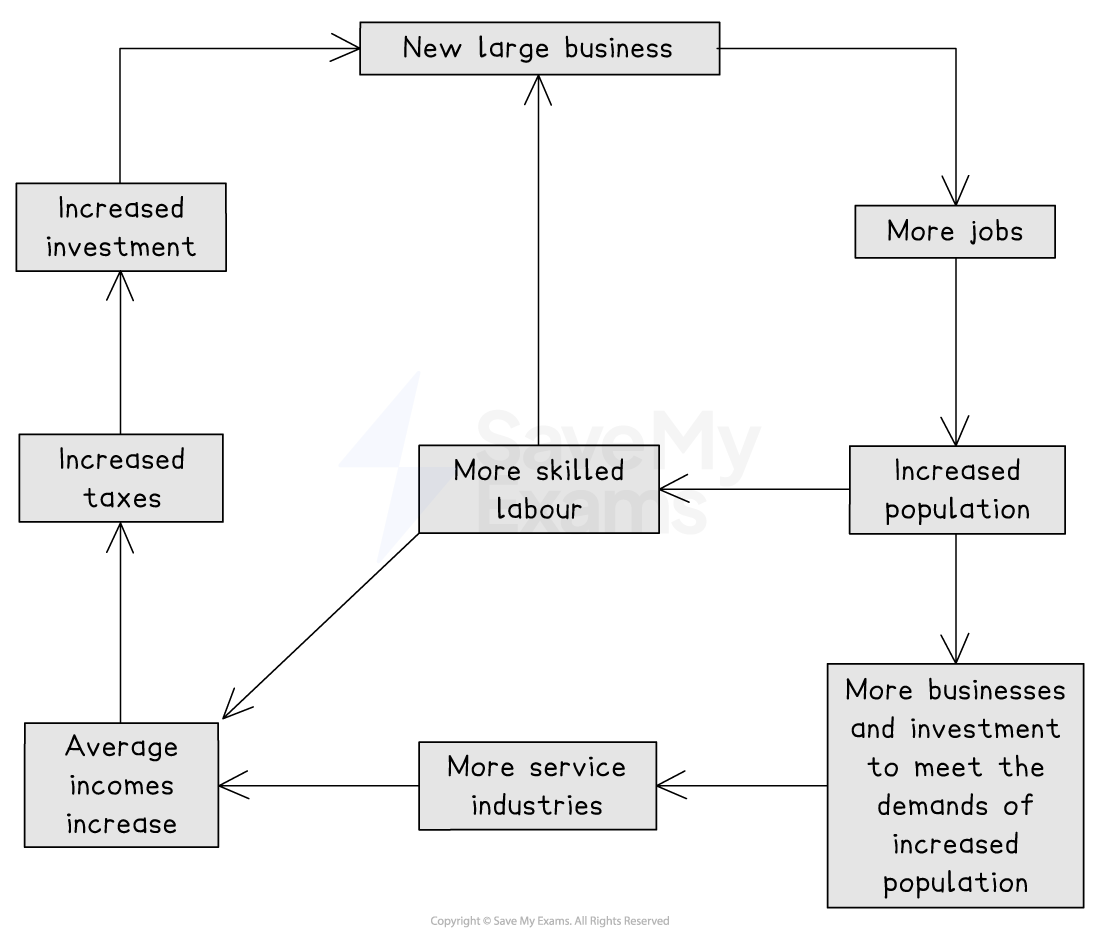
Theory of cumuluative causation
-
There are three stages of regional inequality:
- Pre-industrial stage- regional differences are at their lowest
- Period of rapid economic growth – increasing regional differences
- Regional economic convergence - where wealth from the core spreads to other parts of the country
Causes of regional inequalities
Residence
-
Urban areas generally attract greater levels of investment, leading to increased business and incomes:
- There may also be inequality within the urban area
Ethnicity
-
Discrimination can result in ethnic groups having income levels significantly below those of the dominant groups within a country
- This reduces the opportunities open to these groups
-
Ethnic minority groups often have higher levels of:
- informal employment
- unemployment
- poverty
Employment
- The split between formal and informal employment impacts incomes
- Formal jobs usually have higher incomes and greater benefits, such as holidays and sick pay
Education
- Those with higher levels of education usually gain higher-paying employment
- Higher education levels among women are linked to lower fertility rates
Land ownership
- Inequalities in land ownership are strongly linked to inequalities in income
Was this revision note helpful?
Build on this topic