Tectonic Hazards (Edexcel IGCSE Geography)
Plate Boundaries
Spec point —
4GE1-S3.044
Types of plate boundary
-
Volcanic eruptions and earthquakes most commonly occur at or near plate boundaries
-
There are four main types of plate boundaries:
- Constructive (divergent)
- Destructive (convergent)
- Collision
- Conservative (transform)
Constructive (divergent) plate boundary
- At the constructive boundary, the plates are moving apart
- The Mid-Atlantic Ridge is an example of a constructive plate boundary
- Both volcanic eruptions and earthquakes can occur at this type of plate boundary
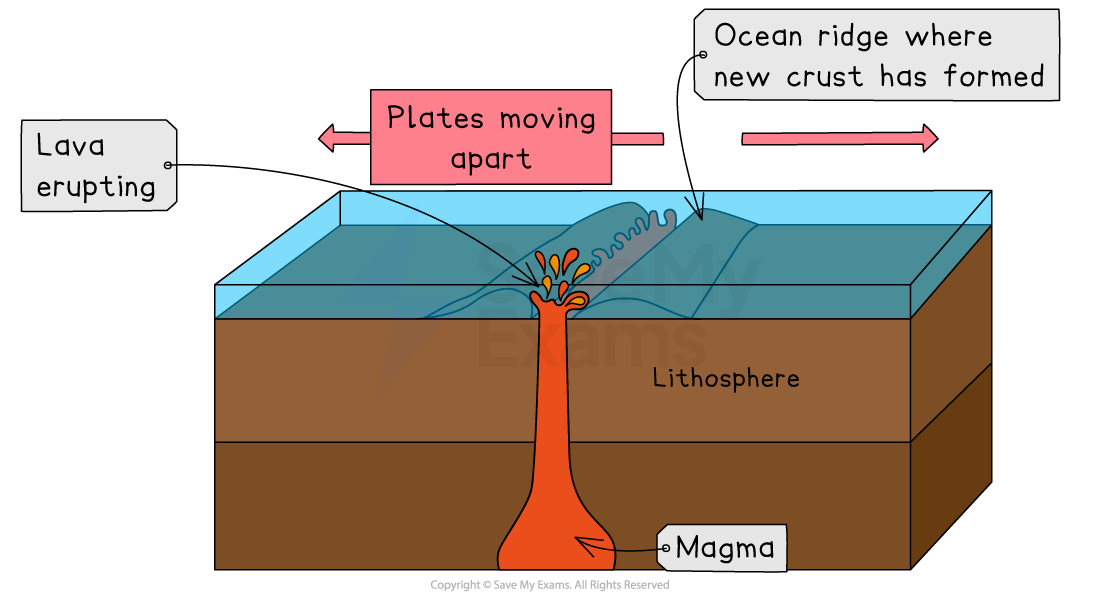
Constructive (Divergent) plate boundary
Destructive (convergent) plate boundary
- At a destructive (convergent) plate boundary, the plates are moving together
- The denser, heavier oceanic plate subducts under the lighter, less dense continental plate
- The boundary between the Nazca plate and the South American plate is an example
- Both volcanic eruptions and earthquakes occur at this type of plate boundary
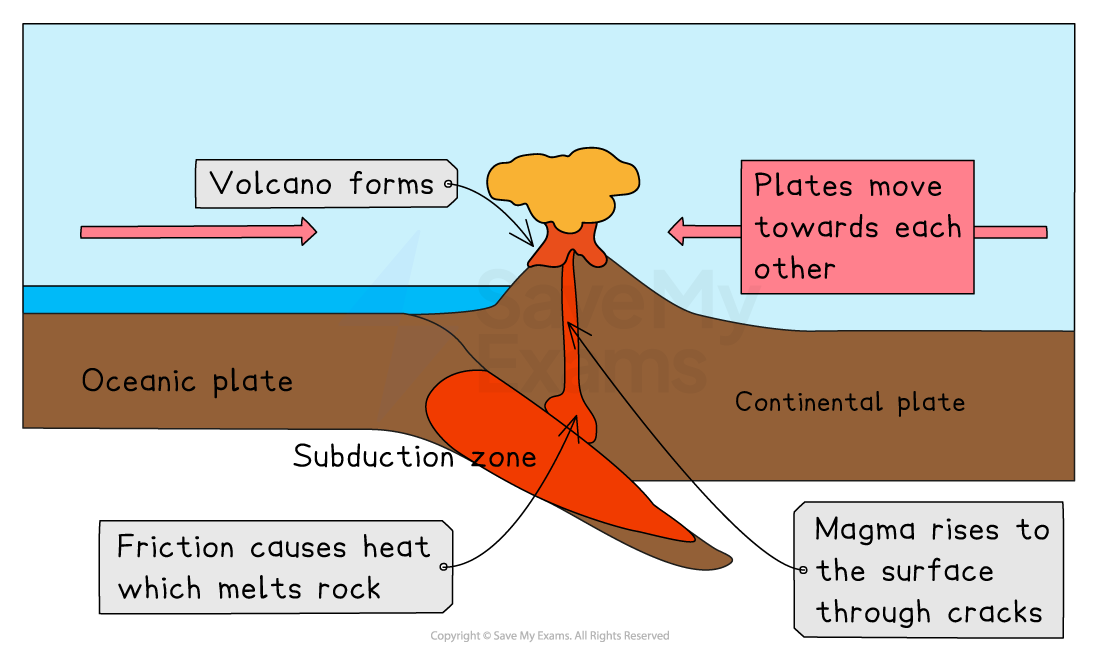
Destructive (Convergent) Plate Boundary
Collision boundary
- At a collision boundary, two plates of similar density move towards each other
- Neither is dense enough to subduct, so the land is pushed upwards
- This process forms fold mountains such as the Himalayas
- Earthquakes are the main hazard at this type of plate boundary
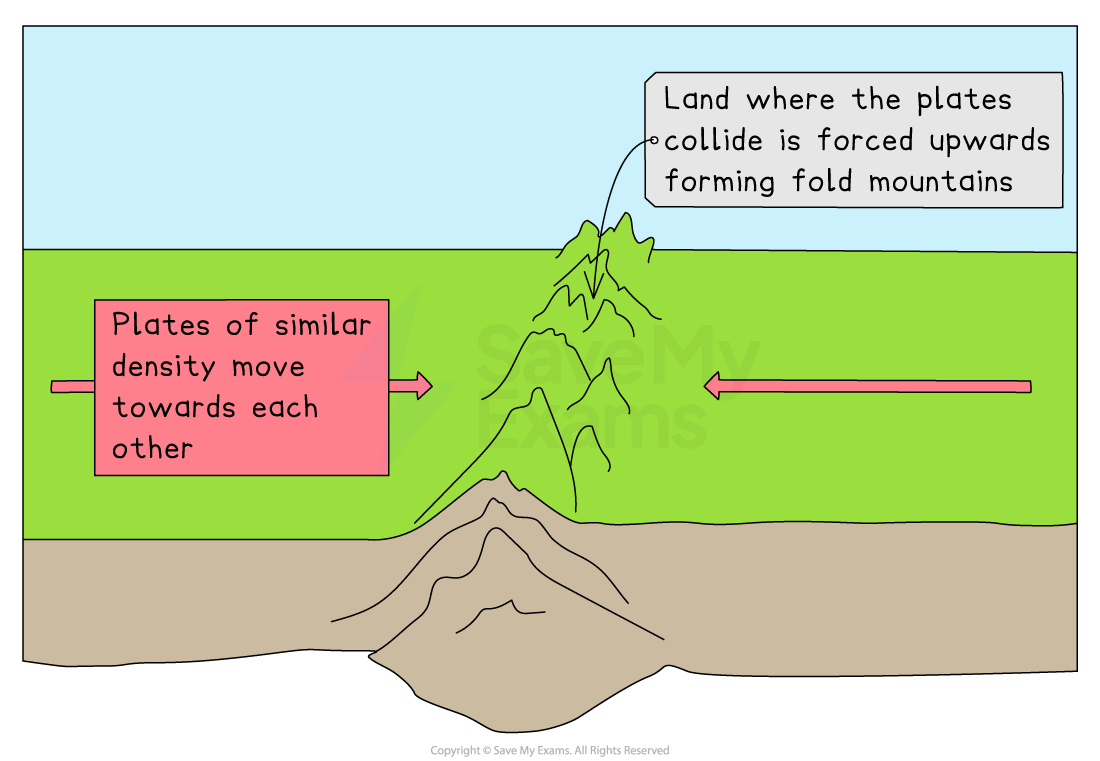
Collision Boundary
Conservative (transform) boundary
- At a conservative (transform) boundary, the plates move past each other in opposite directions or in the same direction at different speeds
- Earthquakes are the only hazard at this type of boundary
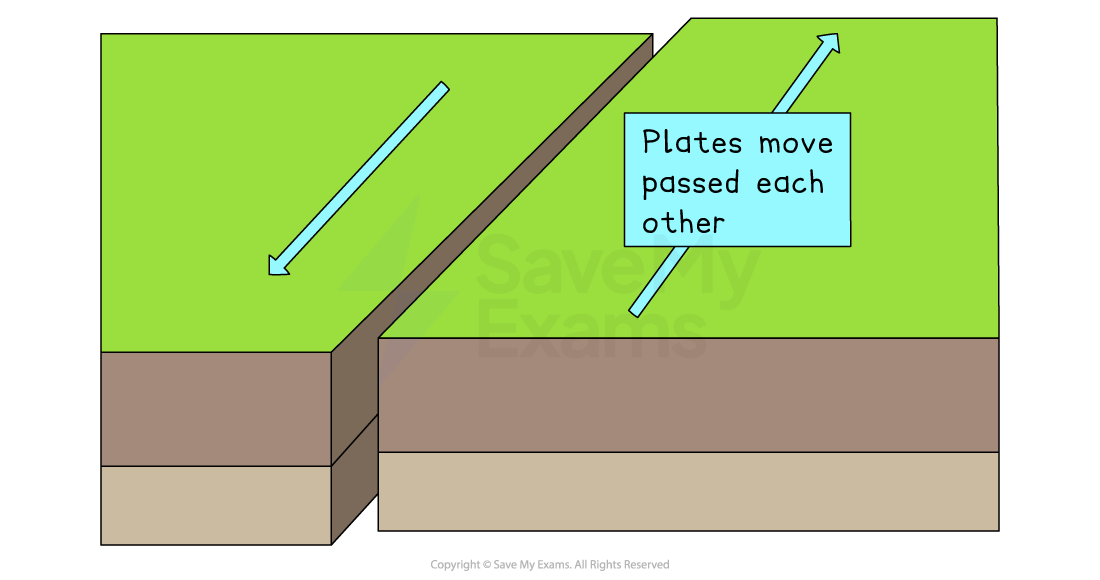
Conservative (Transform) Boundary
Exam Hint Draw each of the plate boundaries and add annotations to outline the processes. This will help you to remember what happens at each one.
Causes of Volcanic Hazards
Spec point —
4GE1-S3.044
- Volcanoes occur at constructive (divergent), destructive (convergent) plate boundaries and hot spots
- Volcanoes do not occur at collision boundaries or conservative (transform) boundaries
Volcanoes at constructive boundaries
-
At a constructive (divergent) boundary, the tectonic plates are moving away from each other:
- Constructive plate boundaries often occur under the sea/ocean
- The lava escapes through the gap left as the plates move apart
- The lava cools and hardens, forming a new crust
-
At constructive plate boundaries, the lava tends to be runny and eruptions are less explosive
-
These types of eruption form shield volcanoes, which have gently sloping sides
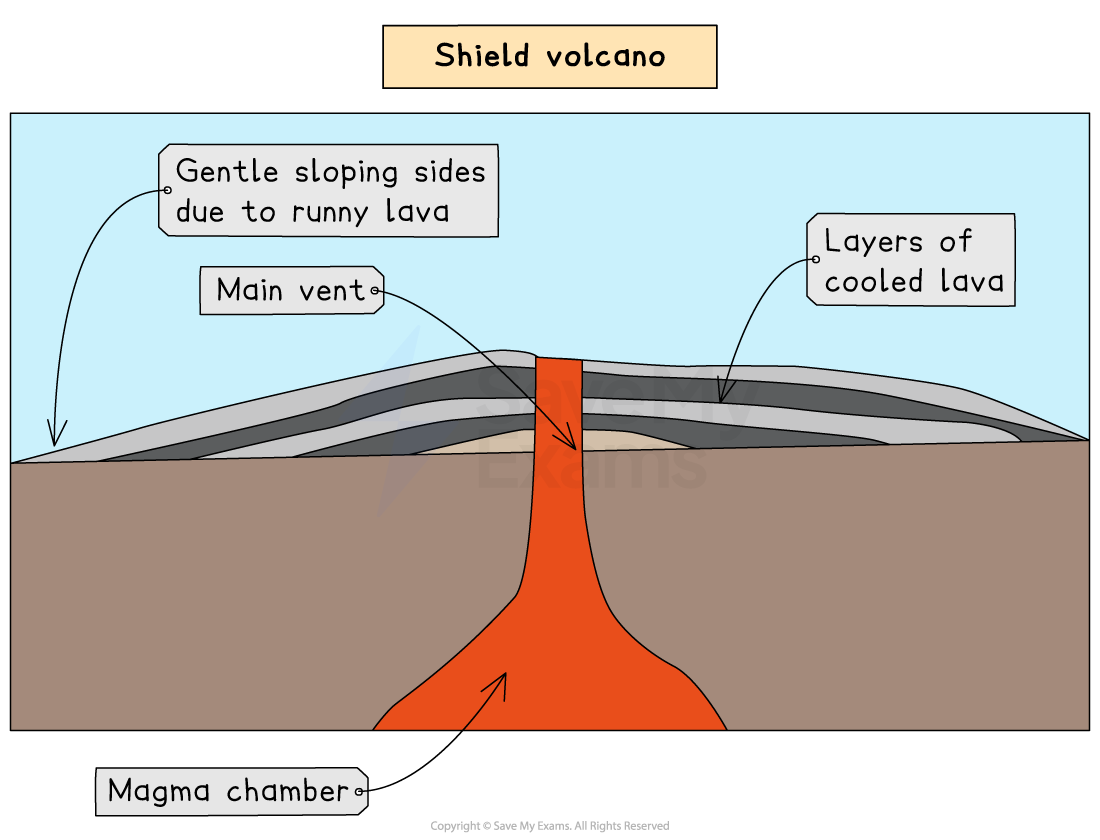
Characteristics of a shield volcano
Volcanoes at destructive boundaries
-
At a destructive (convergent) boundary, the tectonic plates are moving towards each other:
- The heavier, denser oceanic plate subducts under the lighter continental plate
- In the subduction zone, the two plates come together, causing friction
- Friction causes heat and the plate material melts, forming magma
- The magma rises to the surface through cracks in the crust
- The cooling lava and ash build up, forming a volcano
-
At destructive plate boundaries, the lava tends to be sticky and produces explosive eruptions
-
These eruptions tend to form composite or stratovolcanoes
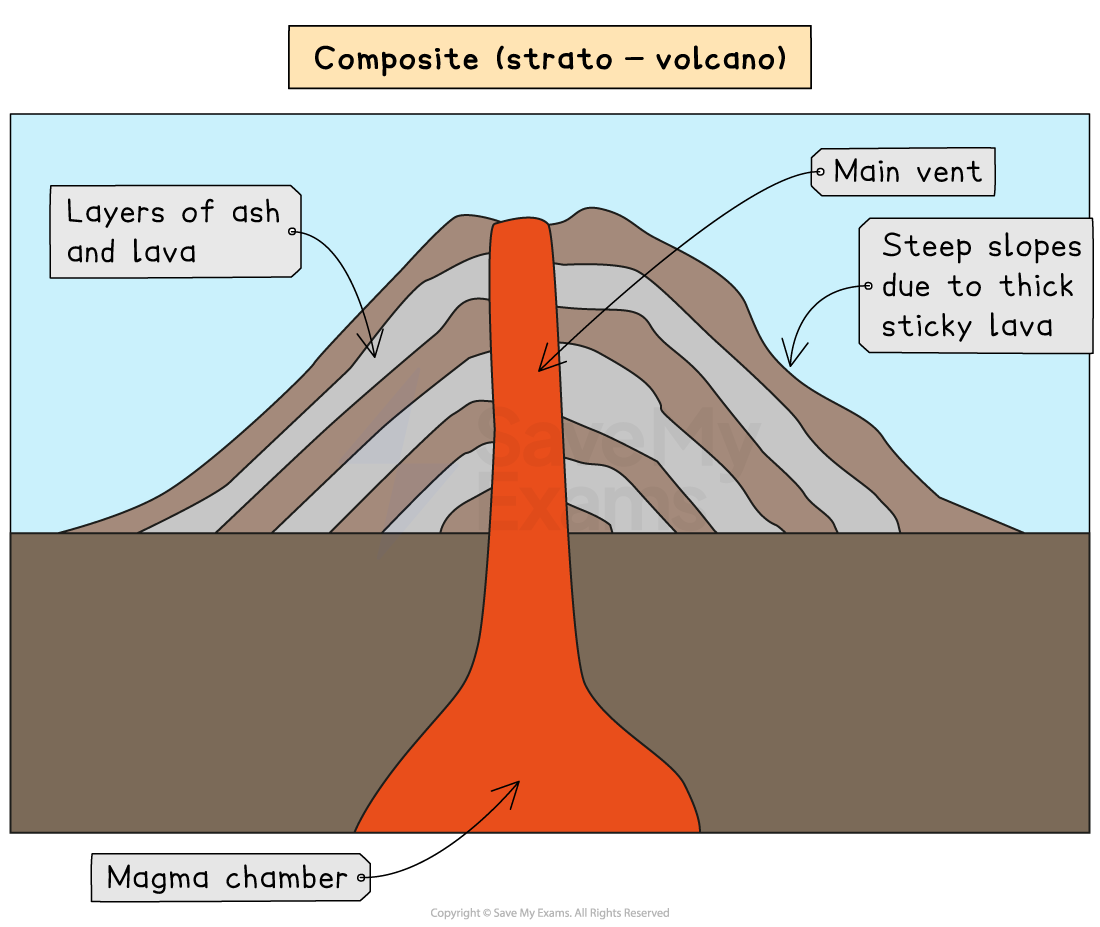
Characteristics of a composite (strato-volcano)
Volcanoes at hot spots
-
At a hot spot, the tectonic plate passes over a plume of magma:
-
The magma rises to the surface through cracks in the crust
-
As the magma erupts and cools, this builds up
- Eventually, due to the buildup of cooled lava, this may rise above the surface of the water, forming an island
-
As the tectonic plate moves slowly over the magma plume, a line of islands may form, e.g. Hawaii
-
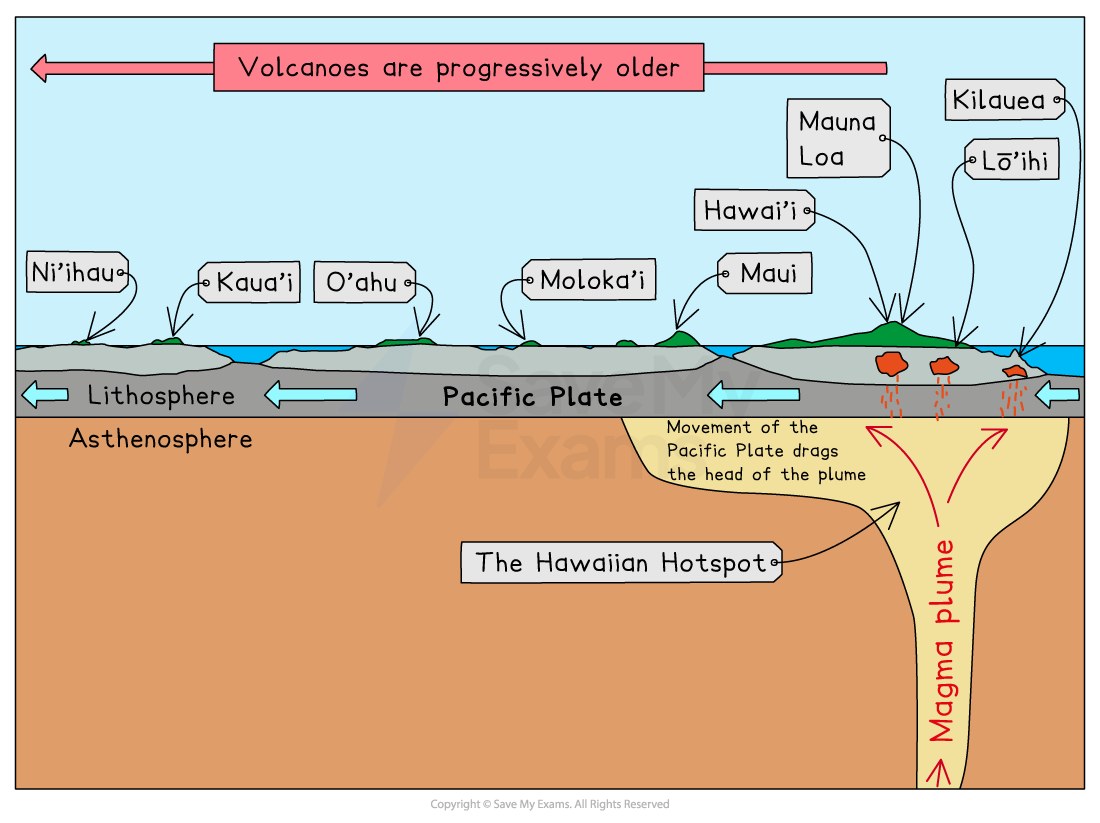
Hot spot and island formation
Volcano primary and secondary hazards
-
Volcanic eruptions only become hazards when they affect people
-
The hazards from the volcanic eruption itself are primary hazards:
- Ash
- Pyroclastic flow
- Lava flow
- Gas emissions
- Volcanic bombs
-
The hazards created that happen as a result of the primary hazards are secondary hazards:
- Lahars
- Acidification
- Landslides
- Climate change
- Fires
- Floods
Causes of Earthquake Hazards
Spec point —
4GE1-S3.044
Earthquakes & plate boundaries
-
Earthquakes can occur anywhere, but mostly occur at or near plate boundaries
-
Earthquakes happen at all plate boundaries - constructive (divergent), destructive (convergent), collision and conservative (transform)
-
At a constructive (divergent) plate boundary, earthquakes tend to be weaker as the plates are moving apart
-
At destructive (convergent), collision and conservative (transform) plate boundaries, earthquakes tend to be stronger
Earthquakes: primary & secondary hazards
-
The primary hazard of an earthquake is the ground shaking. All other hazards then follow on from this as secondary hazards
-
Secondary hazards can include:
- Collapse of buildings and other structures
- Landslides
- Gas leaks
- Fires
- Soil liquefaction
- Subsidence
- Mudflows
- Tsunami
Earthquake sequence
-
The sequence of an earthquake is the same regardless of the boundary at which it happens:
- As the tectonic plates move, they can get stuck
- Pressure builds as the plates continue to try to move
- Eventually, the plates jolt free, and the pressure is released as energy
- The point at which the earthquake starts is the focus
- The epicentre is the point directly above the focus on the Earth's surface
- The energy passes through the Earth's crust as waves, which are the earthquake
-
Earthquakes can happen as a result of human activity, such as drilling into the crust or mining
Exam Hint When describing the processes leading to an earthquake, volcanic eruption or tropical cyclone, it is helpful to write the formation down as a sequence of steps. This will make the processes easier to remember.
Was this revision note helpful?