Rise of the Global Economy (Edexcel IGCSE Geography)
Causes of Globalisation
Spec point —
4GE1-S3.065
-
Globalisation is where the world has become or is becoming interconnected through the processes of:
- economics
- culture
- politics
- trade
- tourism
-
It also includes environmental globalisation through the impacts of global warming
-
Modern transport and communications have made trade almost instantaneous
-
Globalisation reduces the effect of political borders of countries
- It makes them more interdependent
-
More powerful countries and businesses affect decisions in other parts of the world
- This has led to a rise in global inequality
-
Global cities have developed, which are the focus of the world economy
-
The improvements and developments in communication and transport have made globalisation what it is today—a shrinking world
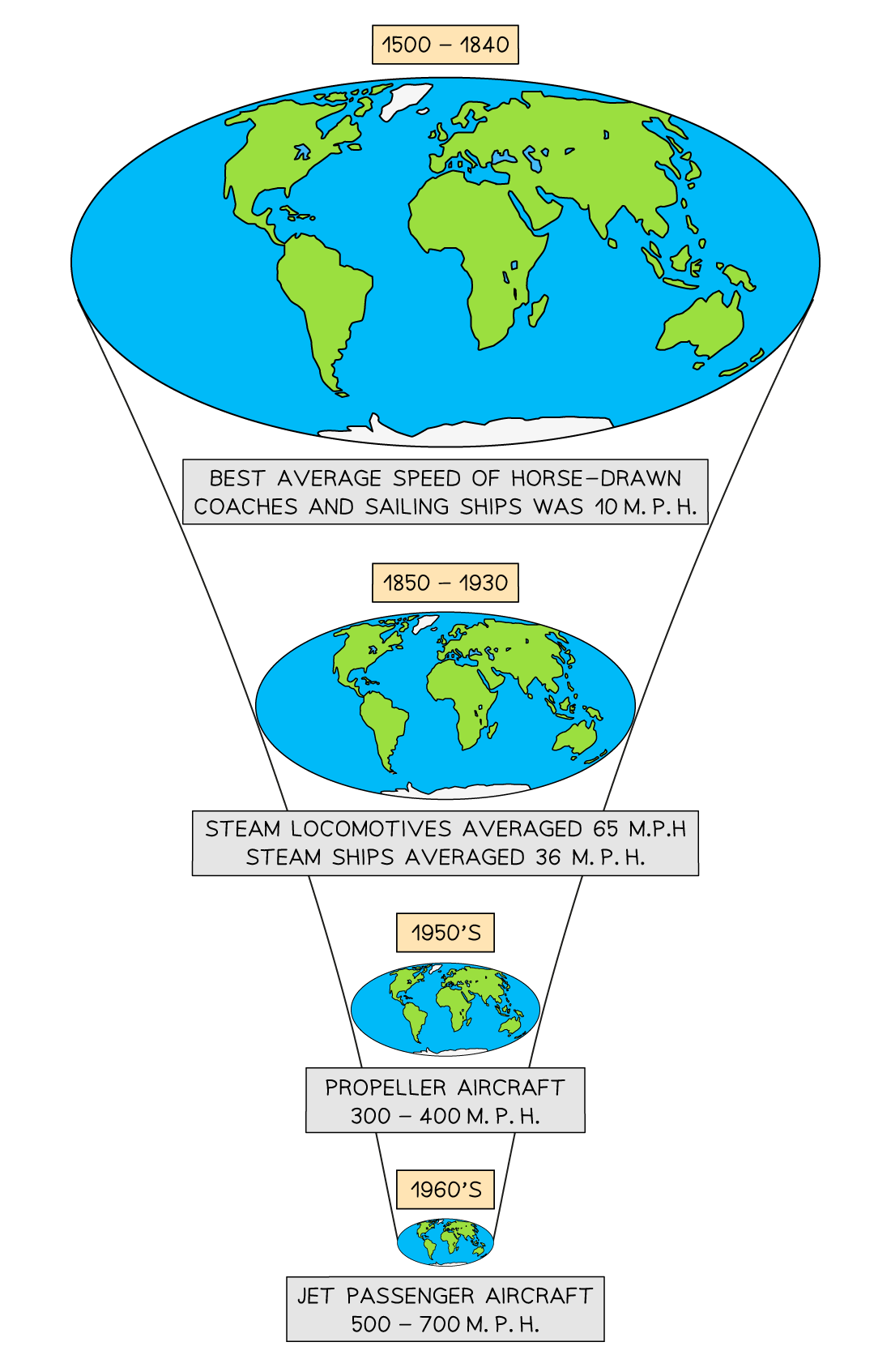
Time-space compression
-
The network flows to places and populations are the result of four significant developments:
- Appearance of large transnational corporations (TNCs)
- Growth of regional economics and trading blocs
- Development of modern transport networks
- Advances in IT and communications, particularly the WWW and the internet
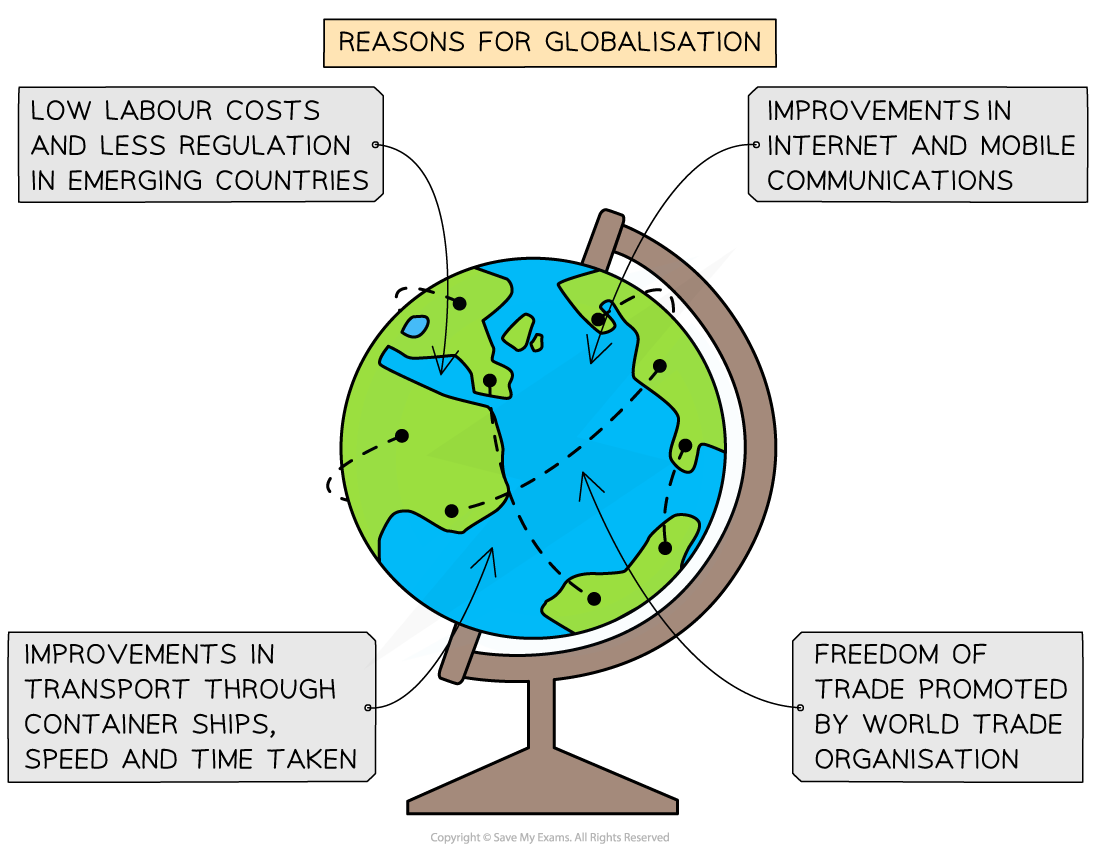
The Production Chain
Spec point —
4GE1-S3.065
-
The developments in globalisation have led to the formation of a global economy
-
There are very few countries in the world that haven't 'networked' in one way or another
-
There are five different network flows:
- Trade
- Aid
- Foreign investment
- Labour
- Information
Trade
-
Trade is the import and export of raw materials, food goods and services
-
Increased volume of trade can lead to better political relationships between countries
-
It can also lead to a sharing of different cultures
-
Trade between countries can increase economic development and reduce inequality
-
However, global trade is unequal
- Developed countries benefit more from trade than developing and **emerging countries **
- Many developing countries are paid** low rates** for materials and products
-
There are fewer barriers to trade than there were previously
- Tariffs and quotas are much lower
-
Trade blocs have developed to make trade easier. For example:
- The European Union (EU) has encouraged free trade between its members, which has increased trade overall
Aid
-
Aid is the transfer of resources from one country to another to help with development or after a disaster
- Most aid is economic, either through receiving or donating
-
This allows developing countries to invest in education, health, infrastructure and trade
Foreign investment
- Investment can either be direct or indirect
Labour
- This is important to the working of the global economy and labour migration fuels this market either with a specialist or cheap labour
- The availability of lower-cost labour in developing and emerging countries has led many transnational corporations (TNCs) to invest in those areas
Information
- Advances in communication mean that companies can have factories and offices around the world
- Media and advertising also increase the demand for products
Commodity chain
-
The global production, supply or commodity chain pulls these flows together to produce goods or commodities
- A commodity chain is therefore a pathway along which goods travel from producers to consumers
-
Before the development of global production, products tended to be manufactured in one country
- Globalisation means that parts of different products can be made in several countries
- At each stage of the flow, value is added to the emerging product
-
Despite the miles involved and the number of countries involved, the product is still cheaper to produce in various stages
-
This is known as the economies of scale: the cost per item reduces when operated on a large scale
-
Transport improvements through large container ships mean that costs are reduced and goods are moved longer distances more quickly
-
Labour costs are cheaper in emerging and developing countries and there are usually reduced legal restrictions
Global Investment
Spec point —
4GE1-S3.065
-
Investment is not just monetary (economic), although this is a large part of it
- Investment can be in people, research or products
-
Foreign investment is when individuals or firms from abroad invest in another country
-
Call centres are examples:
- Call centres can be located anywhere, e.g. India
- Investment is made in the country through building the call centre, paying taxes, etc.
- Local people are employed and trained
- Service is provided to the donor country, for example the UK
Transnational corporations
-
Transnational corporations (TNC) provide most of the foreign direct investment (FDI)
- Transnational corporations (TNCs) are companies which operate in more than one country
- These companies invest in factories and infrastructure
Location of manufacturing
-
Moving manufacturing from developed to developing or emerging countries
- China is the main area for manufacturing goods from around the world
- Investments are made in China to produce goods
- Completed goods are shipped back to the original country, e.g. Germany
Labour
-
Investment in people, either for cheap labour or for their expertise
- Specialist surgeons from the USA to Australia
- Investment in developments that attract cheap labour—the construction of Dubai attracts many Indian migrants
- Research and development investment - motor car industry to build more fuel-efficient motoring—Elon Musk's Tesla electric cars
Aid
-
Investment can come from aid for rebuilding after a disaster. Ukraine will need aid after the war with Russia ends
- Aid can be funds sent to the government to use as necessary, although this can often lead to corruption and funds not going where they should
- Aid can be in the form of goods and services directed to the affected area – refugee camps or after a natural hazard such as a tropical storm or earthquake
Worked Example Identify the meaning of the term TNC
(1 Mark)
A. Translocal Corporation
B. Transnational Corporation
C. Transnational Country
D. Transporting National Corporation
Answer:
- B (1) – as none of the other terms exist.
Was this revision note helpful?
Build on this topic