Coastal Environmental Change (Edexcel IGCSE Geography)
Influence of Geology
Spec point —
4GE1-S3.043
-
Geology shapes the coastline over time, place and space
-
A coastline made up of softer rocks such as sands and clays will be easily eroded by destructive waves
- They will form low, flat landscapes such as bays and beaches
-
Coastlines of more resistant, harder rock will take longer to erode
- This will produce rugged landscapes such as headlands
-
-
The differences between hard and soft rocks will also impact the shape and characteristics of cliffs
-
Geology, therefore, shapes the coastline vertically through the height and profile of a cliff and horizontally with bays and headlands
Hard rock
-
Hard rocks will lead to the formation of:
- high, steep cliff shapes
- bare and rugged cliff faces
- boulders and rocks at the foot of the cliff
Soft rock
-
Soft rocks lead to:
- lower and more gently sloped cliffs
- smoother cliff faces with evidence of slumping
- few rocks at the foot of the cliff
Influence of Vegetation
Spec point —
4GE1-S3.043
-
The longer a coastal landform has existed, the more likely it will be colonised by vegetation
-
Over time, vegetation will 'fix' a feature (e.g. a sand dune)
-
Vegetation adaptation is important to survive coastal conditions
- Vegetation has to cope with high levels of salt in both air and soil
-
The largest influence of vegetation is to assist in protecting and preserving coastal landforms such as sand dunes, salt marshes and mangroves
Influence of Sea-level Changes & People
Spec point —
4GE1-S3.043
-
Sea levels have risen and fallen many times in the past
- Rising sea levels produce submergent coastlines, with rias and fjords
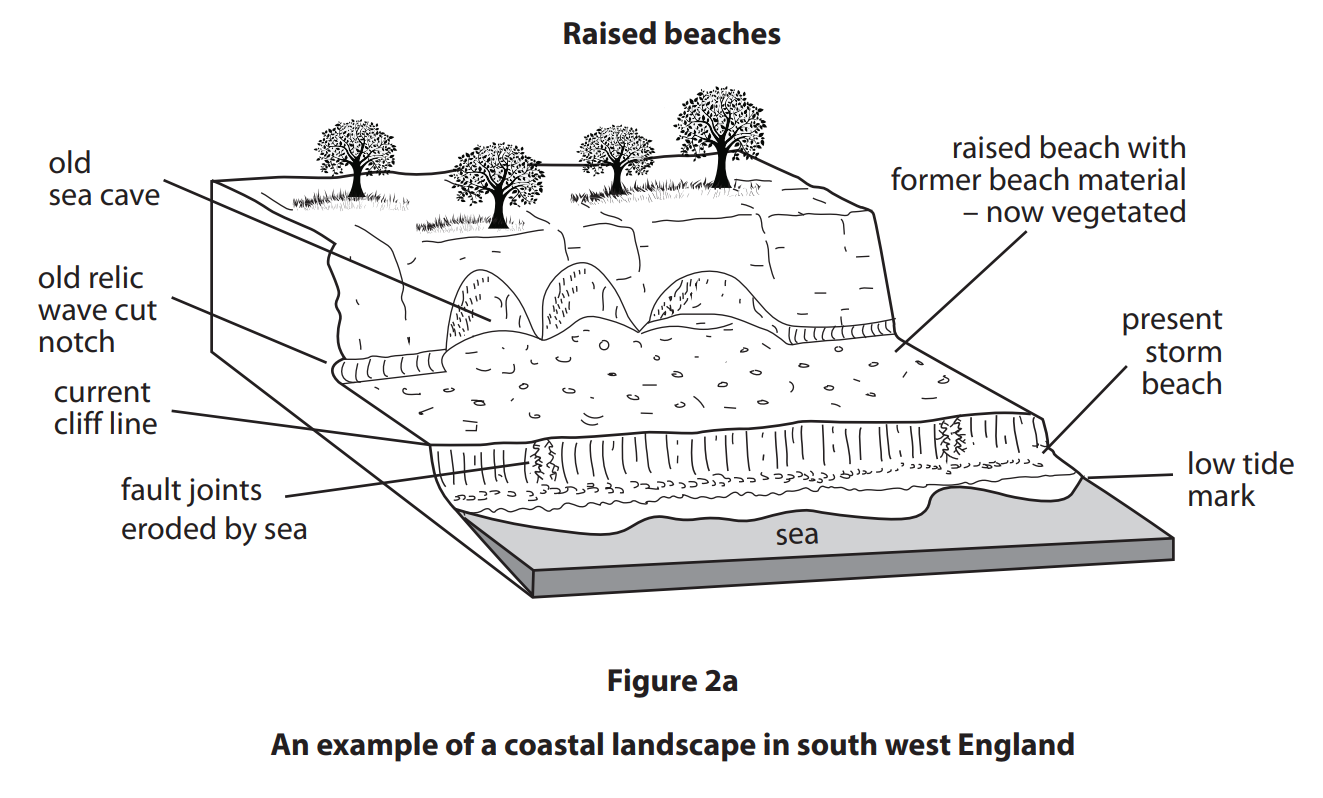
- Falling sea levels produce emergent coastlines, with relic features such as raised beaches, **cliffs with caves, arches, **etc.
-
During the last** Ice Age**, sea levels fell as the water was locked up in glaciers and ice sheets, rising again as the ice melted
-
Sea levels are linked to global warming and will have a significant effect on many low-lying coasts and islands
- Many Pacific Ocean islands, such as Kiribati and Tuvalu are at risk of being completely submerged by rising sea levels
- This issue is made worse as many of the world's densely populated areas are located on coastal lowlands
- New York and Miami in the US are major cities vulnerable to sea-level rise as the cities are built at sea level
Influence of people
Human Activity
-
Human activities, whether intentionally or not, transform the features and landscape of a coastline:
- Settlement – coasts have always been a place of attraction and residence for people
- Economic development - exploitation through fishing, farming, trade, tourism and energy production
- Coastal management – controlling the coastline to protect human interests
-
Through any or all of the above, the natural landscapes and features of the coast can be changed, thereby changing the coastline over time, space and place
Worked Example **Study Figure 2a in the Resource Booklet. Suggest two ways changes in sea level have created coastal landforms **
(4 marks)
- This question tells you to use the figure to show how changes in sea level have created coastal landforms
- You must identify features and then develop your answer to suggest how it was formed due to changes in sea levels
- If you do not refer to the figure, you will not gain full marks
Final answer: Answer:
- From the figure we can see where the sea level has decreased. [1] This has created an emergent coastline [1] with a relic cliff and raised beach**. [1]** Over time, the raised beach has become vegetated, supporting the observation of changing sea levels [1]
OR
- Wave action [1] from previous sea levels has eroded the relic cliff to expose a wave-cut notch [1], showing that sea levels used to be higher than the present. [1] This has led to the relic cliff and sea caves further back than the current cliff face in the figure. [1]
Was this revision note helpful?