12 markseasy
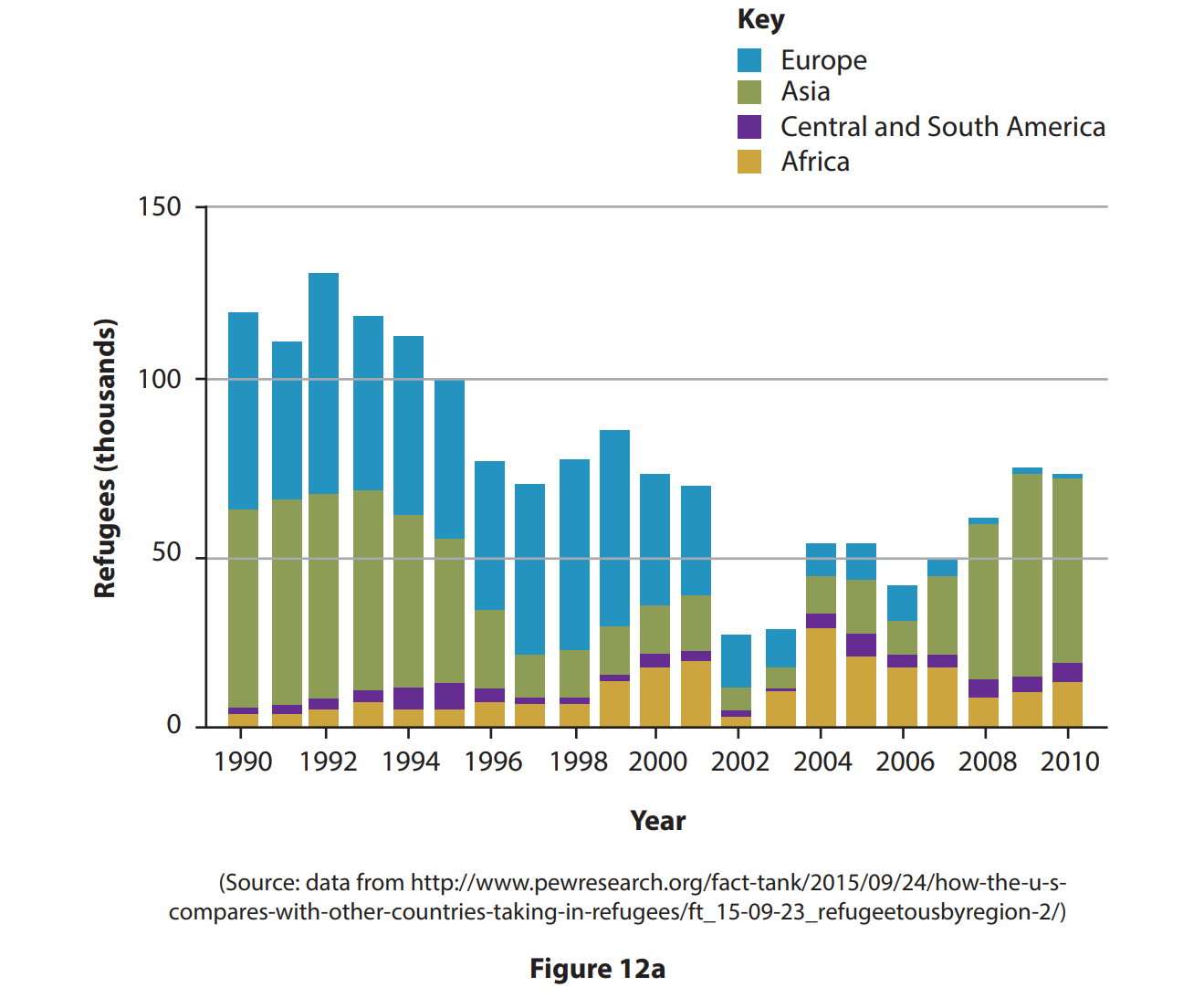
Study Figure 12a which shows the continents of origin of refugees entering the USA between 1990 and 2010.
Suggest one issue resulting from refugees entering HICs like the USA.
24 questions · 106 marks · ≈ 2 hours
Study Figure 12a which shows the continents of origin of refugees entering the USA between 1990 and 2010.
Suggest one issue resulting from refugees entering HICs like the USA.
Describe the nature of the global shift in manufacturing.
Study Figure 8b.
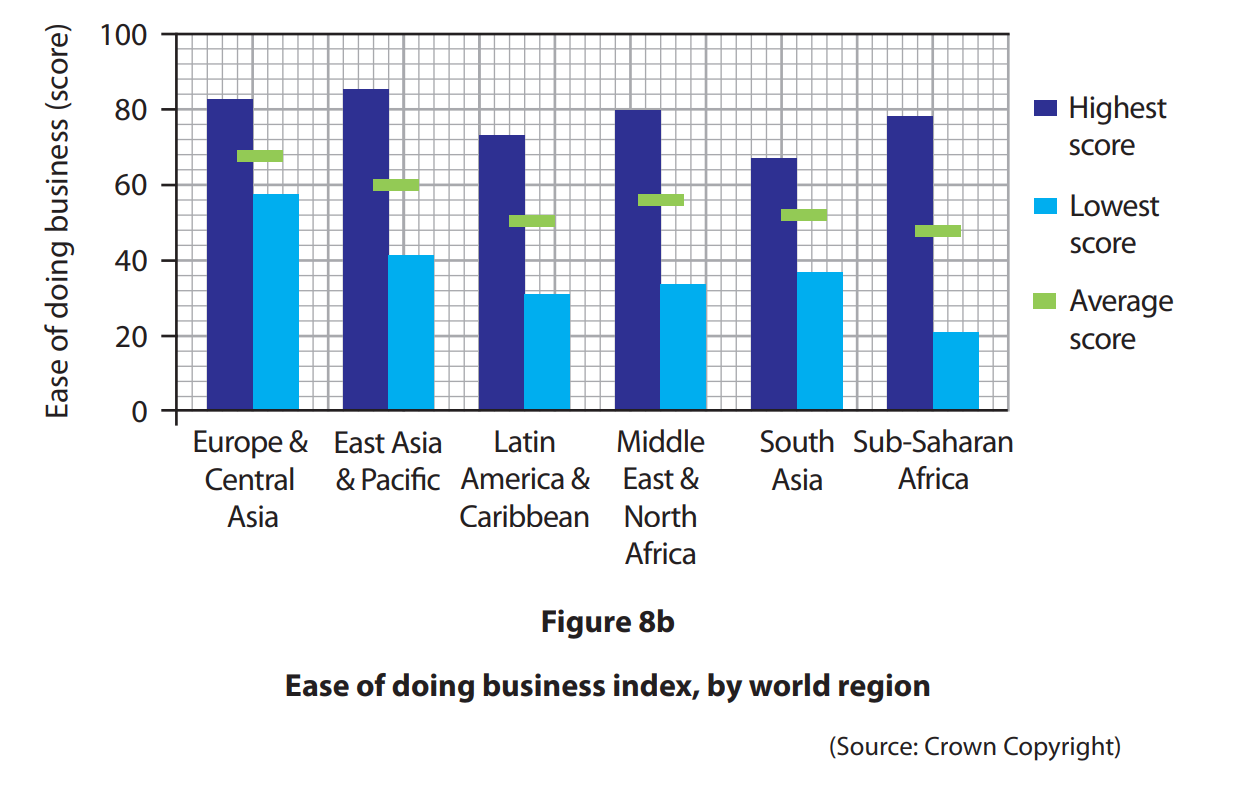
Calculate the range in the ‘Ease of doing business’ index for Sub-Saharan Africa.
You must show all your workings in the space below.
Identify the differences in the ‘Ease of doing business’ index between Europe and Central Asia and Sub-Saharan Africa.
Explain one advantage of mass tourism.
Identify one disadvantage of mass tourism.
Identify one factor that has encouraged growth of mass tourism.
Choose your answer
access to more forests
availability of jobs
faster transport
increased exports
State one reason why a government might want to encourage tourism.
Identify one disadvantage of transnational corporations (TNCs) for host countries.
Choose your answer
job creation
technology transfer
profits leak out of the country
increased tax revenue
State one environmental impact of tourism.
Explain one negative environmental impact of the growth of global tourism.
Describe the consequences for an emerging country when its place in the world economy changes.
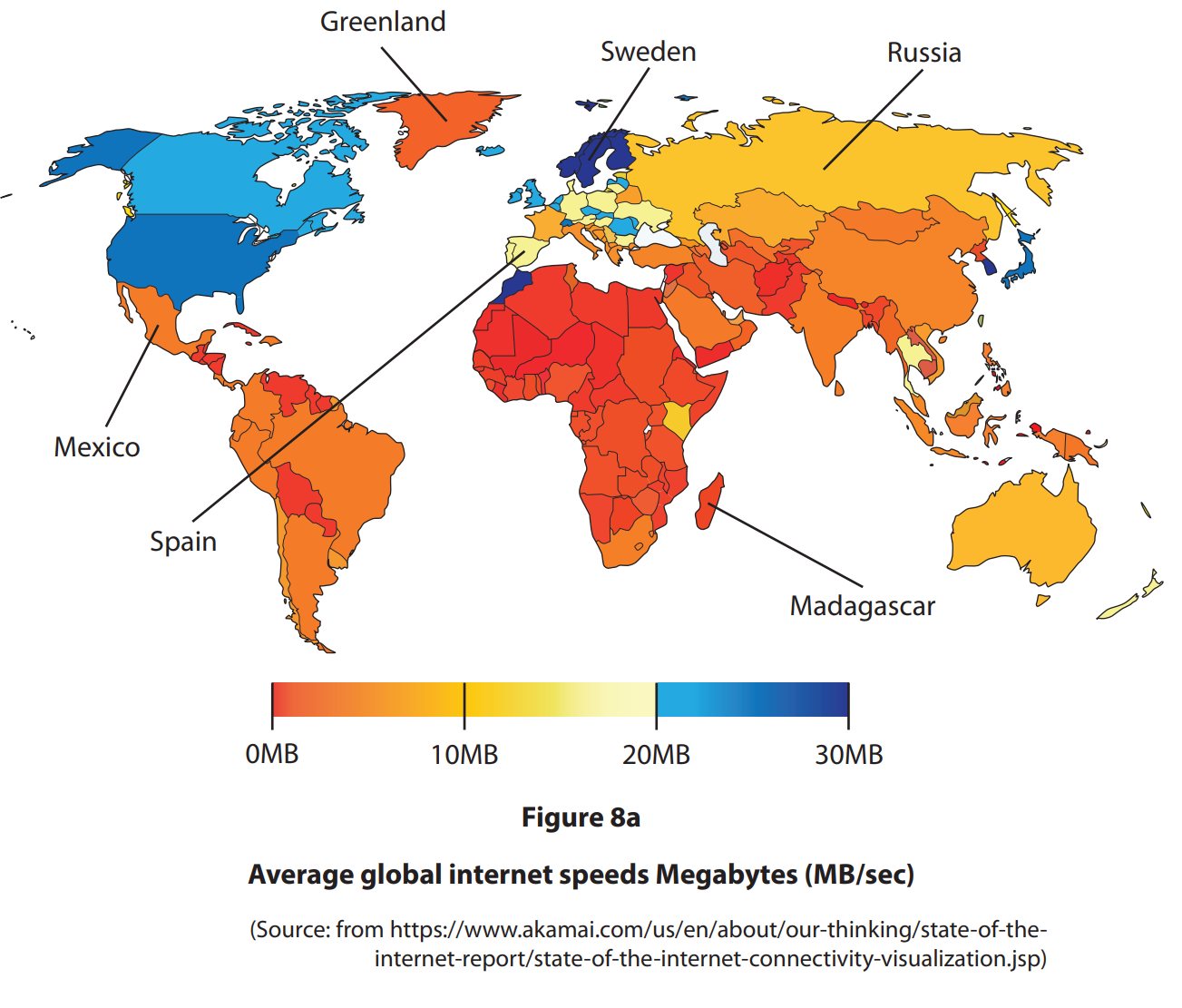
Study Figure 8a.
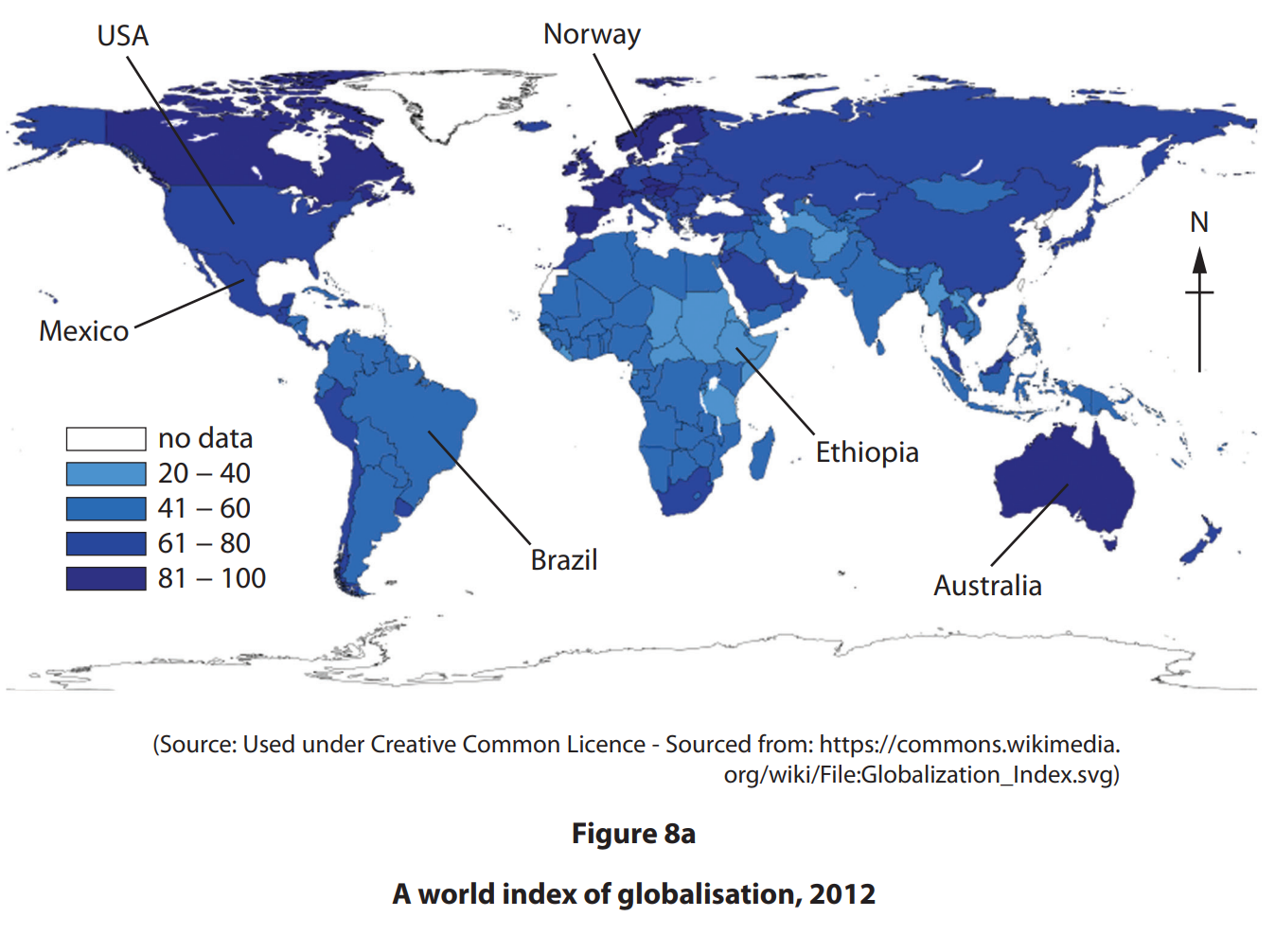
Identify two countries labelled in Figure 8a with the highest index of globalisation.
Suggest two possible reasons for the pattern shown on Figure 8a.
Explain two positive impacts of migration for destination areas.
Suggest two reasons for the pattern shown on Figure 8a.
Explain two positive impacts of globalisation.
Explain two reasons why trade is important for the global economy.
Explain one positive and one negative impact of migration on people.
Explain one benefit and one cost to a developing or emerging country of hosting a transnational corporation (TNC).
Study Figure 8c.
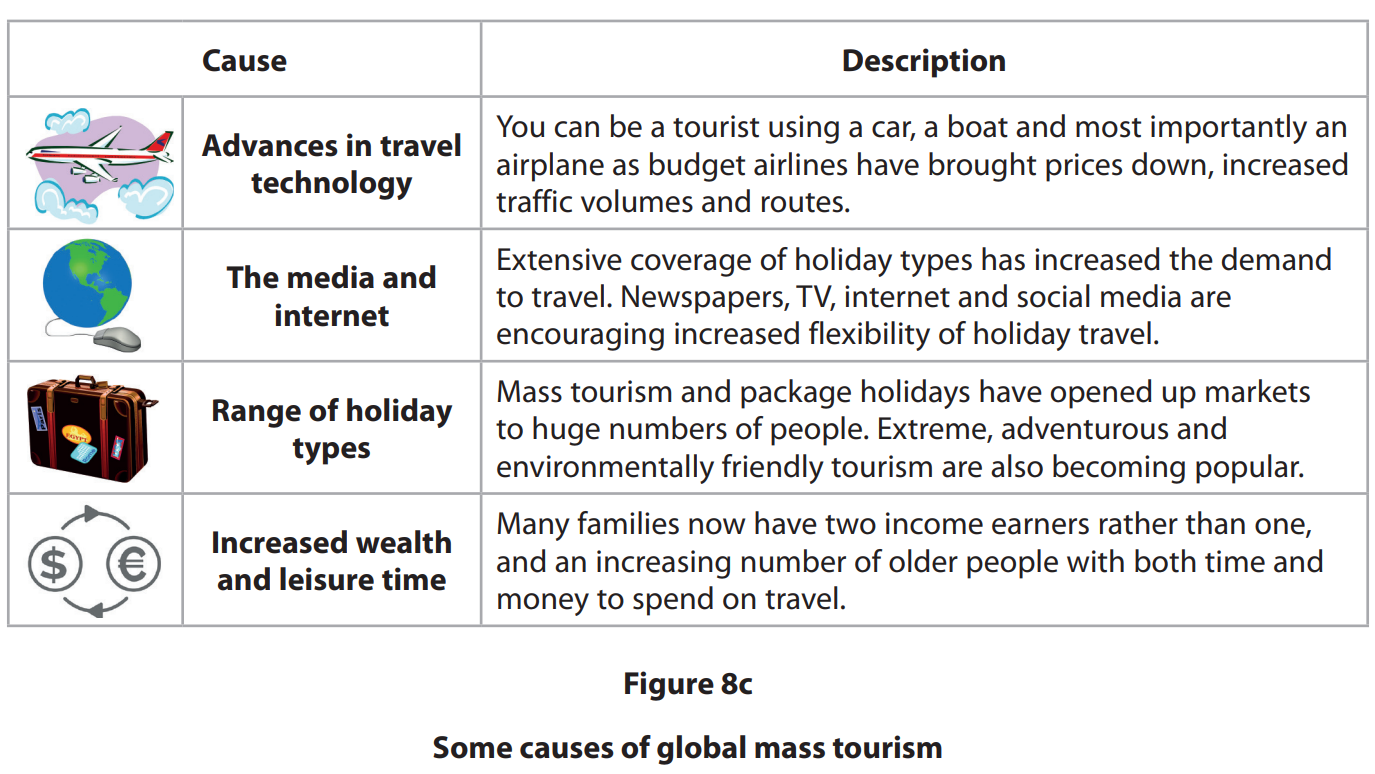
Assess the different factors that have caused the rise in global tourism.
Discuss the costs and benefits that TNCs bring to countries in which they locate.
Discuss the view. 'The causes and impacts of globalisation are distributed unevenly.'
Use Figures 8a, 8b and 8c and your own knowledge and understanding to support your answer.
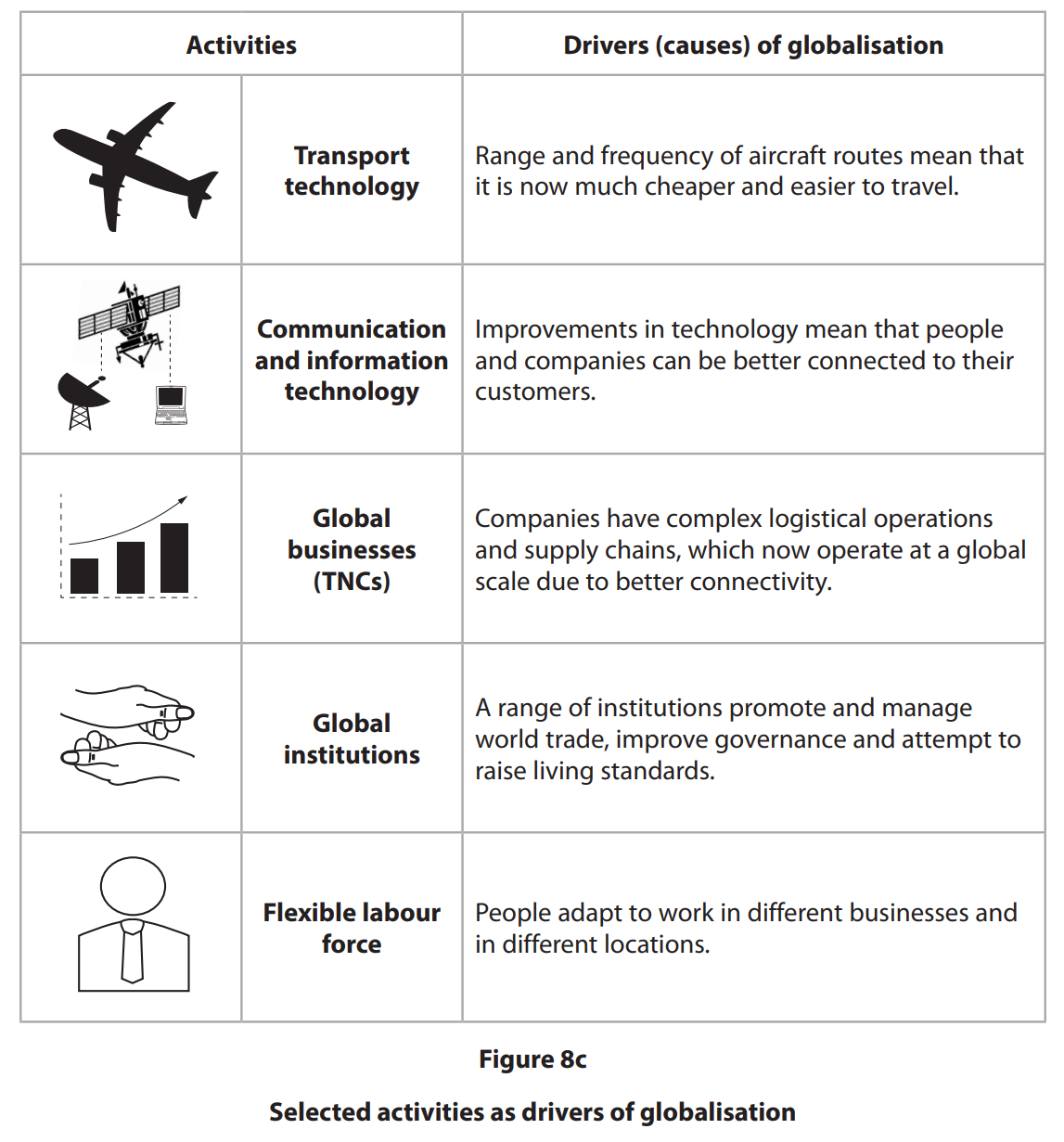
Discuss the extent to which economic factors have been more important than technological factors in causing the growth of global mass tourism.
You must refer to Figure 8c and your own knowledge and understanding in your answer.
Study Figure 9a.
Figure 9a: Approaches to sustainable tourism
| Approach | Named developed country | Named developing or emerging country |
|---|---|---|
| Limiting visitor numbers | National park visitor caps introduced in some areas to reduce erosion and overcrowding | Gorilla trekking permits strictly limited to protect endangered species and reduce habitat disturbance |
| Eco-certification schemes | Government-backed eco-labelling for hotels and tour operators meeting sustainability standards | Community-run eco-lodges certified by national tourism boards to ensure local benefit |
| Community involvement | Local communities consulted on tourism development plans; some profit-sharing schemes in place | Tourism revenue directed into community funds for schools, healthcare, and conservation |
| Transport policies | Investment in low-carbon transport options such as electric buses in tourist hotspots | Limited infrastructure making low-carbon transport difficult; most tourists rely on internal flights or road travel |
| Education and awareness | Tourist information campaigns promoting responsible behaviour at natural and cultural sites | Ranger-led guided tours educating visitors about local ecosystems and conservation challenges |
Using Figure 9a, assess how effective these approaches are in making tourism more sustainable.
Study Figure 10a.
'The world has never been more connected. International trade has more than doubled in value since 2000. Over 280 million people now live outside their country of birth. Global tourism generates over $1.5 trillion in export earnings each year, supporting millions of jobs worldwide. Yet for many communities in developing countries, the benefits of this connected world remain out of reach. Wages in TNC factories are often a fraction of those paid in developed countries, while profits flow back to wealthy shareholders abroad. Migration separates families, drains skilled workers from the countries that trained them, and leaves millions vulnerable to exploitation.'
'Globalisation has brought more benefits than problems for people around the world.'
Discuss this view. Use Figure 10a and your own knowledge.