12 markseasy
(a)
Study Figure 10 which was produced by a group of students as part of their investigation of three farm systems
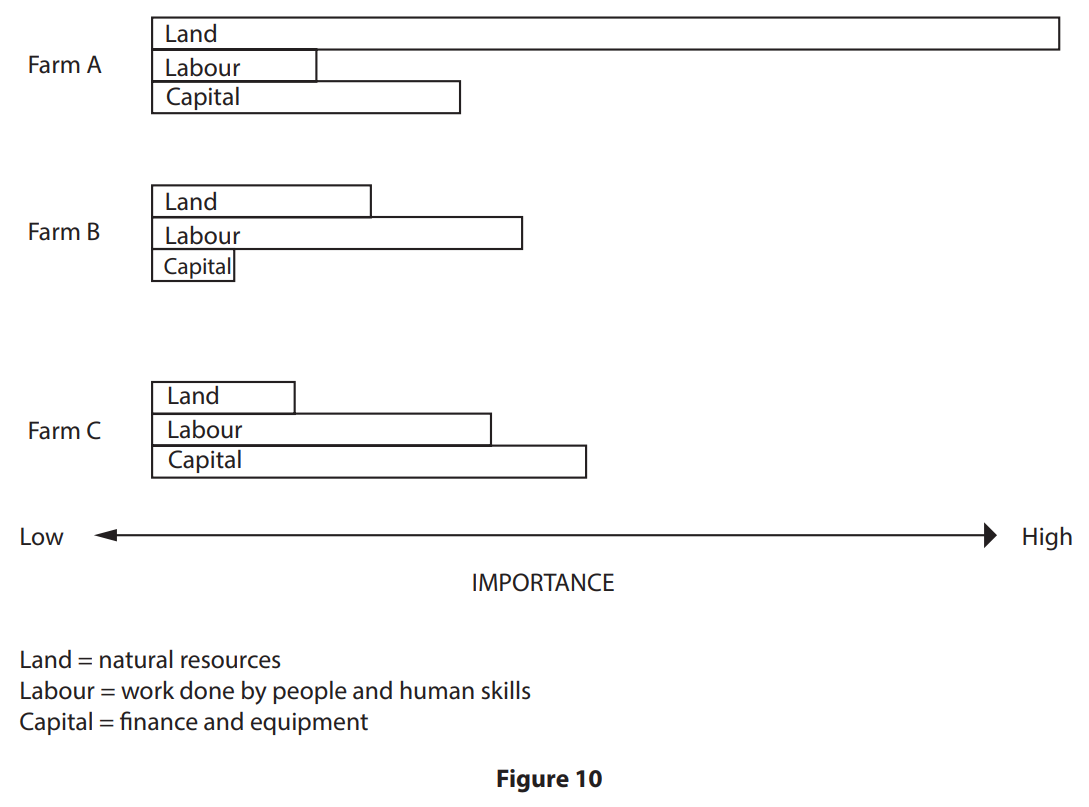
Suggest one possible aim of this investigation.
10 questions · 37 marks · ≈ 37 min
Study Figure 10 which was produced by a group of students as part of their investigation of three farm systems
Suggest one possible aim of this investigation.
You have studied rural environments as part of your own geographical enquiry. State the title of your geographical enquiry.
(i) State one type of sampling you used in your geographical enquiry.
(1 mark)
(ii) Explain one way this sampling technique helped you to collect reliable data or information
(2 marks)
Explain one way you managed a risk associated with your primary data collection
You have studied rural environments as part of your own geographical enquiry.
(i) State one type of secondary data you used in your geographical enquiry.
(1 mark)
(ii) Explain one way this secondary data helped you when investigating rural environments.
(2 marks)
A group of geography students investigated how farming has changed in Ashdale, a rural landscape in the Yorkshire Dales.
They wanted to find out whether farming activity and land use had changed over time across different parts of the area.
State one type of sampling the students could have used to select their five data collection sites.
The students visited five farms in Ashdale, in the Yorkshire Dales, and recorded the dominant land use at each location.
Explain one way the students could have managed a risk during their fieldwork in Ashdale.
Study Figure 10 which was produced by a group of students as part of their investigation of three farm systems
Describe two sources of secondary information that might have been useful as part of the pre-fieldwork and planning stage.
Study Figure 10 which was produced by a group of students as part of their investigation of three farm systems
Suggest what factors students might consider in undertaking a risk assessment on a farm location.
Explain one way you managed a risk associated with your primary data collection.
You have studied rural environments as part of your own geographical enquiry. State the title of your geographical enquiry.
(i) State one type of sampling you used in your geographical enquiry.
(1 mark)
(ii) Explain one way this sampling technique helped you to collect reliable data or information.
(2 marks)
You have studied rural environments as part of your own geographical enquiry.
(i) State one type of secondary data you used in your geographical enquiry.
(1 mark)
(ii) Explain one way this secondary data helped you when investigating rural environments.
(2 marks)
Study Figure 10 which was produced by a group of students as part of their investigation of three farm systems
Describe the use of equipment and the field techniques that might have been used when collecting information in this type of investigation.
Equipment
Field techniques