ADH & Composition of Urine (Edexcel IGCSE Biology)
The Role of ADH
Spec point —
3.28B· describe the role of ADH in regulating the water content of the blood
-
Osmoregulation is the maintenance of water and salt levels within the body
-
The nephrons have a crucial role in osmoregulation; most water absorption from the filtrate occurs from the collecting duct
-
The amount of water that is reabsorbed is controlled by the hormone ADH (antidiuretic hormone)
- Maintenance of body water levels is an example of negative feedback
-
Changes in blood water levels are detected by osmoreceptors in the hypothalamus in the brain
-
The hypothalamus sends signals to the pituitary gland, which releases ADH
-
ADH affects the permeability of the collecting duct to water
-
If the water potential of the blood is too high(too much water):
- The pituitary gland in the brain releases less ADH
- The collecting ducts become less permeable to water
- Less water is reabsorbed from the collecting ducts
- A larger volume of dilute urine is produced
-
If the water potential of the blood is too low(too little water):
- The pituitary gland in the brain releases more ADH
- The collecting ducts become more permeable to water
- More water is reabsorbed from the collecting ducts
- A smaller volume of concentrated urine is produced
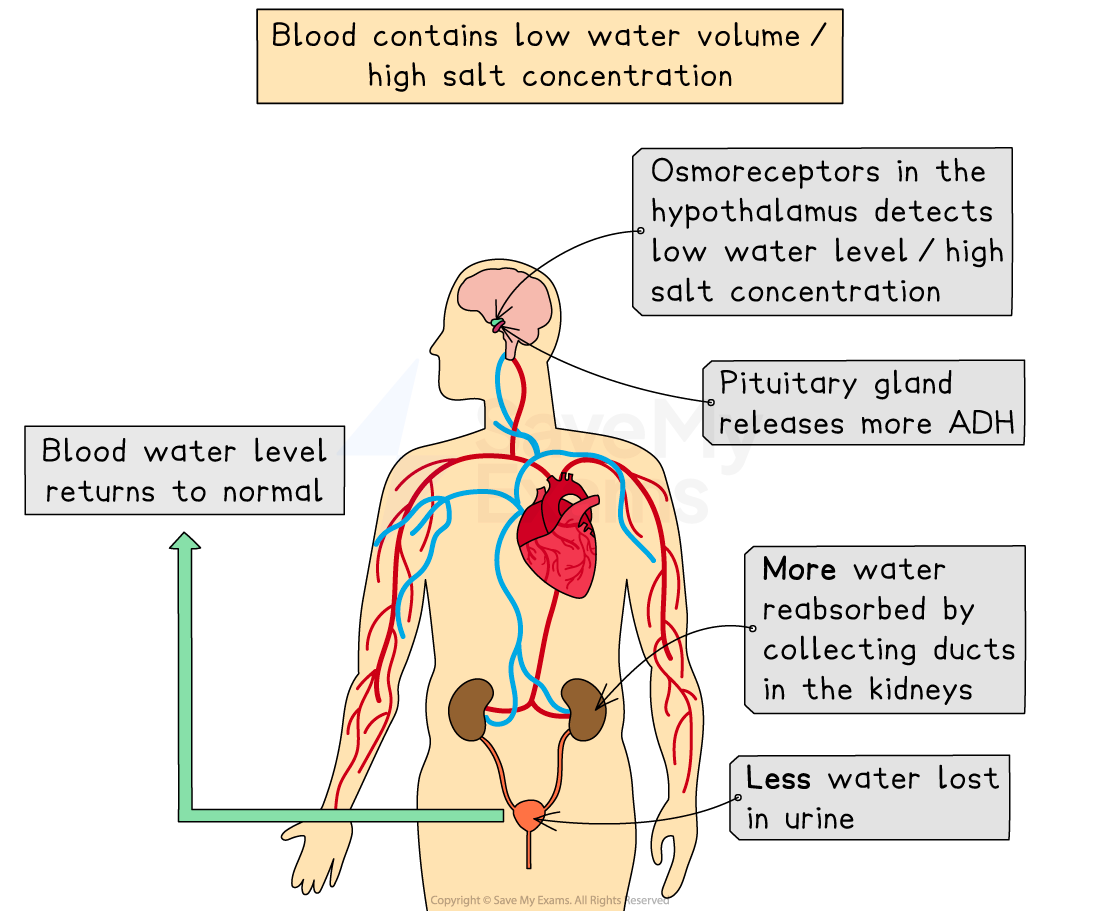
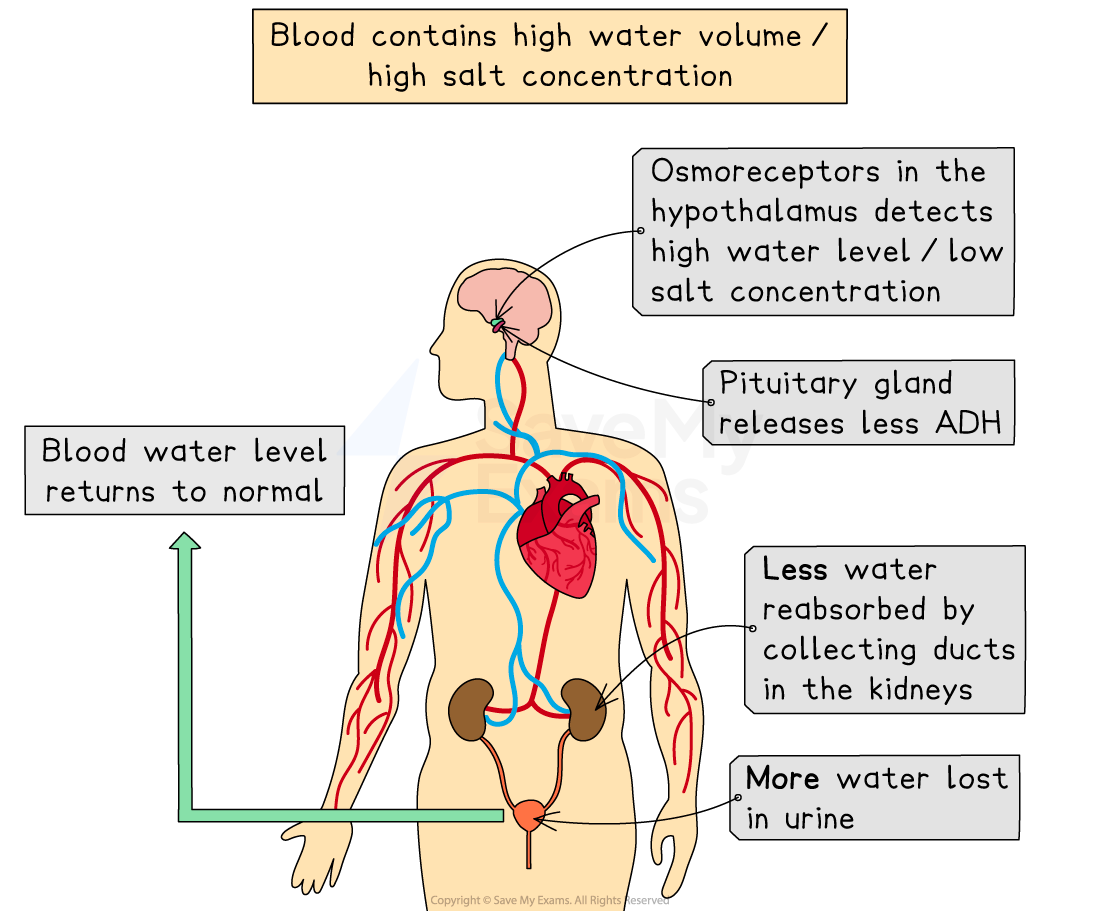
ADH is produced by the pituitary gland and levels of ADH in the blood affect how permeable to water the collecting ducts of nephrons in the kidneys are
Exam Hint You must remember the key phrase "ADH increases the permeability of the collecting duct to water" for your exams. Mark schemes will expect you to use this exact terminology.
Remember that blood with a low water level will have a high salt (or solute) concentration and blood with a high water level will have a low salt (or solute) concentration. Technically it's better to refer to "water potential" rather than "water level".
The Composition of Urine
Spec point —
3.29B· understand that urine contains water, urea and ions
-
Urine produced by the kidneys contains a mixture of
- urea
- **excess ions **
- excess water
-
The** colour and quantity** of urine produced in the body can change quickly
- Large quantities of urine are usually pale yellow in colour because it contains a lot of water and so the urea is less concentrated
- Small quantities of urine are usually darker yellow / orange in colour because it contains little water and so the urea is more concentrated
-
There are various reasons why the concentration of urine will change, including:
- Water intake - the more fluids drunk, the more water will be removed from the body and so a large quantity of pale yellow, dilute urine will be produced
- Temperature - the higher the temperature the more water is lost in sweat and so less will appear in the urine, meaning a smaller quantity of dark yellow, concentrated urine will be produced
- Exercise - the greater the level of exercise, the more water is lost in sweat and so less will appear in the urine, meaning a smaller quantity of dark yellow, concentrated urine will be produced
Was this revision note helpful?
Build on this topic