Human Reproductive Systems (Edexcel IGCSE Biology)
Exam board Pearson Edexcel · IGCSEUpdated 2026-07-02
The Male Reproductive System
Spec point —
4.8· understand how the structure of the male and female reproductive systems are adapted for their functions
-
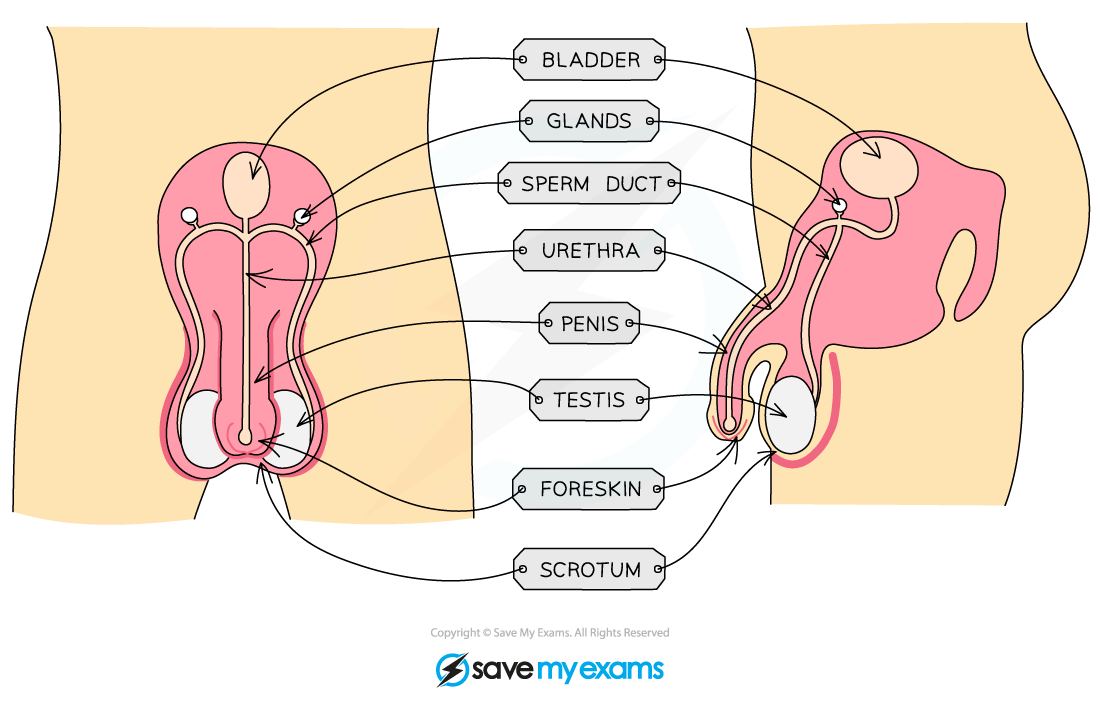
The male reproductive system consists of several key components:
- Sperm duct: Sperm passes **through the sperm duct **to be mixed with fluids produced by the glands before being passed into the urethra for ejaculation
- Urethra: Tube running down the centre of the penis that can carry urine or semen. A ring of muscle in the urethra prevents them from mixing
- Testis: Contained in a bag of skin (scrotum) and** produces sperm (male gamete) and testosterone** (hormone)
- Scrotum:**Sac supporting the testes **outside the body to ensure sperm are kept at a temperature slightly lower than body temperature
- Penis: Passes** urine** out of the body from the bladder and allows semen to pass into the vagina during sexual intercourse
Diagram of the male reproductive system
The Female Reproductive System
Spec point —
4.8· understand how the structure of the male and female reproductive systems are adapted for their functions
-
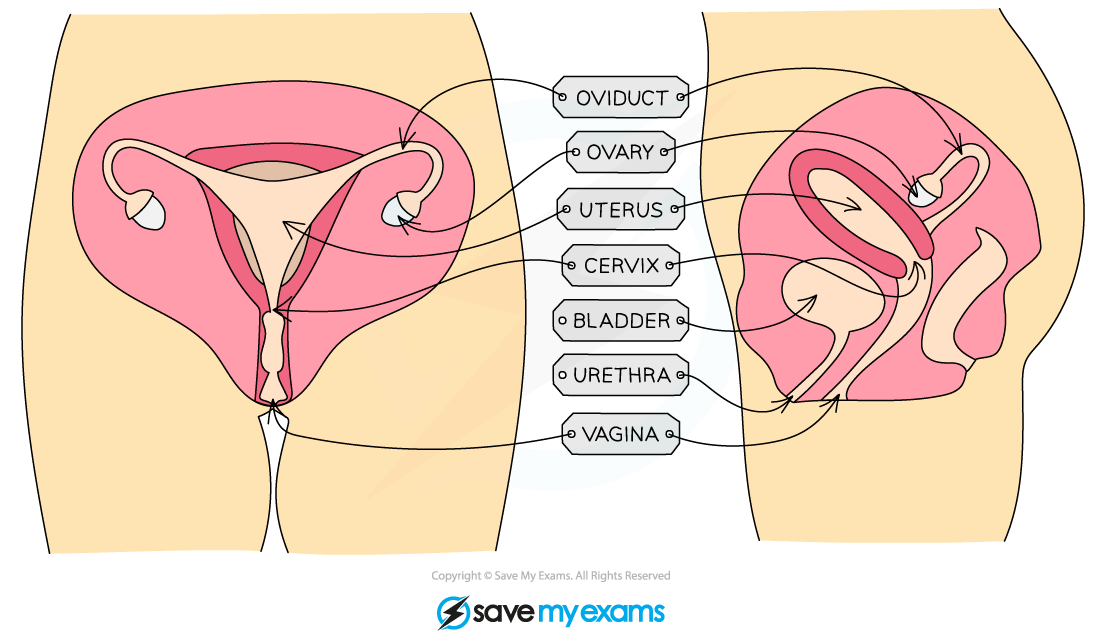
The female reproductive system consists of several key components:
- Oviducts: Connects ovary to the uterus, lined with ciliated cells to push released ovum, fertilisation occurs here
- Ovaries: Contains ova (female gametes) that mature and develop when hormones are released
- Uterus: Muscular sac with soft lining where embryo implants to develop into foetus
- Cervix: Ring of muscle at the lower end of the uterus to keep the developing foetus in place during pregnancy
- Vagina: Muscular tube leading to inside of woman's body, where male's penis enters and sperm are deposited during intercourse
Diagram of the female reproductive system
Was this revision note helpful?
Build on this topic