Biodiversity (Edexcel IGCSE Biology)
Exam board Pearson Edexcel · IGCSEUpdated 2026-07-02
Spec point —
5.3B· understand the term biodiversity
Biodiversity
- Biodiversity is defined as
the range and variety of different species of organisms on Earth, or within an ecosystem
-
Biodiversity considers not only the species richness but the variation within each species, its distribution and population size
- E.g. a high biodiversity would be found in an environment with lots of different species which show a lot of variation and are living in , all evenly distributed across the study area
-
Many human activities are reducing biodiversity in individual ecosystems and on a global level
- E.g. waste production, deforestation and global warming
The importance of biodiversity
-
Different species depend on each other for:
- Food
- Shelter (eg. birds nesting in trees)
- Maintenance of the physical environment (eg. tree roots provide stability for soils, ensuring they do not get washed away. This in turn provides a stable habitat for other plant species)
-
High biodiversity ensures the stability of ecosystems by reducing the dependence of one species on another for these three things
-
Populations with high levels of diversity are also more likely to be resilient to sudden environmental impacts or disease
-
Consider the food web below:
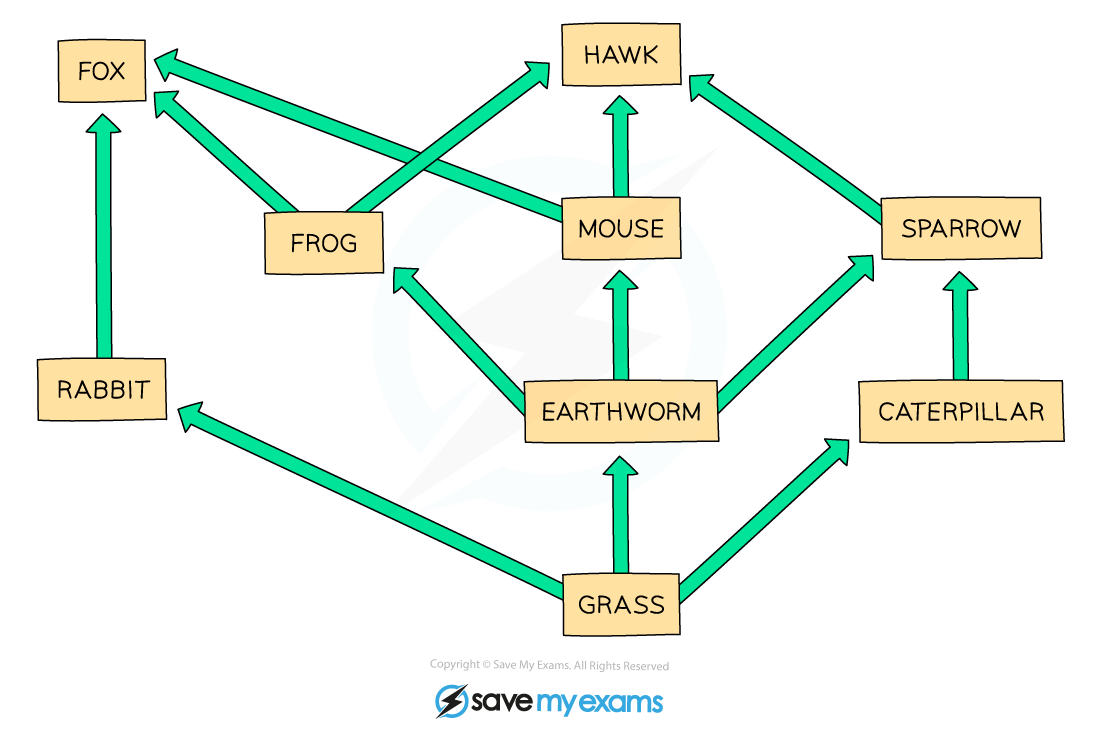
- If the mouse population was suddenly wiped out, the fox and the hawk populations might decrease but would not be wiped out as mice are not their only food source
- This example ecosystem has sufficient biodiversity to support the fox and hawk populations
- The fox population can still depend on the rabbit and frog populations for food
- The hawk population can still depend on the frog and sparrow populations for food
Was this revision note helpful?