Asexual Plant Reproduction (Edexcel IGCSE Biology)
Asexual Reproduction in Plants
Spec point —
4.7· understand that plants can reproduce asexually by natural methods (illustrated by runners) and by artificial methods (illustrated by cuttings)
-
Plants can reproduce asexually as well as sexually
- Asexual reproduction only involves one parent and all offspring produced are exact genetic copies of each other and the parent plant – they are clones (genetically identical)
-
Asexual reproduction in plants can occur naturally or humans can control asexual reproduction in plants artificially for their own uses
Natural asexual reproduction in plants – runners
-
Some plants grow side branches, known as runners, that have small plantlets at their ends
- Runners are horizontal stems that grow sideways out of the parent plant
-
Once they touch the soil, these plantlets will grow roots and the new plantlets will grow and become independent from the parent plant
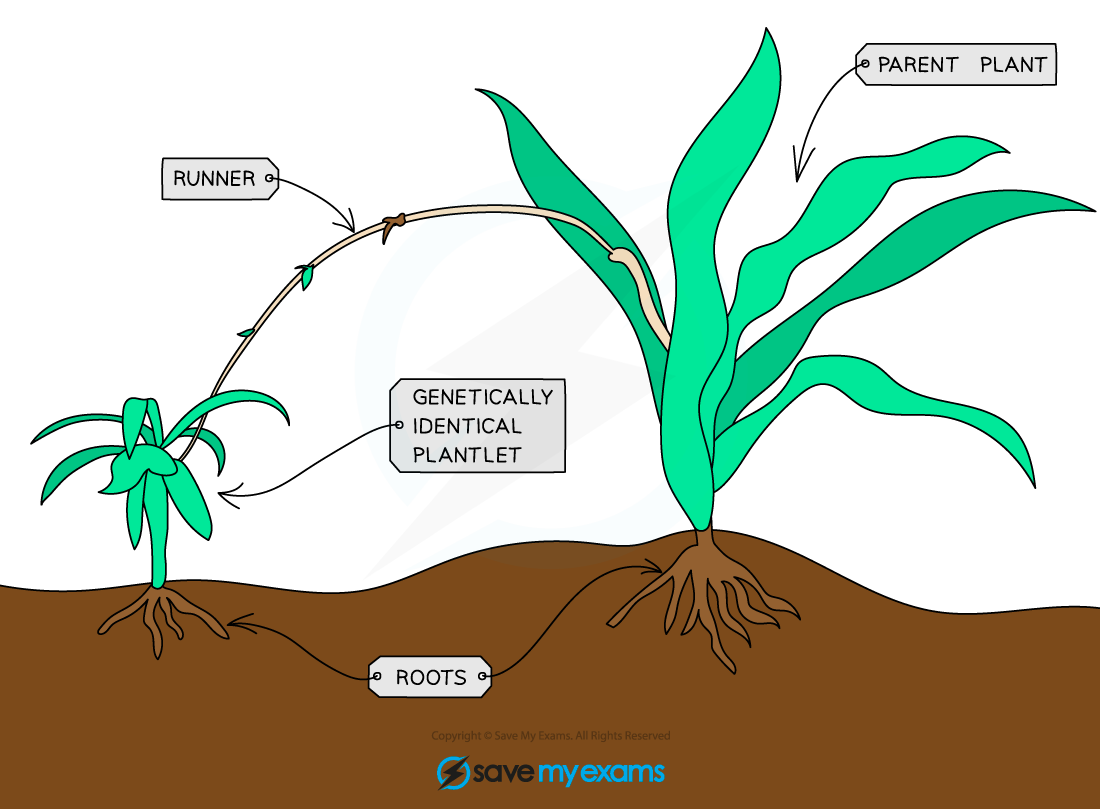
Some plants grow side shoots called runners that contain tiny plantlets on them. These will grow roots and develop into separate plants.
Artificial asexual reproduction in plants – cuttings
-
A simple method to clone plants (mainly used by gardeners) is by taking cuttings
- This is an artificial method of asexual reproduction
-
The method for taking cuttings is as follows:
- Gardeners take cuttings from good parent plants (i.e. those that are healthiest and best-looking)
- A section of the parent plant with a new bud is cut off
- This cutting can either be placed into water until new roots grow or can sometimes be placed directly into soil
- Sometimes, the stem of the cutting may first be dipped into 'rooting powder', which contains plant growth regulators (rooting hormones) that encourage new root growth
- These cuttings are then planted and eventually grow into adult plants that are genetically identical to the original plant
-
Plants cloned by taking cuttings can be produced cheaply and quickly
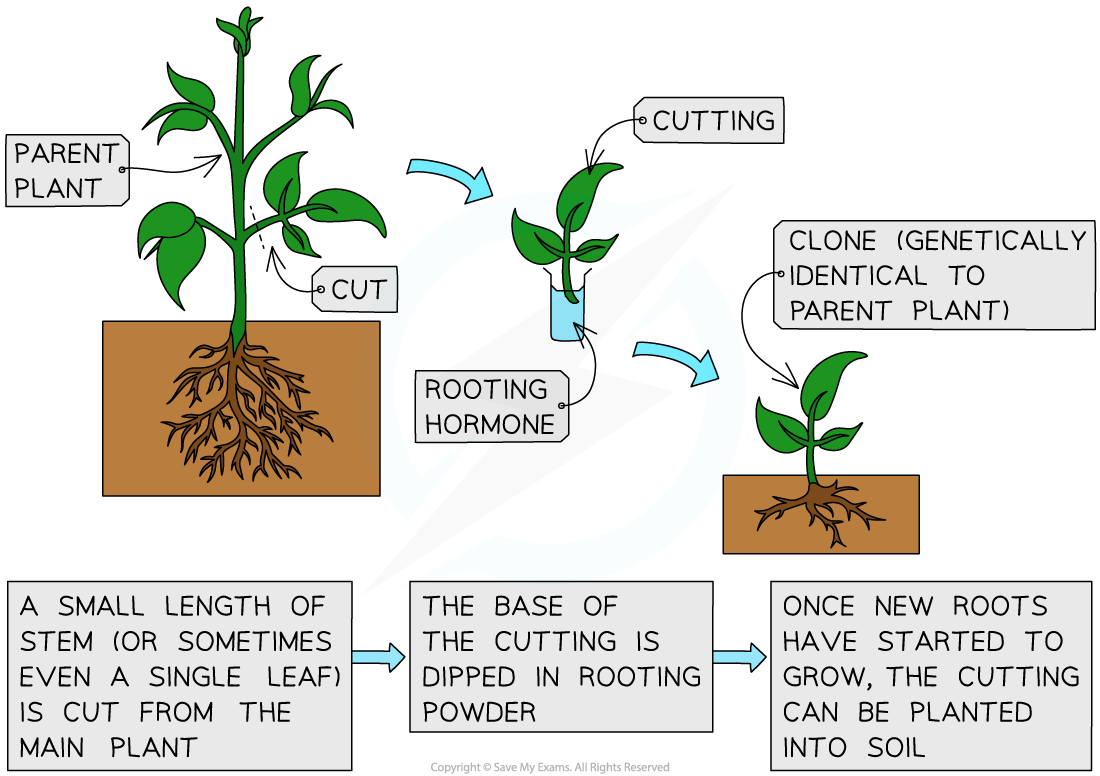
Artificial asexual reproduction in plants – cuttings
Was this revision note helpful?
Build on this topic