White Blood Cells & Immunity (Edexcel IGCSE Biology)
White Blood Cells
Spec point —
3.12· understand how the immune system responds to disease using white blood cells, illustrated by phagocytes ingesting pathogens and lymphocytes releasing antibodies specific to the pathogen
-
White blood cells are part of the body’s immune system
-
These specialised cells defend against pathogenic microorganisms
-
There are two main types of white blood cell:
- Phagocytes
- Lymphocytes
Phagocytes
-
Phagocytes carry out phagocytosis by ingesting pathogens
- Phagocytes have a sensitive cell surface membrane that can detect chemicals produced by pathogens
- Once they encounter a pathogen, phagocytes will engulf it and release digestive enzymes to digest it
- This is a non-specific immune response
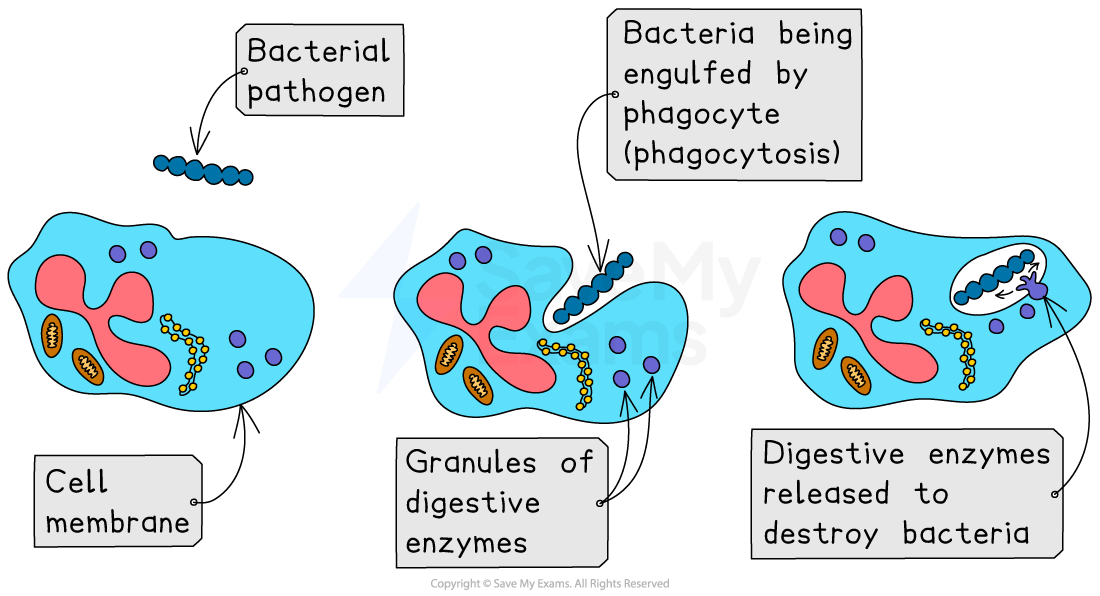
The process of phagocytosis
Lymphocytes
-
Lymphocytes produce antibodies
-
Antibodies are proteins with a shape that is specific (complementary) to the antigens on the surface of the pathogen
- An antigen is a marker on the surface of a cell or pathogen that the body sees as foreign and causes the immune system to respond
-
Lymphocytes provide a specific immune response as the antibodies produced will only fit one type of antigen
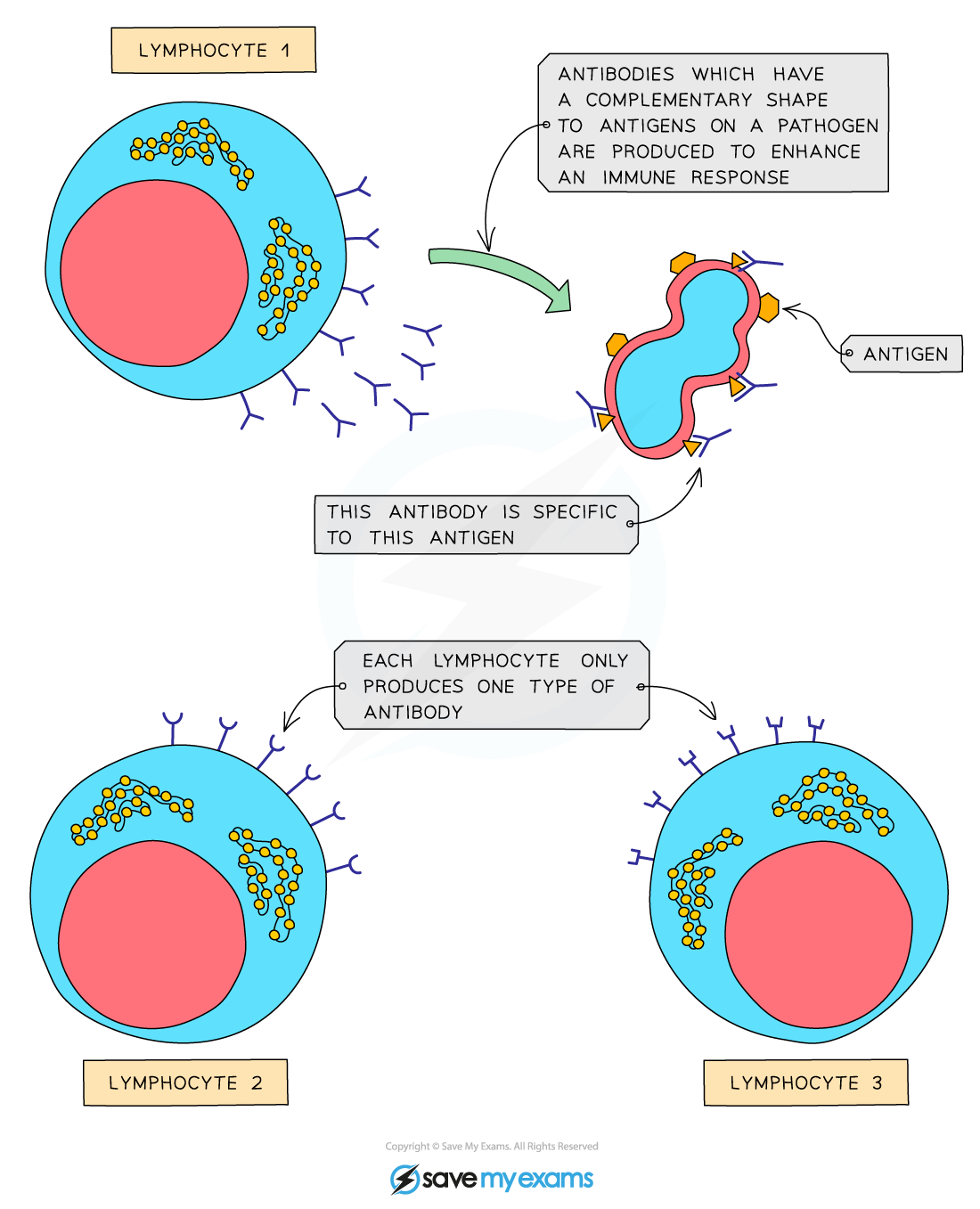
The lymphocytes produce antibodies that are specific to the antigen on the pathogen
Immunity
Spec point —
3.12· understand how the immune system responds to disease using white blood cells, illustrated by phagocytes ingesting pathogens and lymphocytes releasing antibodies specific to the pathogen
-
The body's immune system is highly complex, with white blood cells being the main component
-
Once a pathogen has entered the body the role of the immune system is to prevent the infectious organism from reproducing and to destroy it
-
An organism has immunity when its immune system can respond quickly if the pathogen enters the body. This protection can come from having enough antibodies already present or from memory cells that can produce antibodies rapidly when needed
- Memory cells are a type of lymphocyte that remains in the body for a long time
-
As a result, someone infected with a pathogen that they have immunity to does not suffer from the disease the pathogen can cause or its symptoms
Response to infection
-
The stages of infection and the subsequent immune response are as follows:
- The pathogen enters the bloodstream and multiplies
- A release of toxins (in the case of bacteria) and infection of body cells causes symptoms in the patient
- Phagocytes that encounter the pathogen recognise that it is an invading pathogen and engulf and digest (non-specific response)
- Eventually, the pathogen encounters a lymphocyte which recognises its antigens
- The lymphocyte starts to produce specific antibodies to combat that particular pathogen
- The lymphocyte also clones itself to produce lots of lymphocytes (all producing the specific antibody required)
- Antibodies support the destruction of pathogens by recognising and binding to them, marking them for destruction
- Phagocytes engulf and digest the destroyed pathogens
Exam Hint Make sure you know the difference between antigen and antibody:
- An antigen is a molecule found on the surface of a cell
- An antibody is a protein made by lymphocytes that is complementary to an antigen and, when attached, clumps them together and signals the cells they are on for destruction
Was this revision note helpful?
Build on this topic