Nervous & Hormonal Control (Edexcel IGCSE Biology)
The Human Nervous System & Endocrine System
Spec point —
3.36· describe how nervous and hormonal communication control responses and understand the differences between the two systems
-
There are two different control systems in humans that work together to help us respond to stimuli. These are:
- The nervous system
- The hormonal system (also known as the endocrine system)
-
Changes in our external environment or in the internal environment of our bodies act as stimuli
-
The nervous and hormonal systems coordinate a suitable response to these stimuli
-
This allows us to make sense of our surroundings, to respond to the changes that occur in our surroundings and coordinate and regulate body functions
The nervous system
- Information is sent through the nervous system as electrical impulses – these are electrical signals that pass along nerve cells known as neurones
- These impulses travel along neurones at very high speeds (up to 100 metres per second)
- This allows rapid responses to stimuli (e.g. the withdrawal reflex that causes you to move your hand away extremely quickly when it touches a flame)
- The nervous system coordinates the activities of sensory receptors (e.g. those in the eye), decision-making centres in the central nervous system, and effectors such as muscles and glands
- The nervous system is used to control functions that need instant (or very rapid) responses
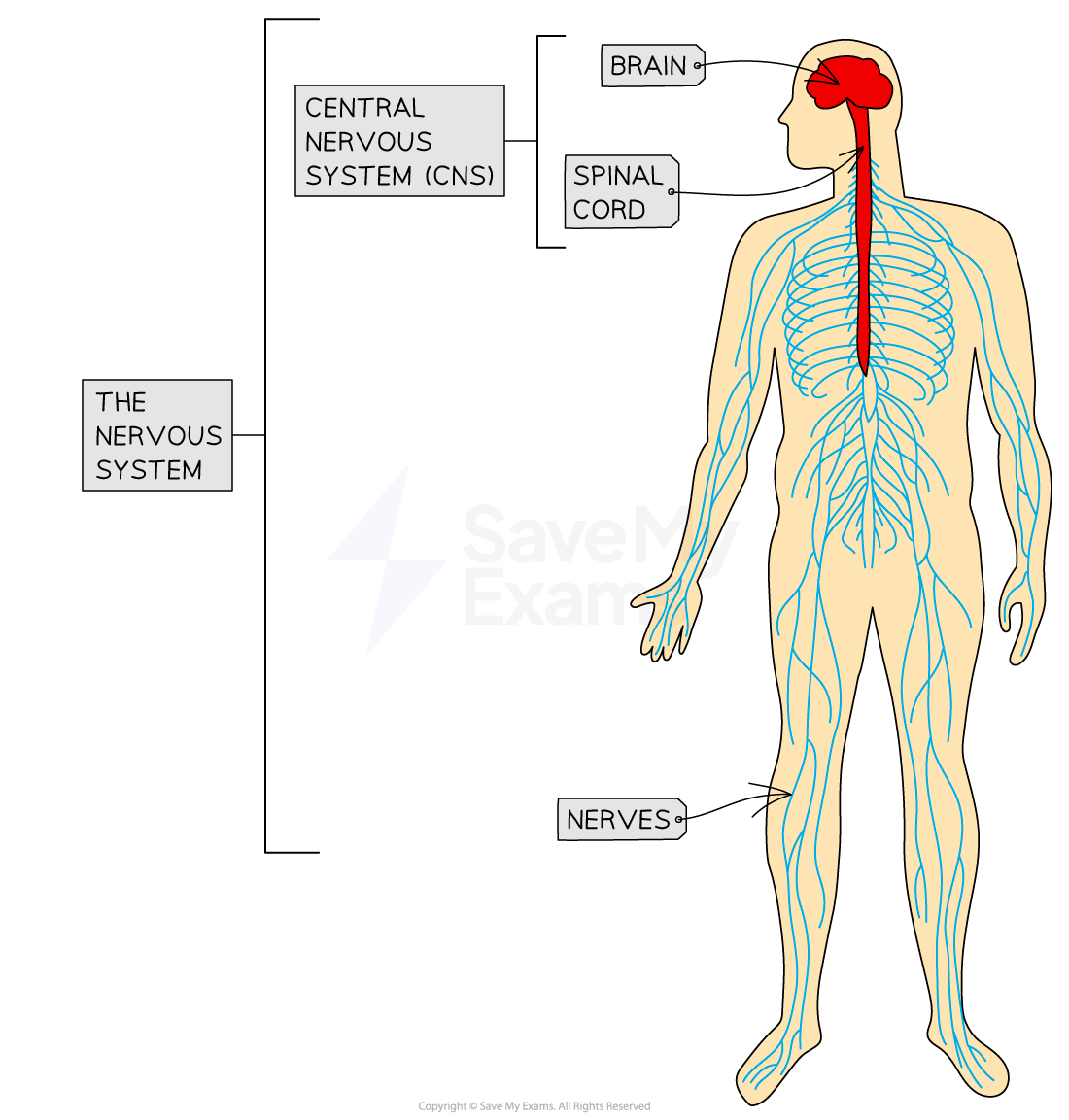
The human nervous system
The endocrine system
-
Information is sent through the endocrine (hormonal) system as chemical substances known as hormones
-
Hormones are carried by the blood and can therefore circulate around the whole body
-
Hormones transmit information from one part of the organism to another and bring about a change (they provide a signal that triggers a response)
-
Hormones alter the activity of one or more specific target organs
-
Hormones are used to control functions that do not need instant responses
-
Hormones are produced by endocrine glands
- A gland is a group of cells that produces and releases one or more substances (a process known as secretion)
-
The endocrine glands that produce hormones in animals are known collectively as the endocrine system
A comparison of the nervous and endocrine systems table
| Nervous system | Endocrine system | |
|---|---|---|
| Made up of | Nerves (bundles of neurones), brain, spinal cord | Glands |
| Type of message | Electrical (impulse) | Chemical (hormone) |
| Transmission of message | Along neurones | Through the bloodstream (in plasma) |
| Speed of action | Very fast | Slower |
| Type of effect | Specific/localised (acts on specific cells) | Widespread (affects many cells/organs) |
| Duration of effect | Short (stops quickly) | Long (lasts until the hormone is broken down) |
Was this revision note helpful?
Build on this topic