Small Intestine: Structure & Adaptations (Edexcel IGCSE Biology)
Absorption of Food & Water
Spec point —
2.32· understand how the small intestine is adapted for absorption, including the structure of a villus
- Absorption is the **movement of small digested food molecules from the digestive system into the blood (glucose and amino acids) and lymph **(fatty acids and glycerol)
- Absorption of small soluble molecules occurs through diffusion and sometimes active transport
- Water is absorbed (by osmosis) primarily in the small intestine,**** but also in the large intestine
Adaptations of the Small Intestine
Spec point —
2.32· understand how the small intestine is adapted for absorption, including the structure of a villus
-
The small intestine is adapted for absorption as it is very long and has a highly folded surface with millions of villi (tiny, finger-like projections)
- These adaptations massively increase the surface area of the small intestine, allowing absorption to take place faster and more efficiently
-
Peristalsis helps by mixing together food and enzymes and by keeping things moving along the alimentary canal
The role of villi in the small intestine
-
Villi have several specific adaptations which allow for the rapid absorption of substances, such as:
-
A large surface area
- Microvilli on the surface of the villus further increase the surface available for absorption
-
A short diffusion distance
- The wall of a villus is only one cell thick
-
A steep concentration gradient
- The villi are well supplied with a network of blood capillaries that transport glucose and amino acids away from the small intestine in the blood
- A lacteal(lymph vessel) runs through the centre of the villus to transport fatty acids and glycerol away from the small intestine in the lymph
- Enzymes produced in the walls of the villi assist with chemical digestion
- The movement of villi helps to move food along and mix it with the enzymes present
-
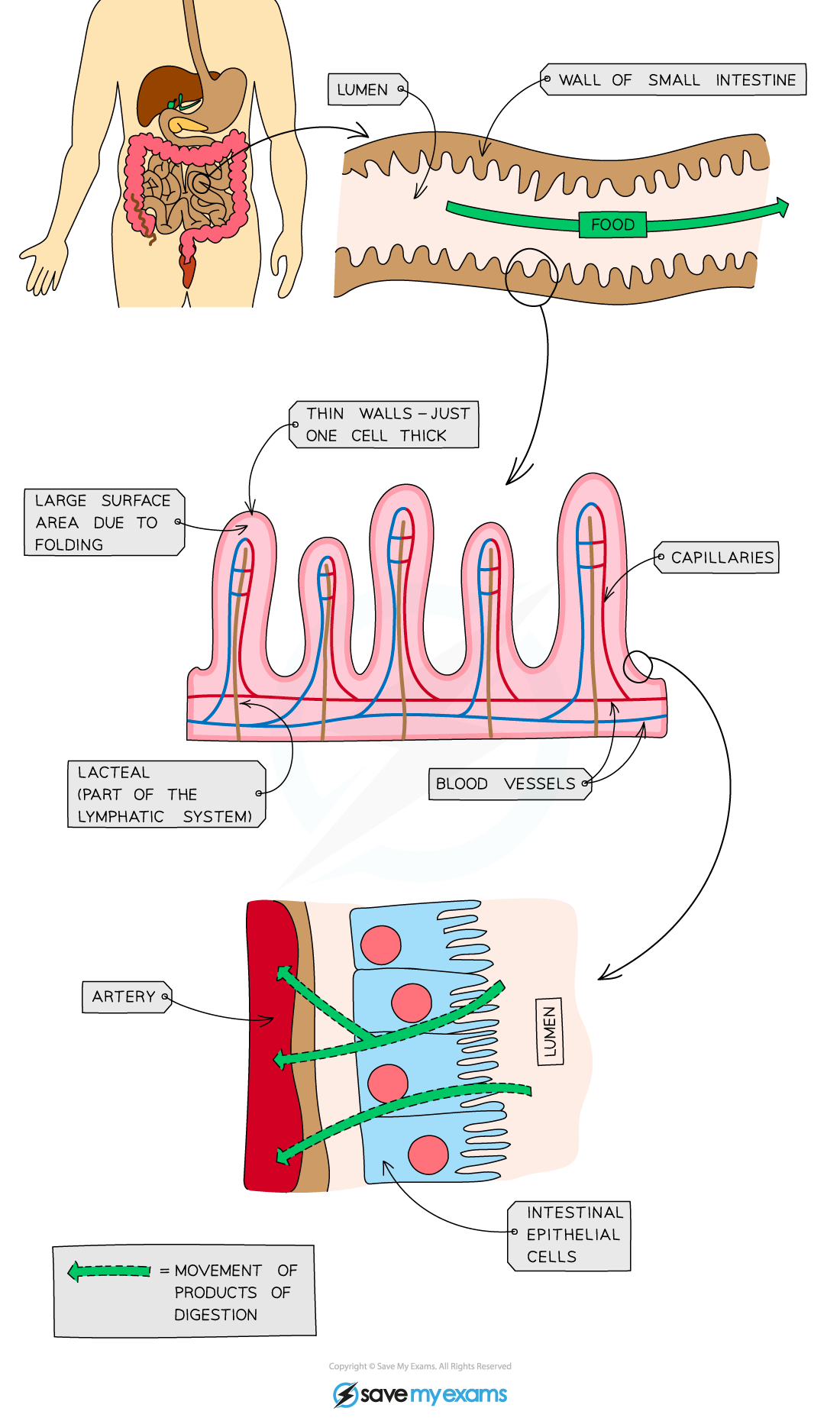
Adaptations of the small intestine
Exam Hint The way in which the structure of a villus is related to its function comes up frequently in exam questions so it is worth ensuring you have learned these adaptations and how they influence the rate of absorption.
Was this revision note helpful?
Build on this topic