The Blood (Edexcel IGCSE Biology)
Components of Blood
Spec point —
2.59· describe the composition of the blood: red blood cells, white blood cells, platelets and plasma
- Blood consists of red blood cells, white blood cells, platelets and plasma
- Over half of the volume of the blood is made up of plasma
- The majority of the other half is made up of red blood cells
- The remaining fraction consists of white blood cells and platelets
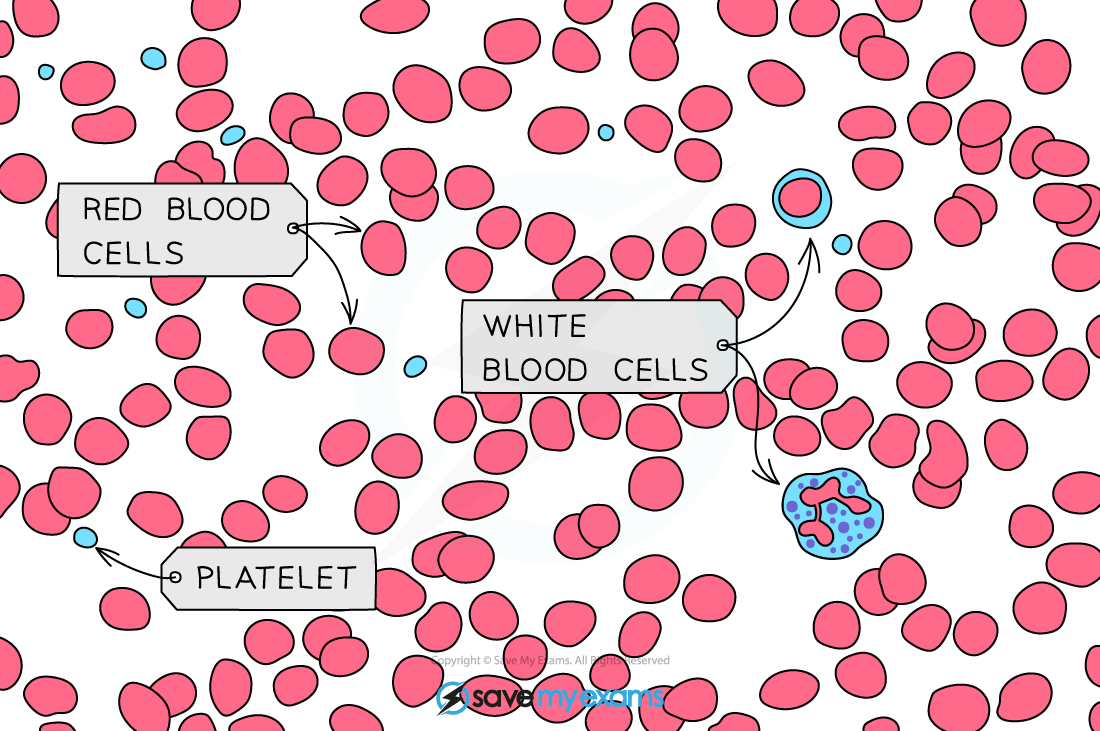
Blood micrograph
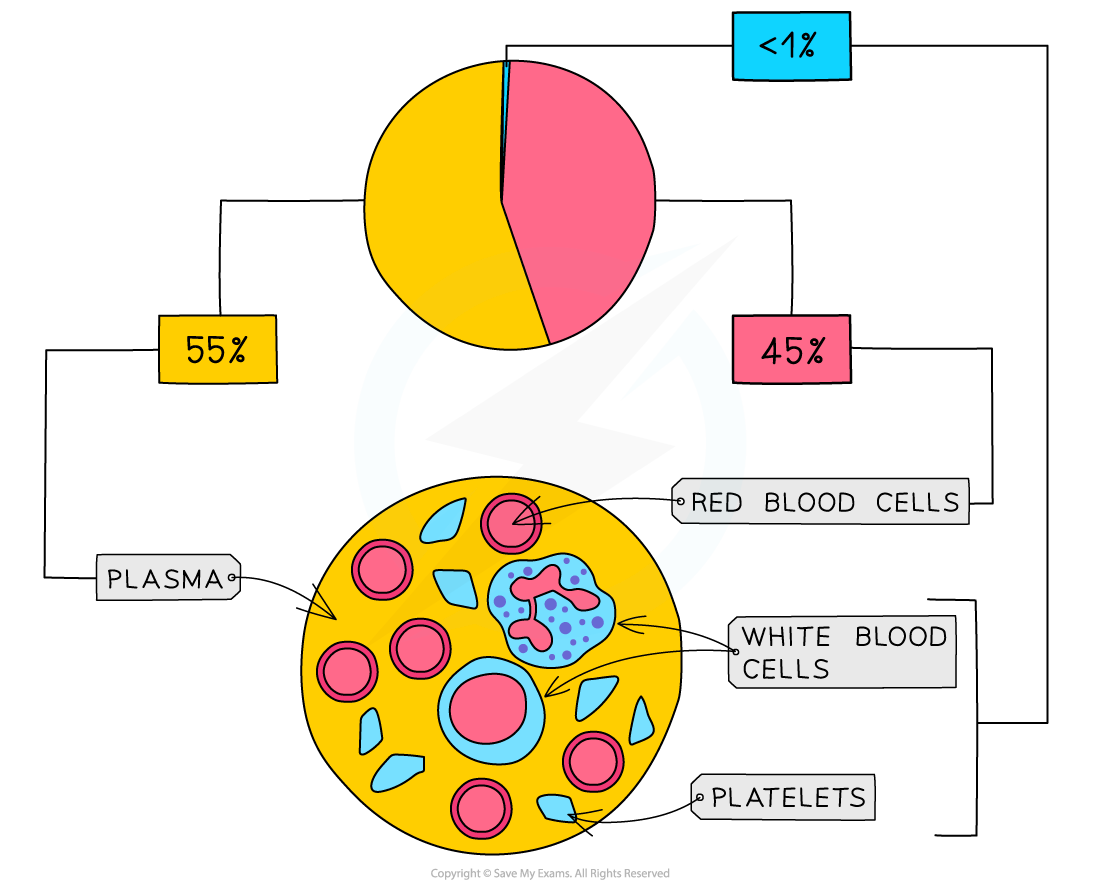
Composition of human blood
Components of the Blood Table
| Component | Structure |
|---|---|
| Red blood cells | Biconcave discs, no nucleus and contains haemoglobin |
| White blood cells | Large cells containing a large nucleus; different types have slightly different structures and functions |
| Platelets | Fragments of cells |
| Plasma | Clear, straw-coloured aqueous solution |
Plasma
Spec point —
2.60· understand the role of plasma in the transport of carbon dioxide, digested food, urea, hormones and heat energy
-
Plasma is a straw coloured liquid which the other components of the blood are suspended within
-
Plasma is important for the transport of many substances including:
- Carbon dioxide - the waste product of respiration, dissolved in the plasma and transported from respiring cells to the lungs
- Digested food and mineral ions - dissolved particles absorbed from the small intestine and delivered to requiring cells around the body
- Urea- urea is a waste substance dissolved in the plasma and transported to the kidneys
- Hormones - chemical messengers released into the blood from the endocrine organs (glands) and delivered to target tissues/organs of the body
- Heat energy - heat energy (created in respiration) is transferred to cooler parts of the body or to the skin where heat can be lost
Red Blood Cells
Spec point —
2.61· understand how adaptations of red blood cells make them suitable for the transport of oxygen, including shape, the absence of a nucleus and the presence of haemoglobin
-
Red blood cells are specialised cells which carry oxygen to respiring cells
-
They are adapted for this function in three key ways:
- Red blood cells are packed with haemoglobin, a protein that binds to oxygen to form oxyhaemoglobin
- They have no nucleus which allows more space for haemoglobin to be packed in
- Red blood cells have a biconcave disc shape, which means they are thinner in the middle than at the edges. This shape gives them a larger surface area to volume ratio, allowing oxygen to diffuse in and out quickly and efficiently.
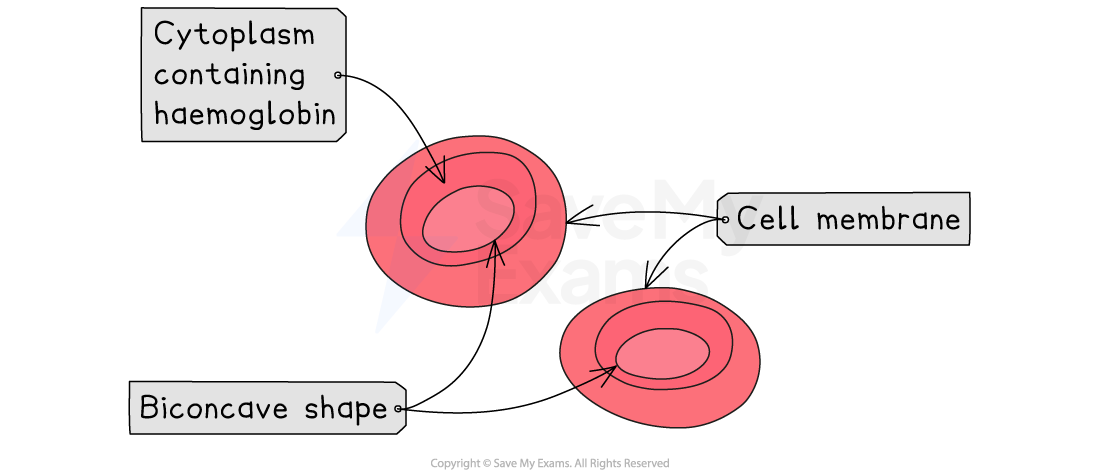
Red blood cells
Was this revision note helpful?
Build on this topic