Mitosis (Edexcel IGCSE Biology)
Spec point —
3.28· understand how division of a diploid cell by mitosis produces two cells that contain identical sets of chromosomes
Mitosis
-
Mitosis is defined as nuclear division giving rise to genetically identical cells
-
Mitosis is used for:
- growth
- repair of damaged tissues
- replacement of cells
- asexual reproduction
-
Most body cells have two copies of each chromosome
-
We describe these cells as diploid
-
When cells divide their chromosomes double beforehand (also known as duplication)
-
This ensures that when the cell splits in two, each new cell still has two copies of each chromosome (is still diploid)
The process of mitosis
- Just before mitosis, each chromosome in the nucleus copies itself exactly (forms X-shaped chromosomes)
- Chromosomes then line up along the centre of the cell where cell fibres pull them apart
- The cell divides into two; each new cell has a copy of each of the chromosomes
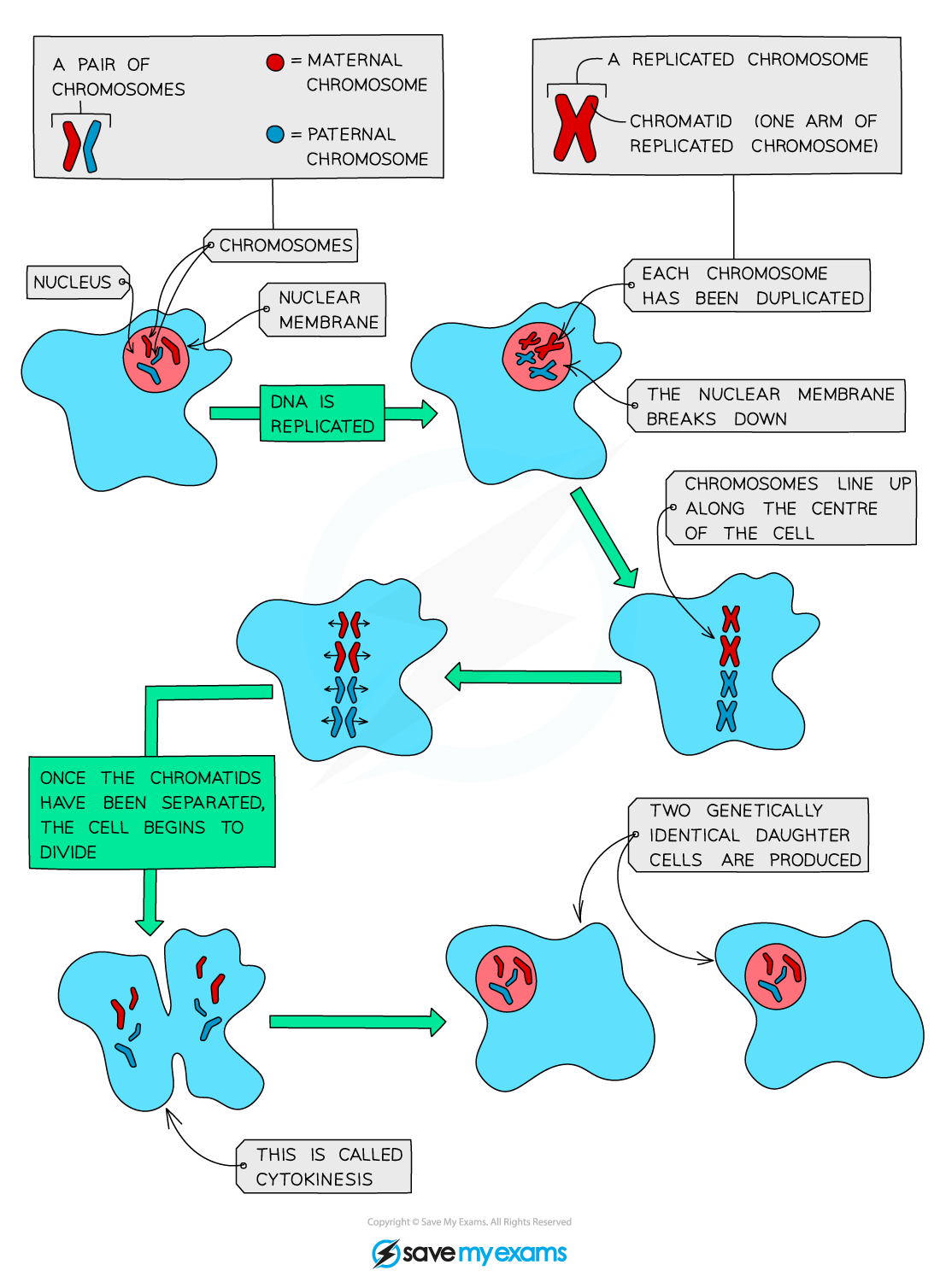
The process of cell division by mitosis
Importance of Mitosis
Spec point —
3.29· understand that mitosis occurs during growth, repair, cloning and asexual reproduction
-
All cells in the body (excluding gametes) are produced by mitosis of the zygote
-
Mitosis occurs during:
- Growth: mitosis produces new cells
- Repair: to replace damaged or dead cells
- Asexual reproduction: mitosis produces offspring that are genetically identical to the parent
-
Mitosis is important for replacing cells e.g, skin cells, and red blood cells, and for allowing growth (production of new cells e.g. when a zygote divides to form an embryo)
Was this revision note helpful?
Build on this topic