Role of the Intercostal Muscles & Diaphragm (Edexcel IGCSE Biology)
Intercostal Muscles & Diaphragm
Spec point —
2.47· understand the role of the intercostal muscles and the diaphragm in ventilation
-
Muscles are only able to pull on bones, not push on them
-
This means that two sets of intercostal muscles work antagonistically to facilitate breathing
- External intercostal muscles contract to pull the rib cage up during inhalation
- Internal intercostal muscles contract to pull the ribcage down during forced exhalation
-
The diaphragm is a thin sheet of muscle that separates the chest cavity from the abdomen and also facilitates in the breathing process
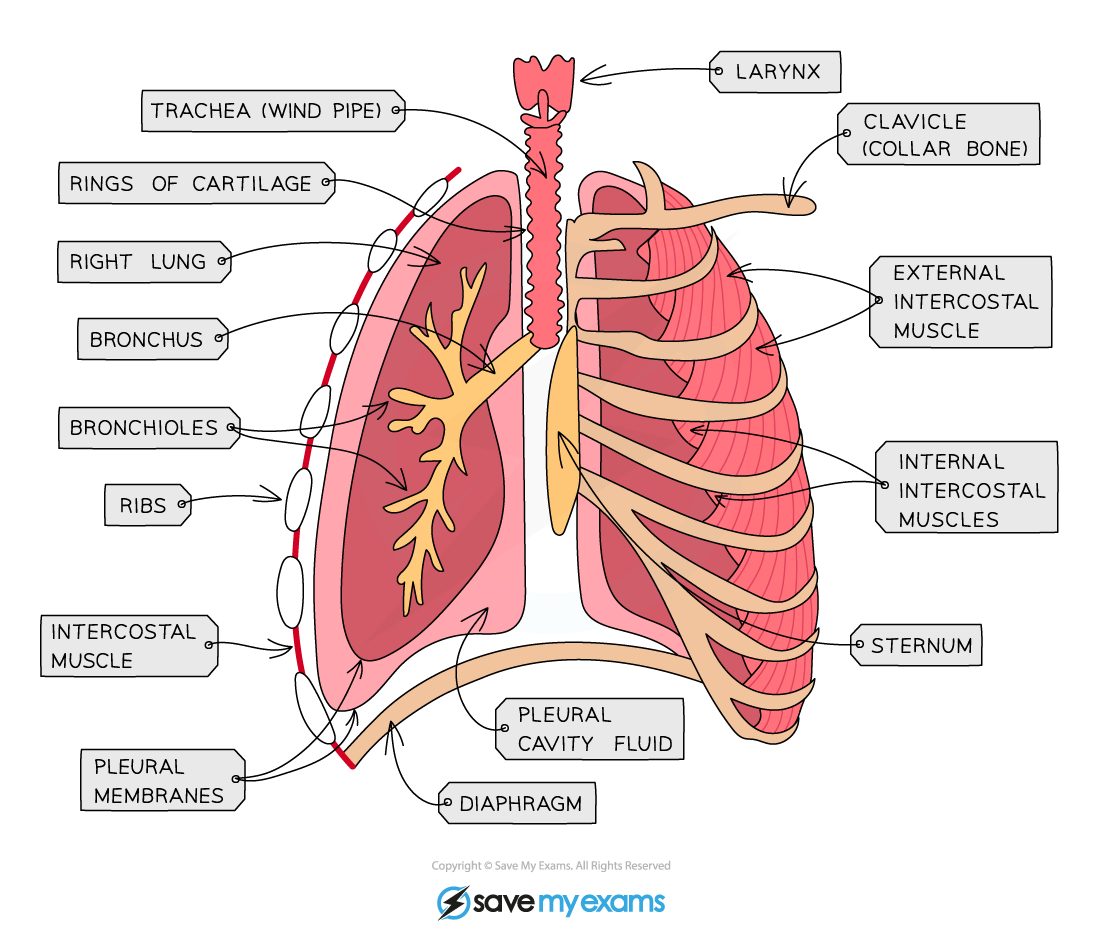
There are two sets of intercostal muscles: the external, on the outside of the rib cage, and the internal, on the inside of the rib cage. The diaphragm also works with these to facilitate breathing.
Ventilation
-
Inhalation (breathing air in)
- The diaphragm contracts and flattens
- The **external intercostal muscles contract **to pull the ribs up and out
- This increases the volume of the chest cavity, or thorax
- There is a decrease in air pressure inside the lungs relative to outside the body
- Air is** drawn in**
-
Normal exhalation (breathing air out)
- The diaphragm relaxes and moves upwards back into its domed shape
- The external set of intercostal muscles relax so the ribs drop down and inwards
- This decreases the volume of the chest cavity
- There is an increase in air pressure inside the lungs relative to outside the body
- Air is forced out
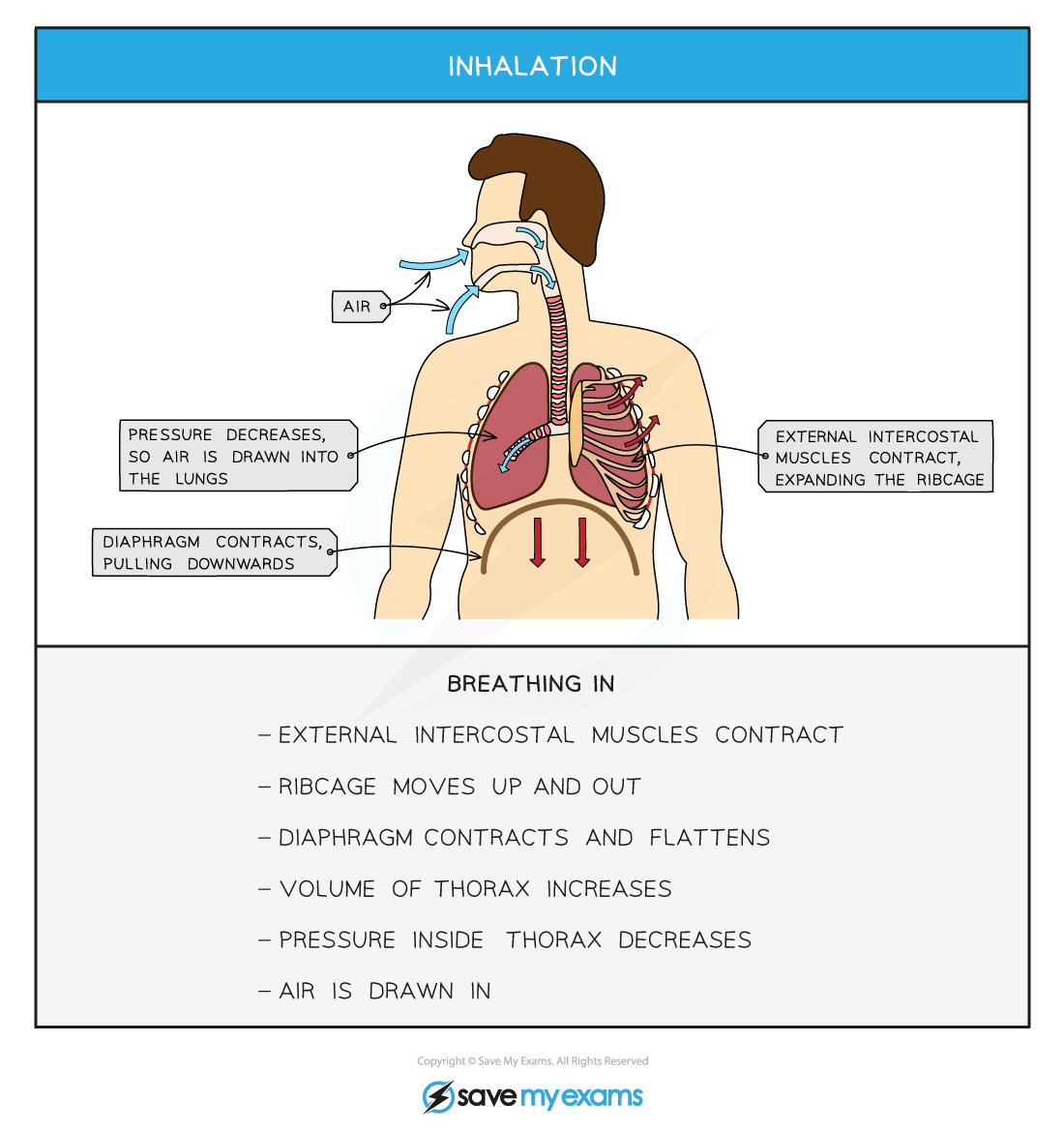
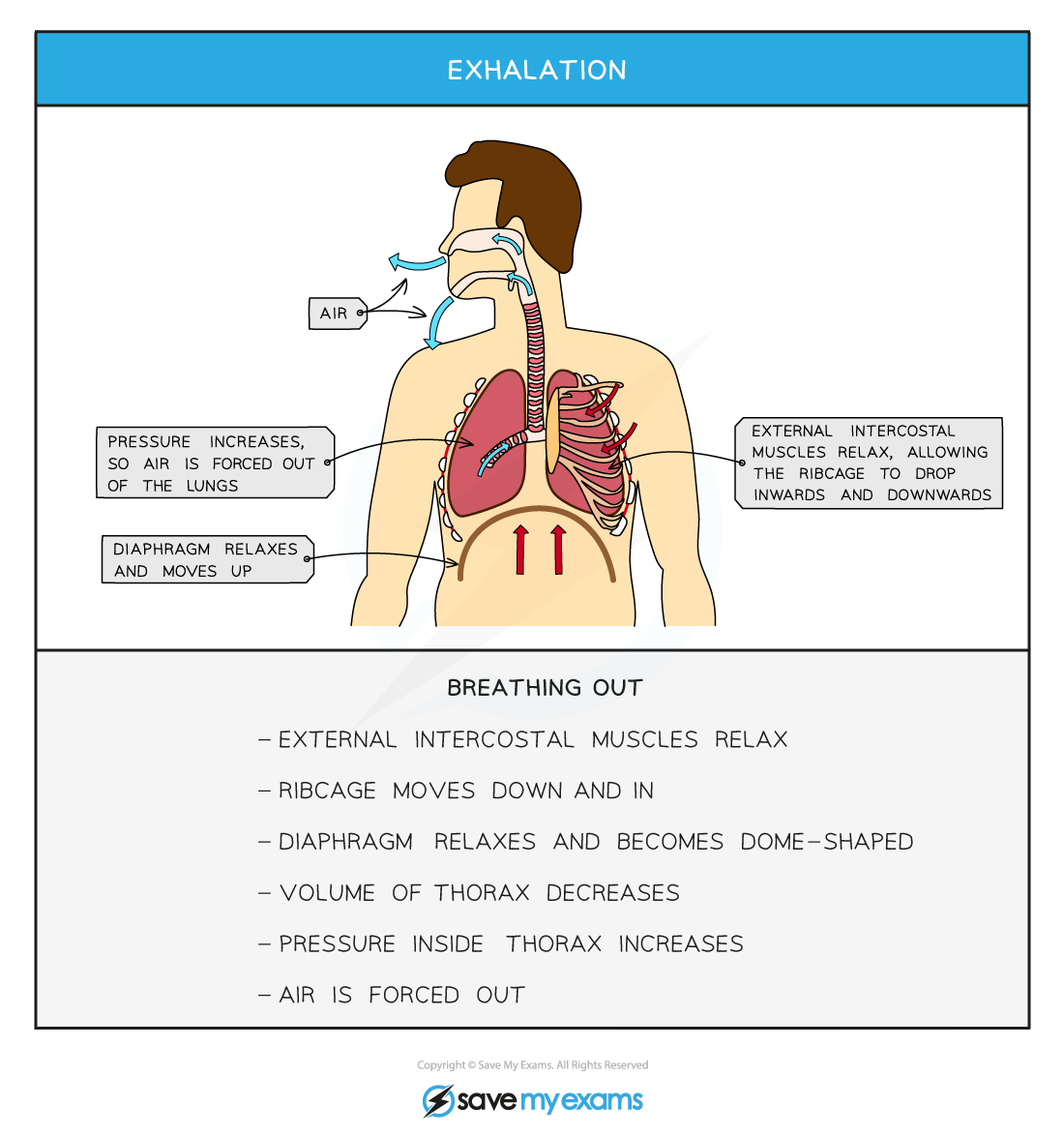
Changes in the thorax during ventilation
Forced exhalation
-
The external and internal intercostal muscles work as antagonistic pairs
-
When we need to increase the rate of gas exchange, e.g. during strenuous activity, the internal intercostal muscles will also work to pull the ribs down and in; this decreases the volume of the thorax further, forcing air out more quickly – this is called forced exhalation
- There is a greater need to rid the body of increased levels of carbon dioxide produced during strenuous activity
-
This allows a greater volume of gases to be exchanged
Exam Hint You may see the terms inhalation/inspiration (breathing in), and exhalation/expiration (breathing out). Both sets of terms mean exactly the same thing, so don’t let them confuse you!
The sequence of events during ventilation is a common exam question and you should be able to explain in detail what is happening to the external and internal intercostal muscles, the rib cage, the diaphragm, the volume and the pressure-volume of the lungs when breathing in and out. Remember, if you learn one, the other is almost exactly the opposite.
Was this revision note helpful?
Build on this topic