Importance of Cell Differentiation (Edexcel IGCSE Biology)
Cell Differentiation & Specialised Cells
Spec point —
2.5B· explain the importance of cell differentiation in the development of specialised cells
-
The structural differences between different types of cells enable them to perform specific functions within an organism
-
Cell differentiation is an important process by which a cell changes to become specialised
- Cell differentiation is how cells develop the structure and characteristics needed to be able to carry out their functions
- Specialised cells are those that have developed certain characteristics that allow them to perform particular functions. Developing these characteristics is controlled by genes in the nucleus
-
As an organism develops, cells differentiate to form different types of cells
-
When a cell differentiates, it develops a structure and composition of subcellular structures which enables it to carry out a certain function
- E.g. to form a nerve cell the cytoplasm and cell membrane of an undifferentiated cell must elongate to form connections over large distances
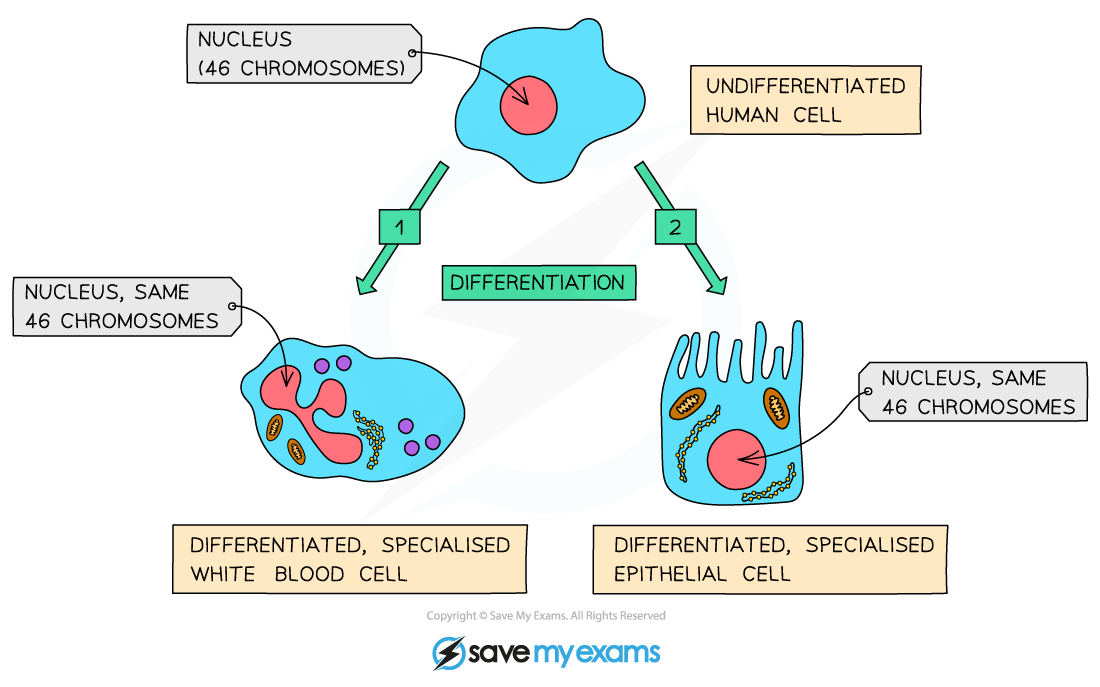
When a cell differentiates, it develops a structure and composition that enables it to carry out a particular function.
Differentiation and development
-
Stem cells are undifferentiated (unspecialised) cells that can divide by mitosis to form more stem cells or cells that go on to differentiate to become specialised cells
-
As a multicellular organism develops, its cells differentiate to form specialised cells
- In animals, most cells differentiate at an early stage of development
- As a result, animal cells lose their ability to differentiate early in the life of the organism
-
Specific cells in various locations throughout the body of an animal retain the ability to differentiate throughout the life of the animal
- These undifferentiated cells are called adult stem cells and they are mainly involved in replacing and repairing cells, such as blood or skin cells
-
Plants differ from animals in that many types of plant cells retain the ability to fully differentiate throughout the life of a plant, not just in the early stages of development
Examples of specialised cells
Ciliated cell
- Ciliated cells move mucus in the trachea and bronchi
- They have hair-like extensions called cilia, which beat to transport mucus and trapped particles toward the throat
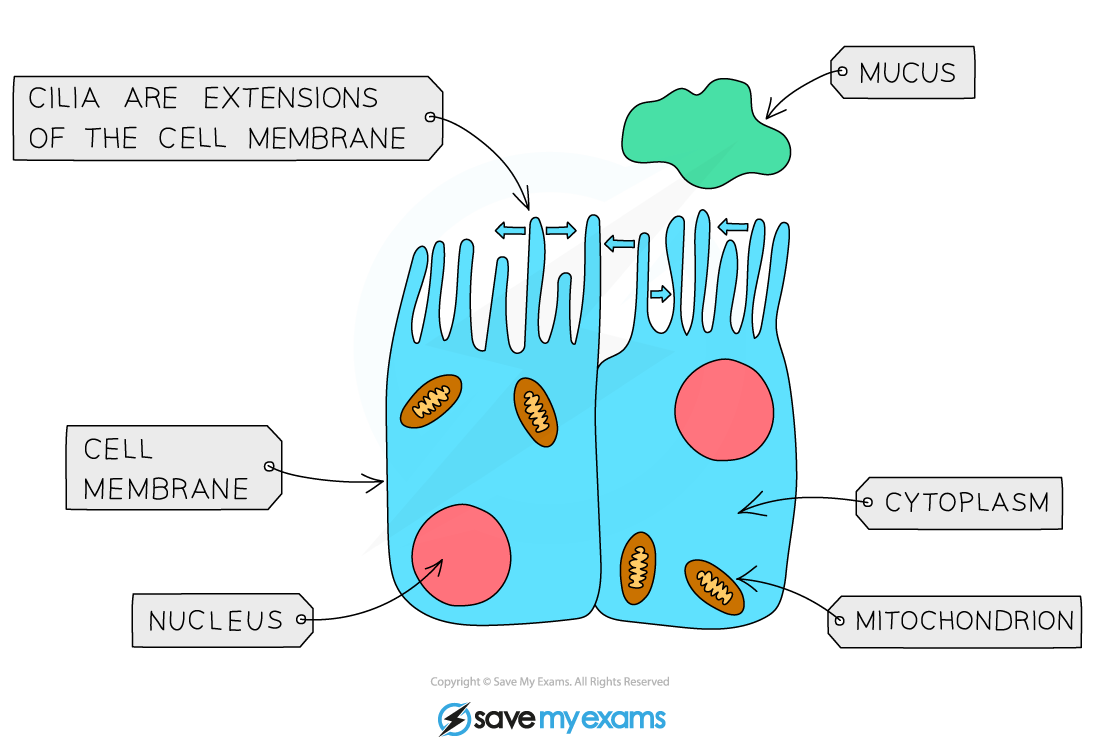
Ciliated epithelial cells
Nerve cell
- Nerve cells conduct impulses and are long, allowing communication between different parts of the body and the central nervous system
- Their axons are covered in a fatty sheath that insulates and speeds up nerve transmission
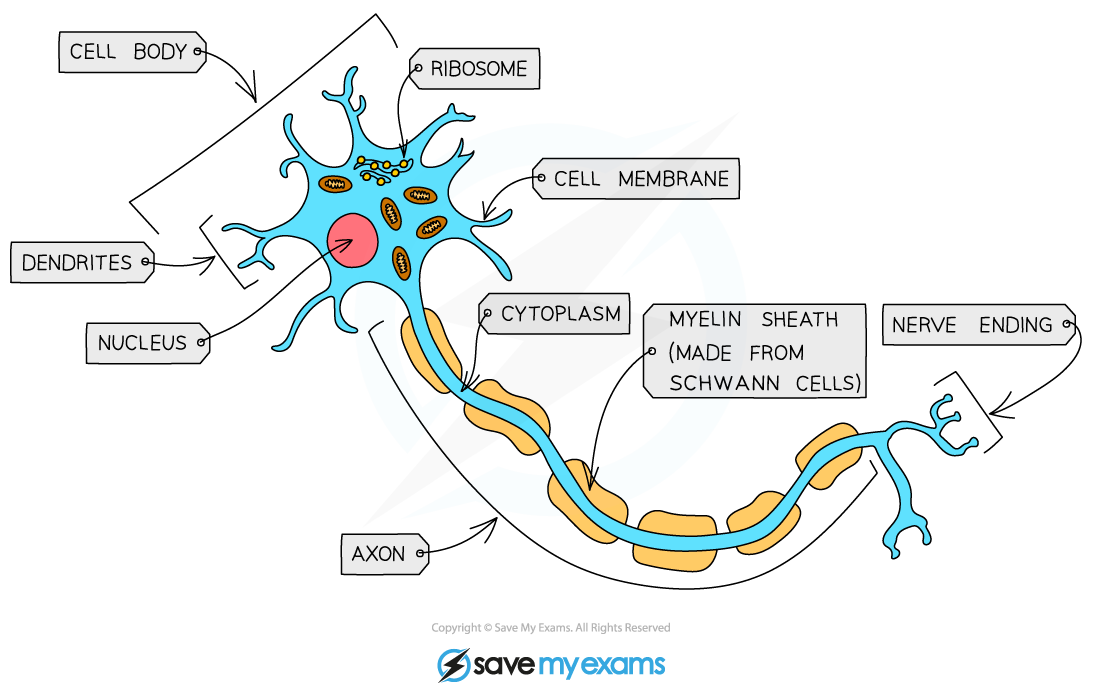
A nerve cell
Red blood cell
- Red blood cells transport oxygen efficiently due to their biconcave shape, which provides a high surface area to volume ratio for oxygen diffusion
- Red blood cells are packed with the protein haemoglobin, which transports oxygen from the lungs to the rest of the body. Red blood cells do not have a nucleus, maximising space for haemoglobin to transport oxygen
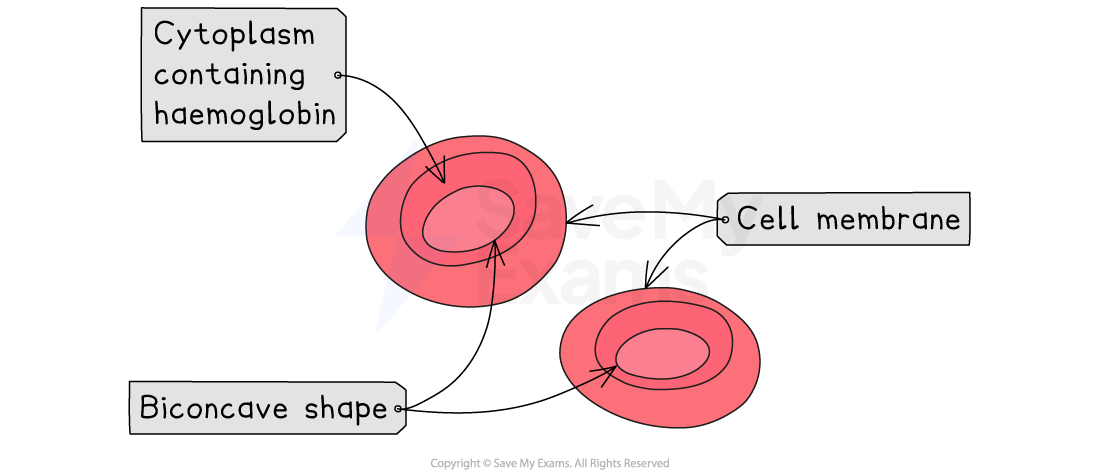
Red blood cells
Root hair cell
- Root hair cells absorb water and **mineral ions **from the soil
- Root hair cells have** long extensions to increase surface area** for maximum absorption, and their thin walls help water move quickly through them
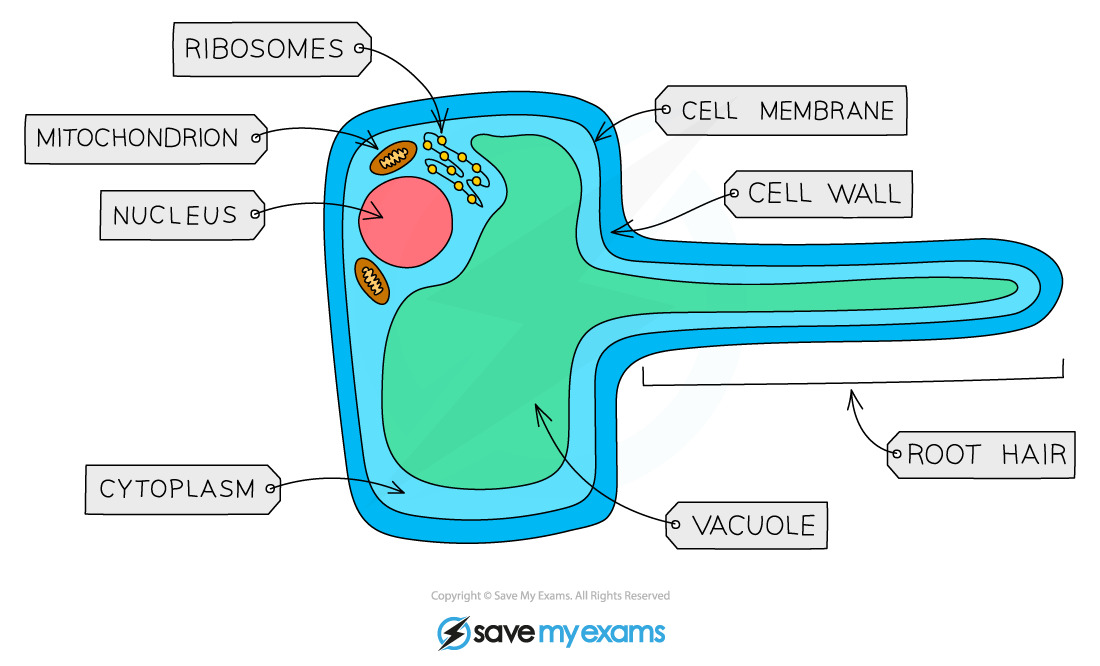
Root hair cell
Palisade mesophyll cell
- Palisade mesophyll cells are found in the leaf and are adapted for photosynthesis
- Palisade mesophyll cells contain many chloroplasts
- The cells are column-shaped and tightly packed together beneath the upper epidermis of the leaf to maximise light absorption for photosynthesis
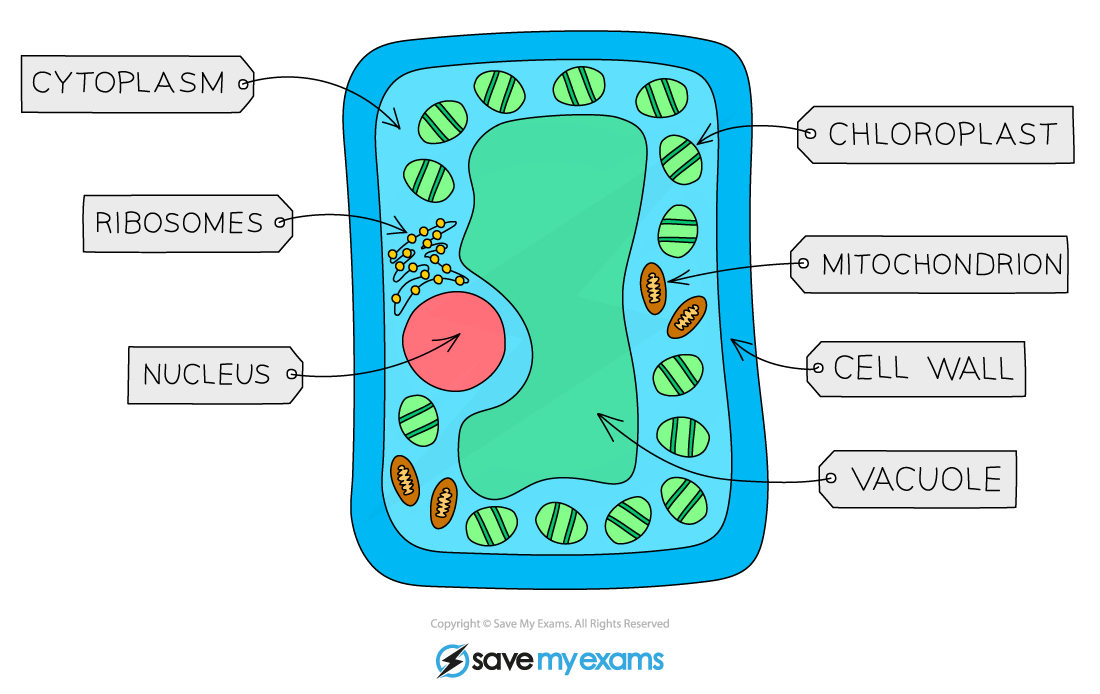
Palisade mesophyll cell
Was this revision note helpful?
Build on this topic