110 markseasy
3 marks
(a)
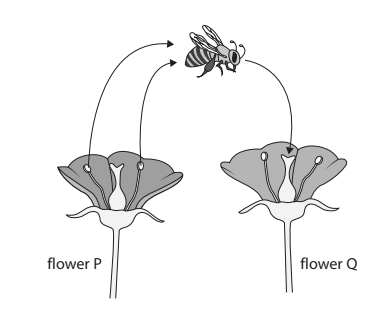
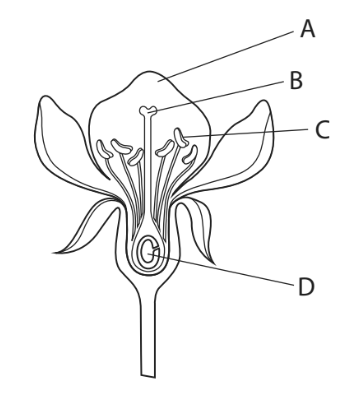
The diagram shows an insect-pollinated flower called a lily.
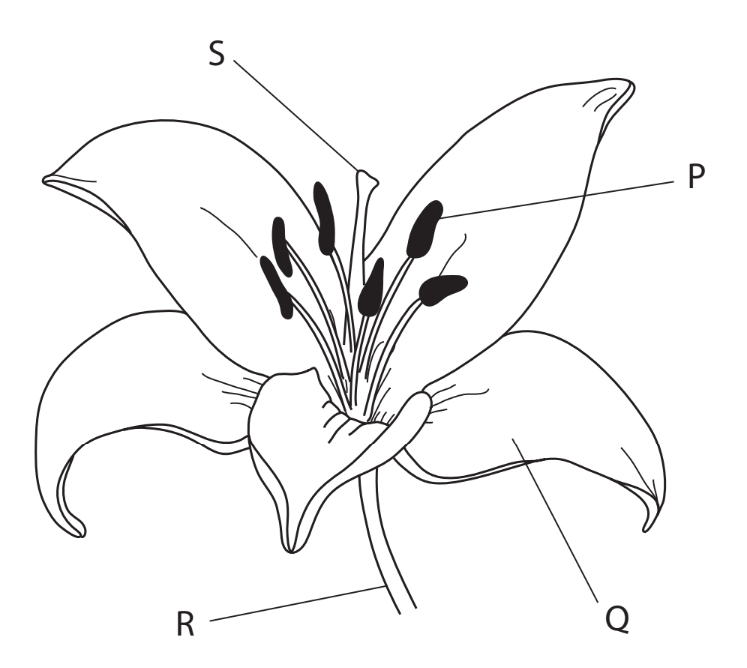
(i) Which of these is the name of structure P?
(1 mark)
| ☐ | A | Anther |
|---|---|---|
| ☐ | B | Filament |
| ☐ | C | Stigma |
| ☐ | D | Style |
(ii) Which of these is the name of structure Q?
(1 mark)
| ☐ | A | Leaf |
|---|---|---|
| ☐ | B | Petal |
| ☐ | C | Stem |
| ☐ | D | Style |
(iii) On which structure do pollen grains germinate?
(1 mark)
| ☐ | A | P |
|---|---|---|
| ☐ | B | Q |
| ☐ | C | R |
| ☐ | D | S |
3 marks
(b)
Describe how the structures of P, Q and S would differ in a wind-pollinated flower.
4 marks
(c)
Plants can also reproduce by asexual reproduction.
(i) Give one natural method that plants use to reproduce asexually.
(1 mark)
(ii) Give one artificial method that a plant grower may use to reproduce a plant asexually.
(1 mark)
(iii) Suggest why a plant grower may choose to reproduce a plant asexually rather than allowing the plant to reproduce sexually.
(2 marks)