Reflections (Edexcel IAL Maths)
Exam board Pearson Edexcel · IALUpdated 2026-07-02
Spec point —
1.12
Reflections
What are graph reflections?
- When you alter a function in certain ways, the effects on the graph of the function can be described by geometrical transformations
- With a reflection all the points on the graph are reflected in either the x or the y axis
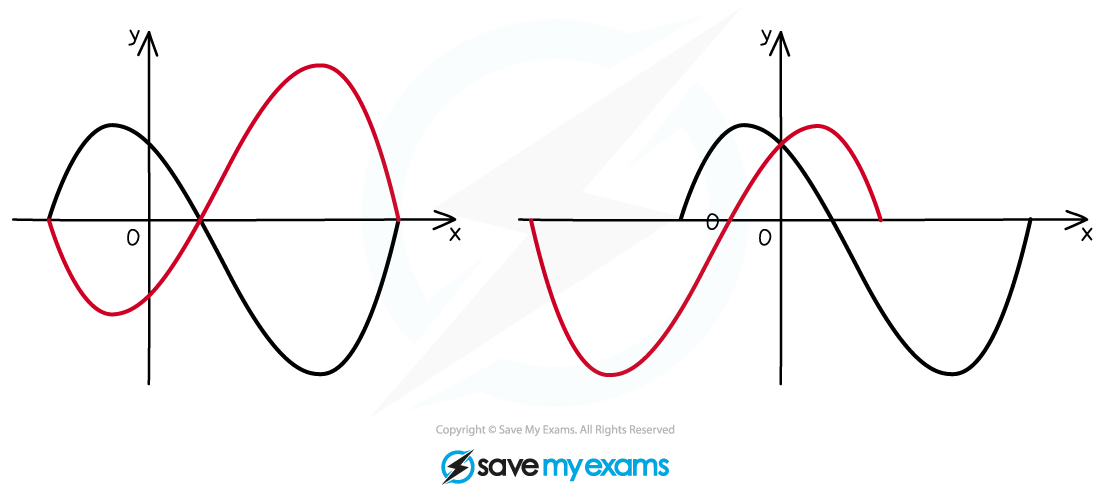
- Any asymptotes of f(x) are also affected by the reflection (reflect them as you would reflect the function of a straight line)
- If an asymptote is one of the coordinate axes, or is perpendicular to the coordinate axis in which the graph is reflected, it will not be affected
What do I need to know about graph reflections?
-
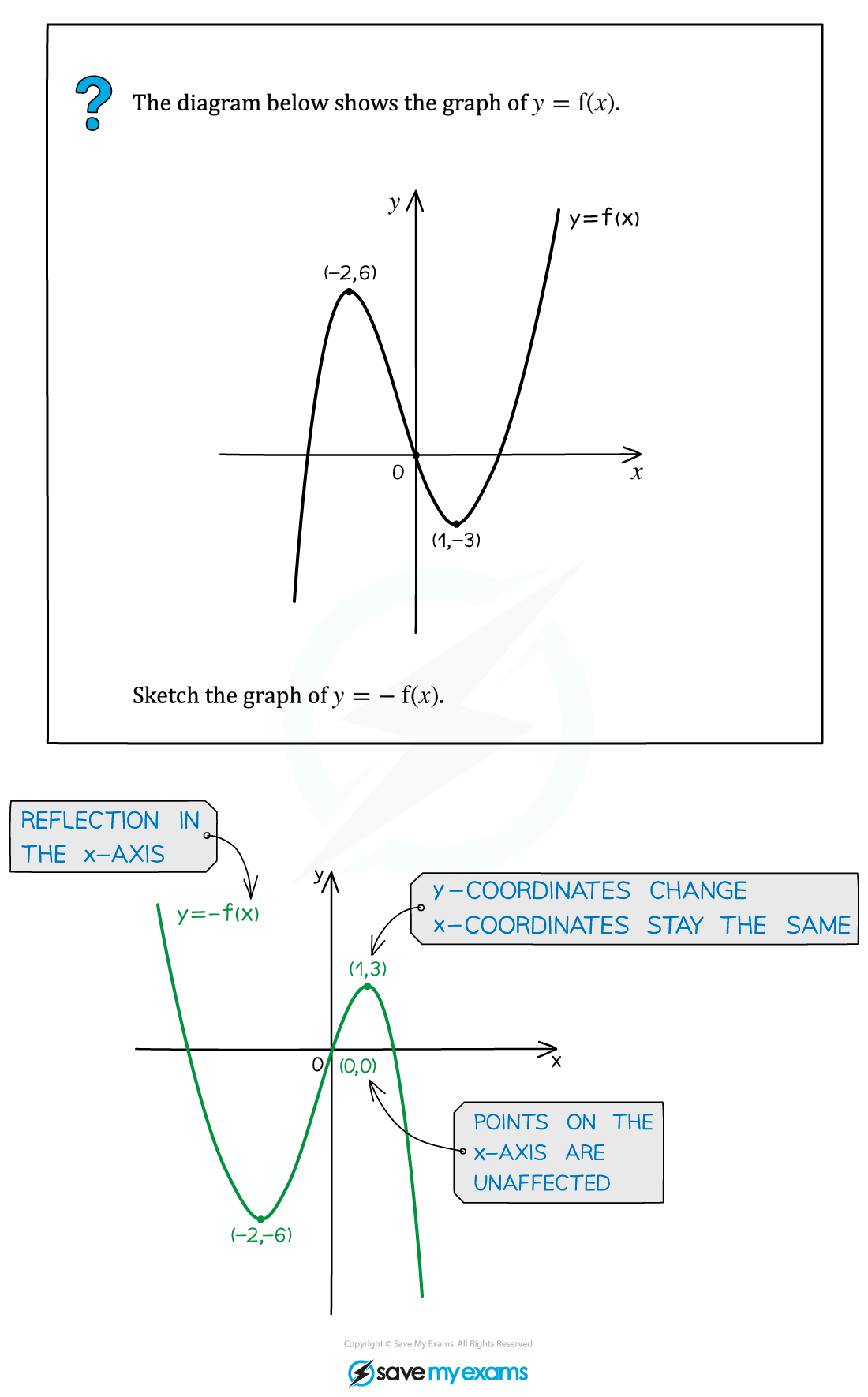
The graph of y = -f(x) is a reflection in the x axis
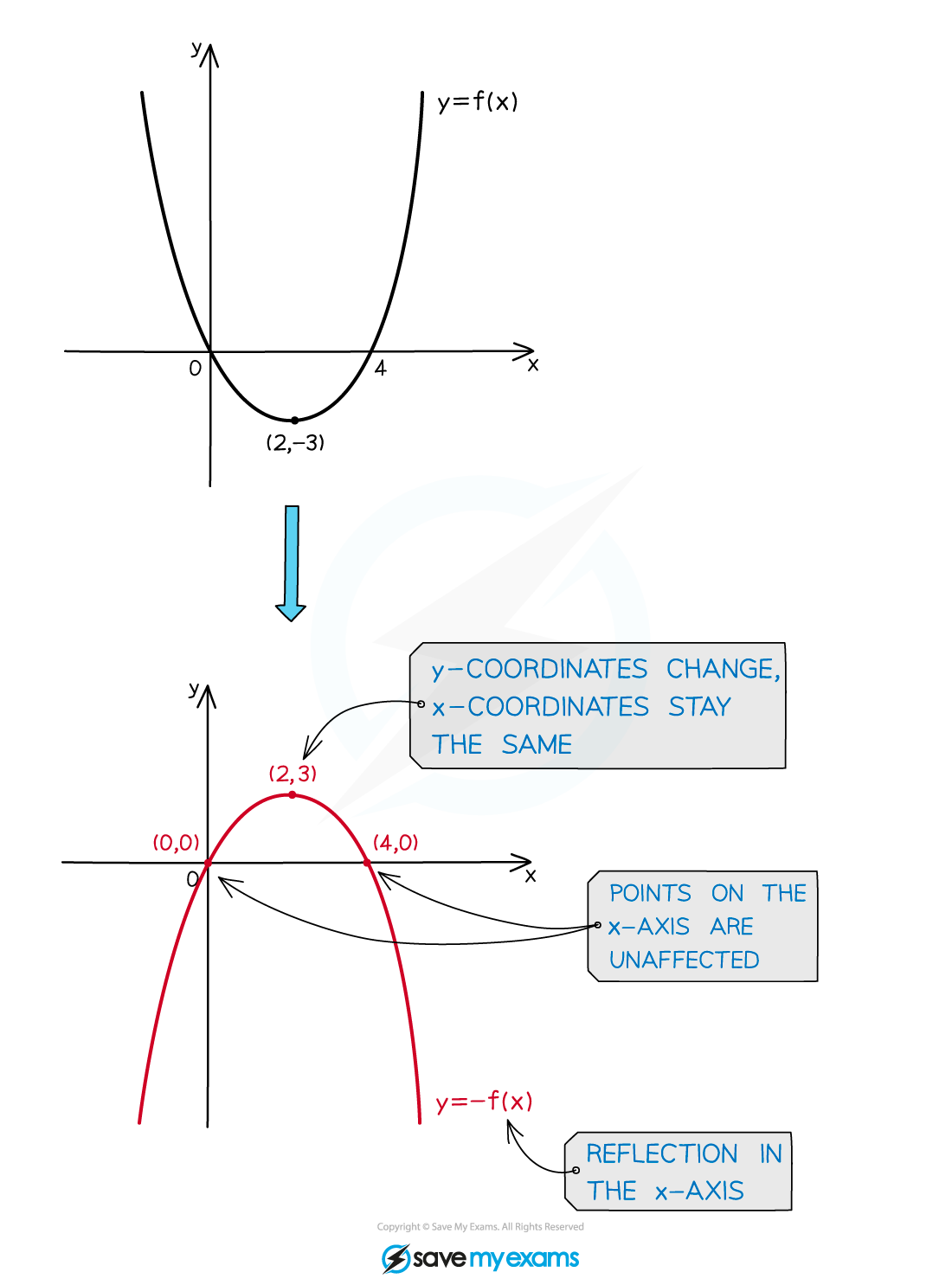
- The x **coordinates of points stay the same; y coordinates have their signs flipped (positive to negative, negative to positive)
- Points on the x axis stay where they are
- All other points are reflected to the other side of the x** axis
-
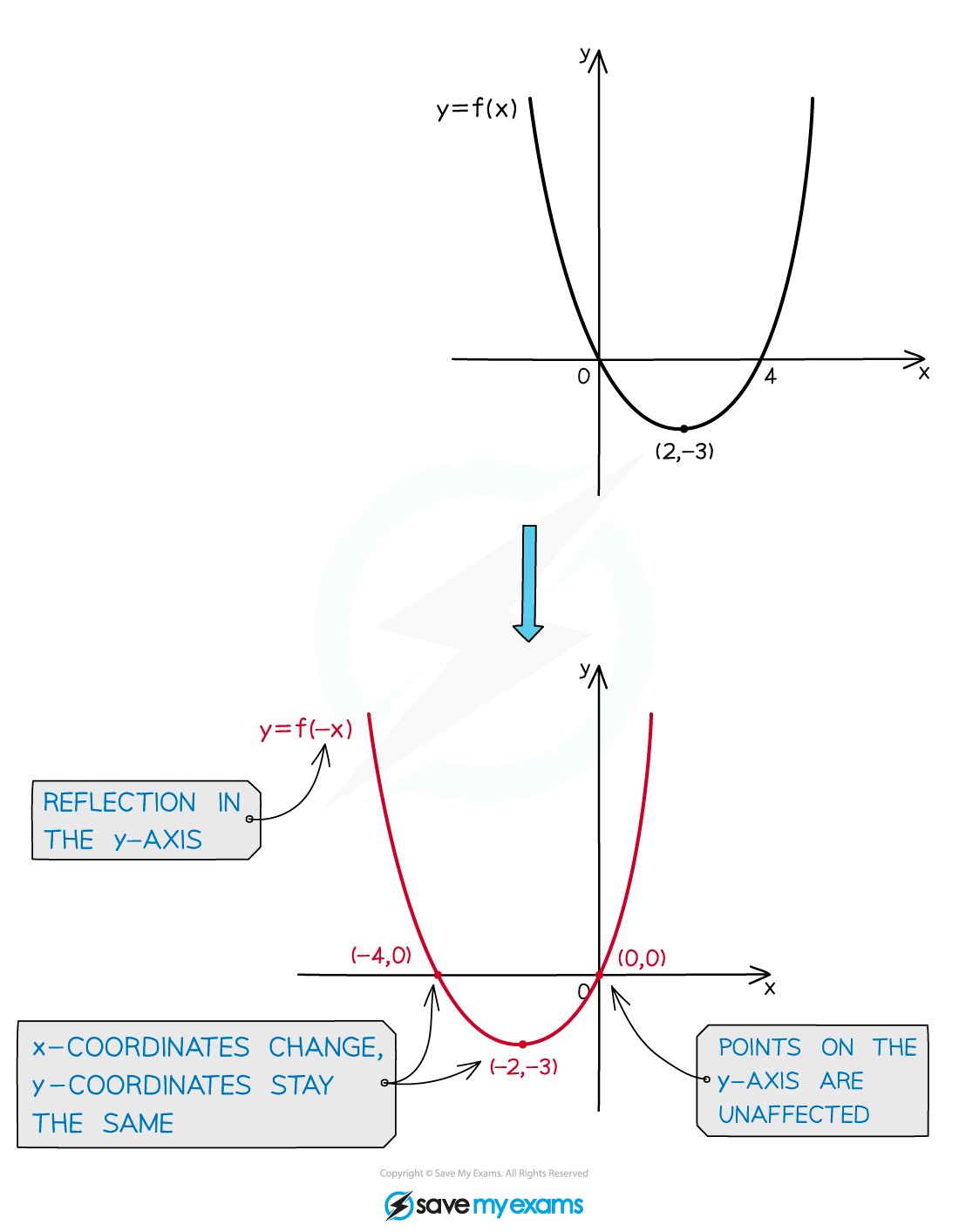
The graph of y = f(-x) is a reflection in the y axis
- The y coordinates of points stay the same; x coordinates have their signs flipped (positive to negative, negative to positive)
- Points on the y axis stay where they are
- All other points are reflected to the other side of the y axis
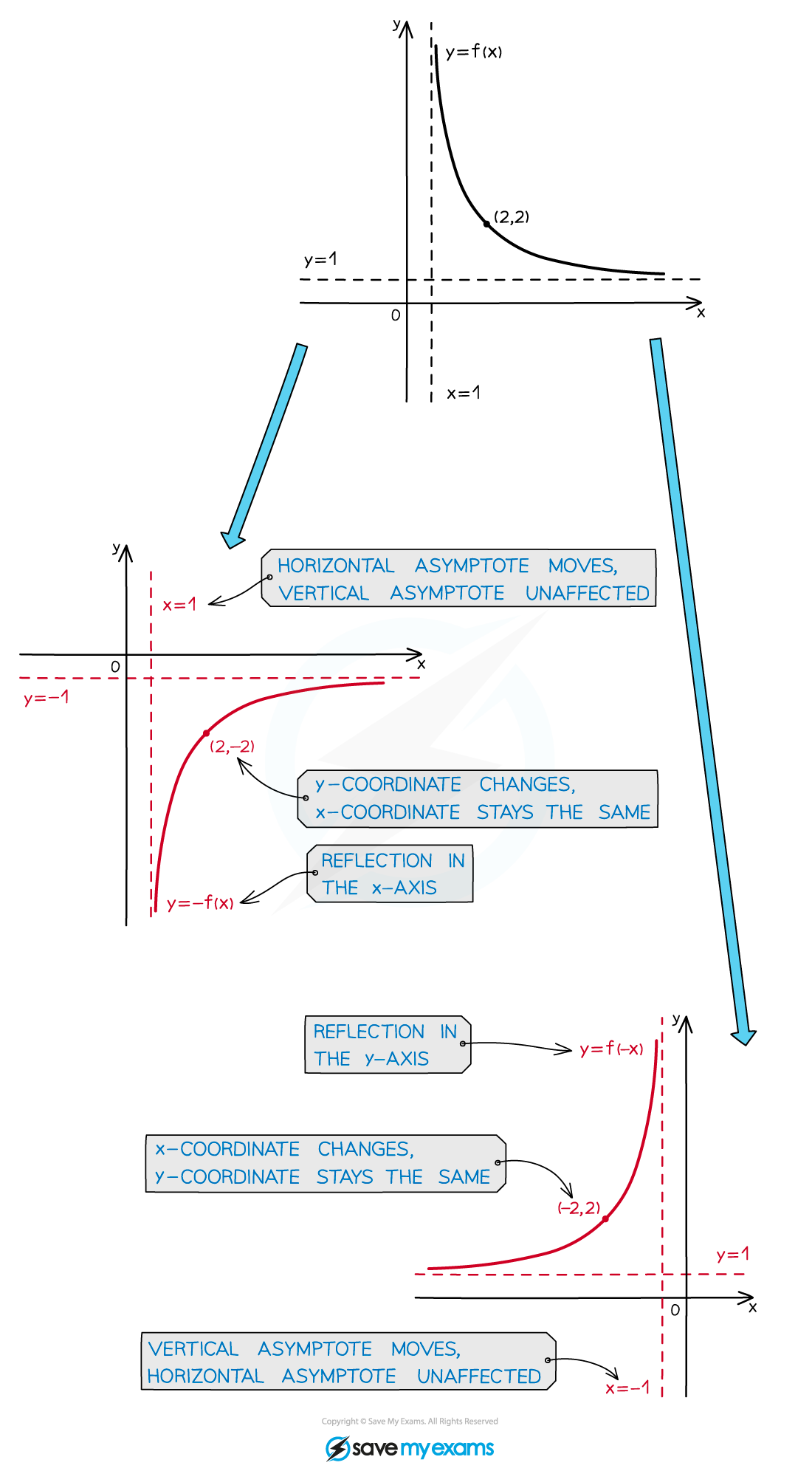
- Any asymptotes of f(x) are also affected by the reflection (reflect them as you would reflect the function of a straight line)
- If an asymptote is one of the coordinate axes, or is perpendicular to the coordinate axis in which the graph is reflected, it will not be affected
Worked Example
Was this revision note helpful?
Build on this topic