Organic Techniques - Purity (Edexcel IAL Chemistry)
Melting & Boiling Temperature Determination
Spec point —
20.5
Melting point determination
-
The melting point of a solid is indicative of its purity and identity
-
A melting point can be matched to a known substance as a means of identification or confirmation of a desired product
-
The proximity of a melting point to the actual data book value can express purity
- Impurities tend to lower the melting point of a solid
-
The melting point range also reveals the degree of purity
- Pure substances have sharp well defined melting points
- Impure substances have a broad melting point range, i.e. a large difference between when the substance first melts until it completely melts
-
The skills needed in performing a melting point test are largely dependent on the specific melting point apparatus you are using
-
However, there are some common key skills:
- Correctly preparing the melting point tubes
- Heating the tubes very slowly
- Repeating to get a range of measurements (three would be normal)
-
The sample solid must be totally dry and finely powdered - this can be achieved by crushing it with the back of a spatula onto some filter paper or the back of a white tile (this absorbs any moisture)
-
Use the first tube to find the approximate melting point range and then repeat using a much slower heating rate
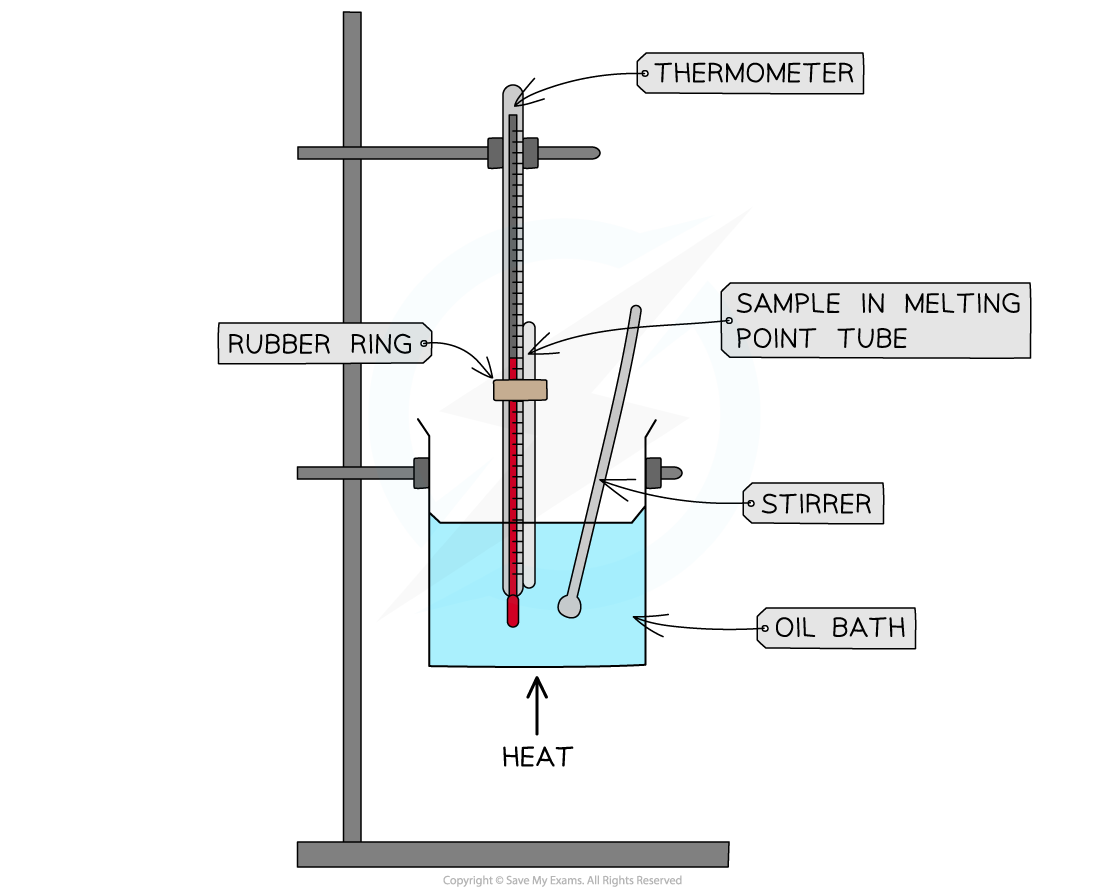
Melting point test using an oil bath
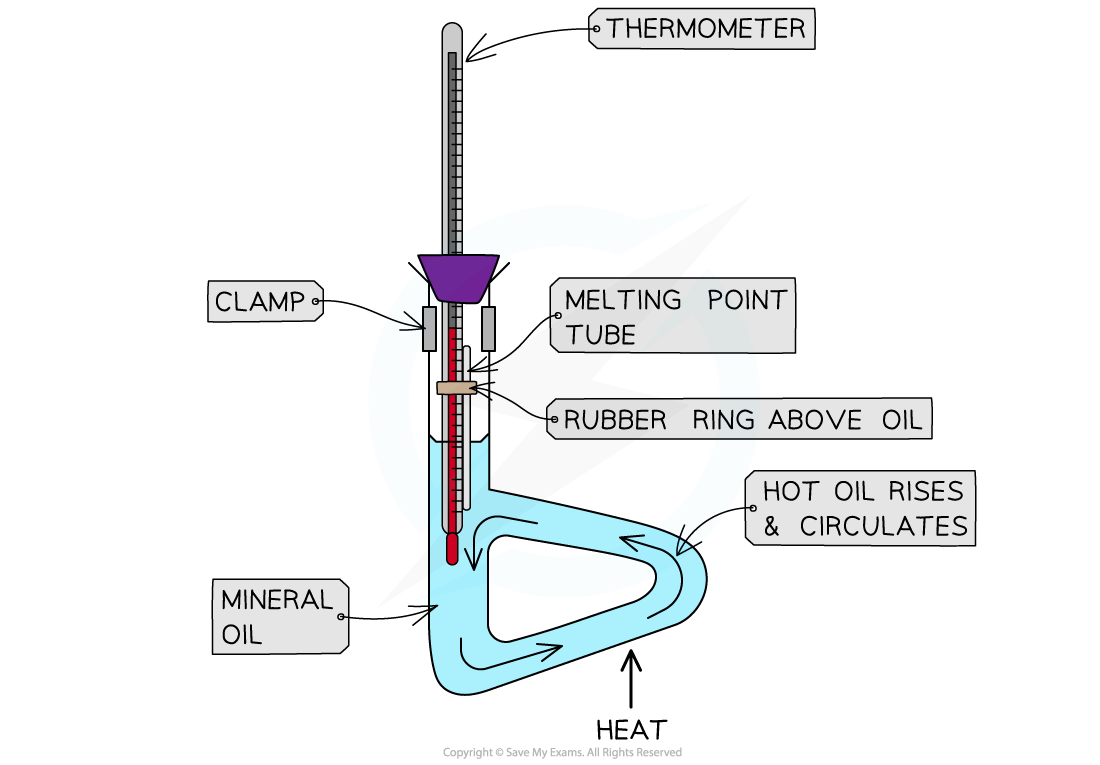
Melting point test using a Thiele tube
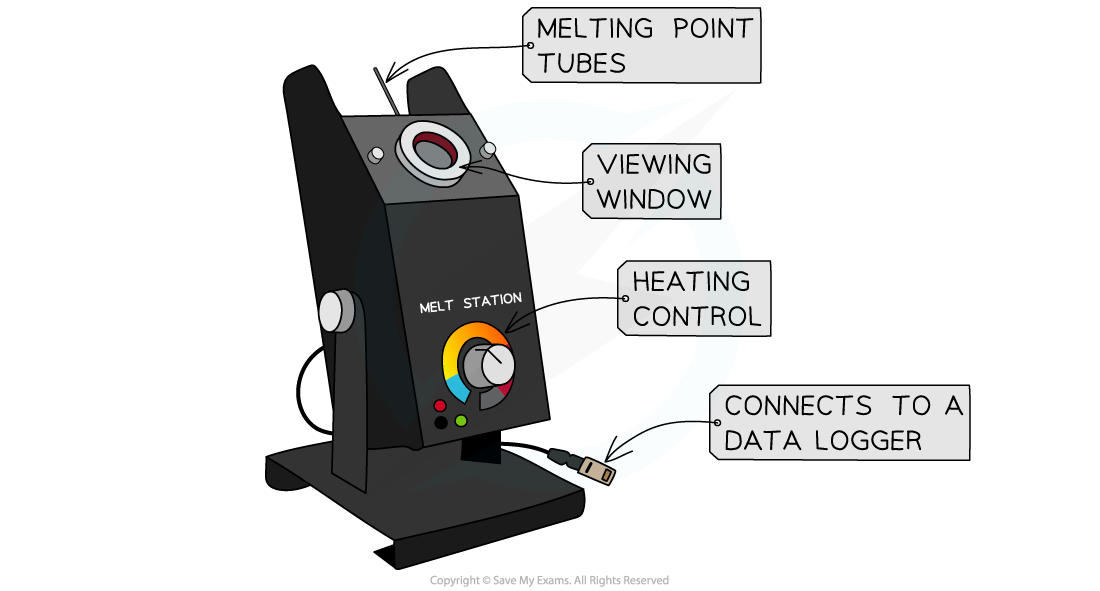
Melting point test using a melt station
Exam Hint Always quote a melting point as a range + or - and reference a data book value if you have one.
Boiling point determination
-
The boiling point of a liquid is indicative of its purity and identity
-
Boiling point is determined by distillation
-
The sample is gently heated until it boils and this temperature is recorded
- This boiling point can then be compared against literature / database values
-
If the sample contains impurities:
- The boiling point may appear higher than the literature / database values
- The sample may boil over a range of temperatures instead of at a single temperature
Was this revision note helpful?
Build on this topic