The Periodic Table (Cambridge International IGCSE Science)
Spec point — Describe the Periodic Table as an arrangement of elements in periods and groups and in order of increasing proton number/ atomic number Describe the relationship between group number and the charge of the ions formed from elements in that group
The Periodic table
-
There are over 100 chemical elements which have been isolated and identified
-
Elements are arranged on the Periodic Table in order of increasing atomic number
- Each element has one proton more than the element preceding it
-
This arrangement places elements with similar properties in the same columns
-
The table is arranged:
- In vertical columns called groups
- In rows called periods
The period number
-
Periods are the horizontal rows on the Periodic Table
-
Periods are numbered from 1–7
-
The period number shows the number of shells of electrons an atom has
-
For example:
- Elements in Period 2 have two electron shells
- Elements in Period 3 have three electron shells
The group number
-
Groups are the vertical columns on the Periodic Table
-
They are numbered in roman numerals from I (1) to VIII (8)
-
The group number shows how many electrons are in the outermost shell of the atom
-
For example:
- Group 4 elements have atoms with 4 electrons in the outermost shell
- Group 6 elements have atoms with 6 electrons in the outermost shell
The Periodic Table
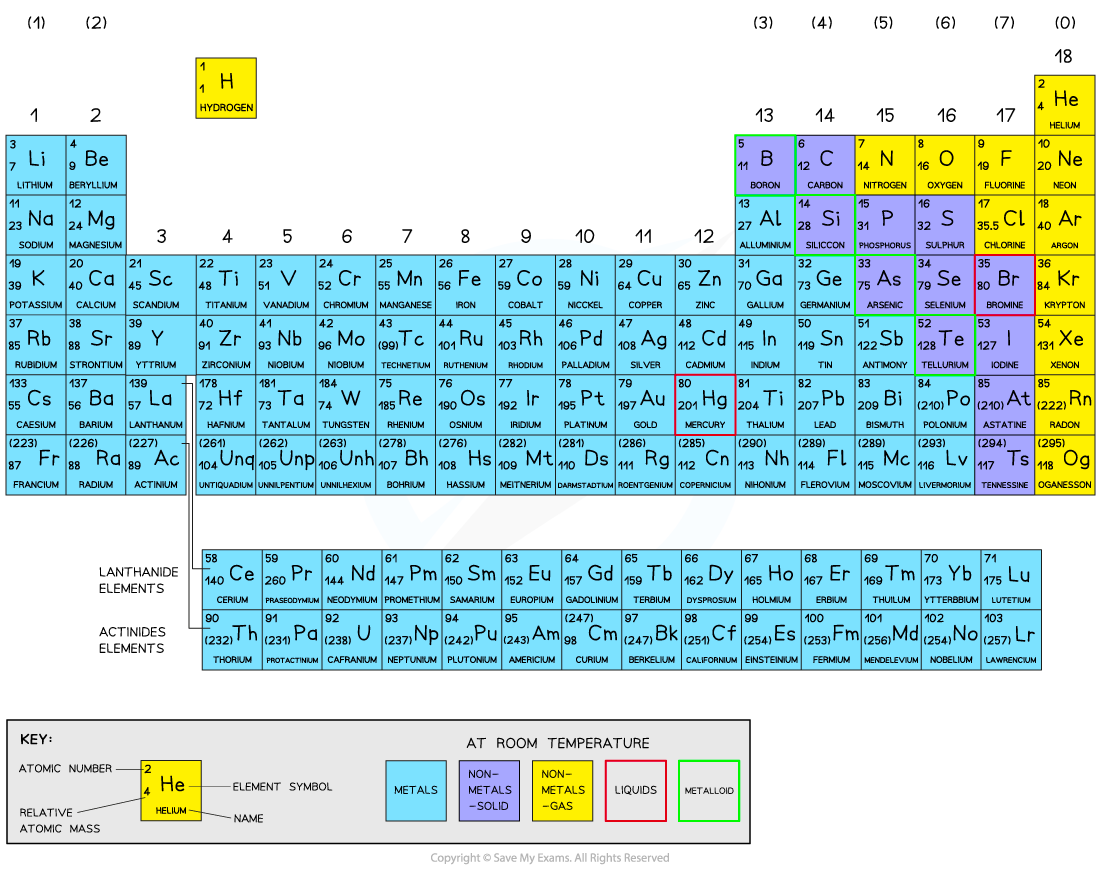
All elements are arranged in the order of increasing atomic number from left to right
Exam Hint The group number is always labelled on the Periodic Table but the period number isn't.
Don't forget that hydrogen and helium are in Period 1.
Was this revision note helpful?
Build on this topic