Work Done (Cambridge International IGCSE Science)
Work done & energy transfers
-
Mechanical work is done when an object is moved over a distance by a force applied in the direction of its displacement
- It is said that the force does work on the object
- If a force is applied to an object but doesn’t result in any movement, no work is done
-
When work is done, energy is transferred
-
Work done and energy transferred are equivalent quantities
Work done pushing a box
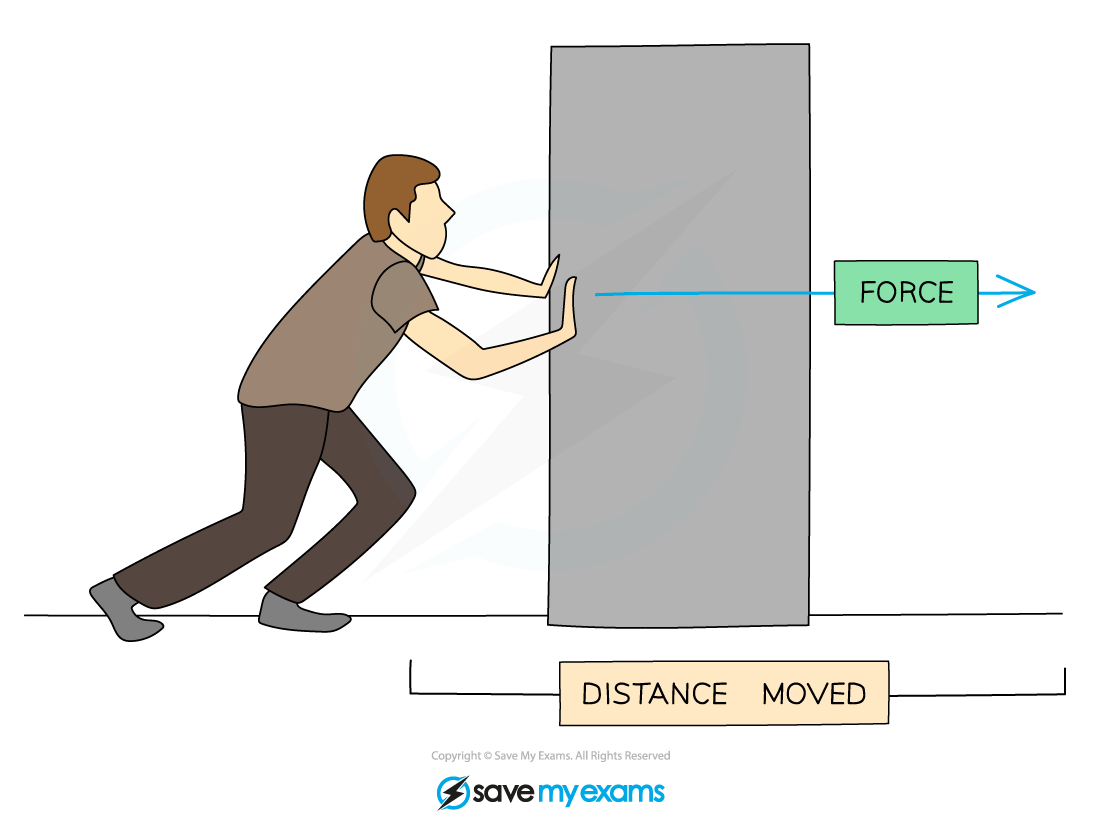
Work is done when a force is used to move an object over a distance, and energy is transferred from the person to the box
Work done equation
- The formula for work done is:
-
Where:
- = work done, measured in newton-metres (N m)
- = force applied, measured in newtons (N)
- = distance in metres (m)
- = energy transferred, measured in joules (J)
Formula triangle for work done, force and distance
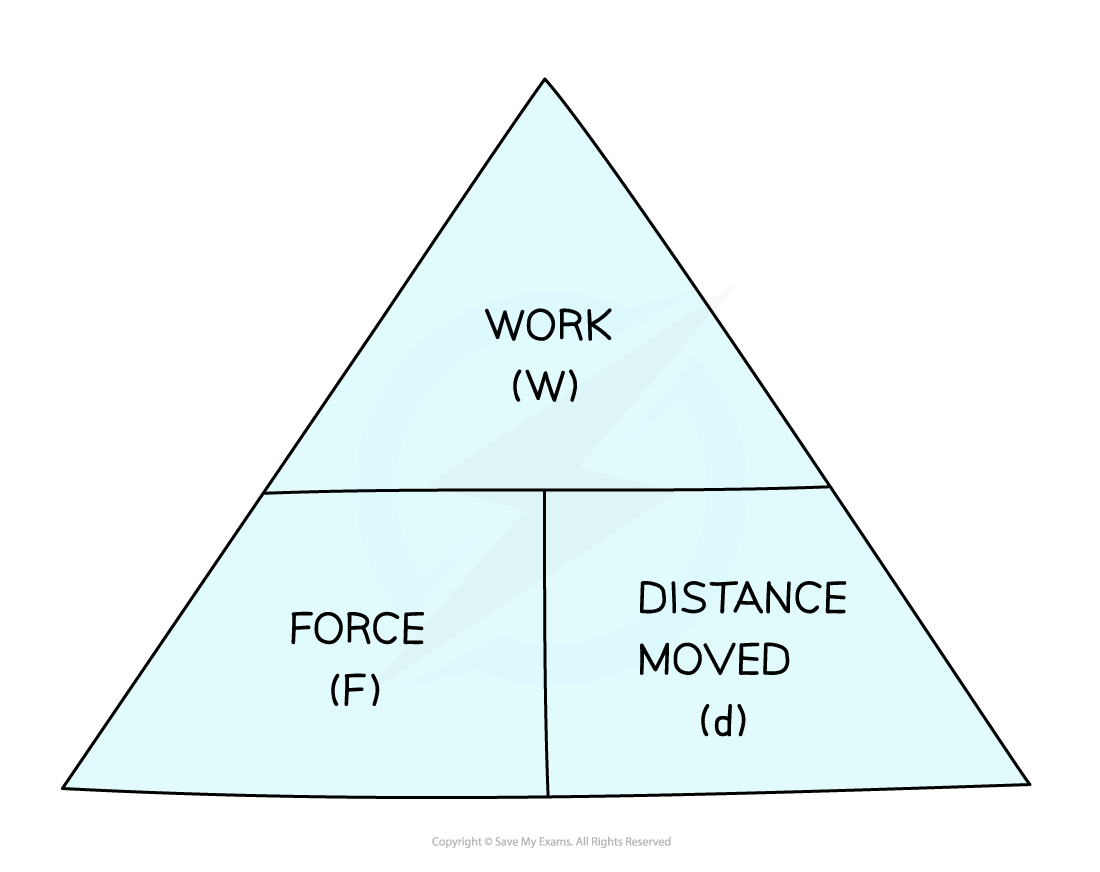
To use a formula triangle, simply cover up the quantity you wish to calculate and the structure of the equation is revealed
-
Using formula triangles is covered in more detail in the revision note on Speed & velocity
-
Mechanical work done and electrical work done are equivalent to energy transferred
- Therefore:
Examples of work done
-
Work is done on a ball when it is lifted to a height:
- A force is required to lift the ball
- Work is done against the weight force to lift the ball through the gravitational field
- Energy is transferred as work is done
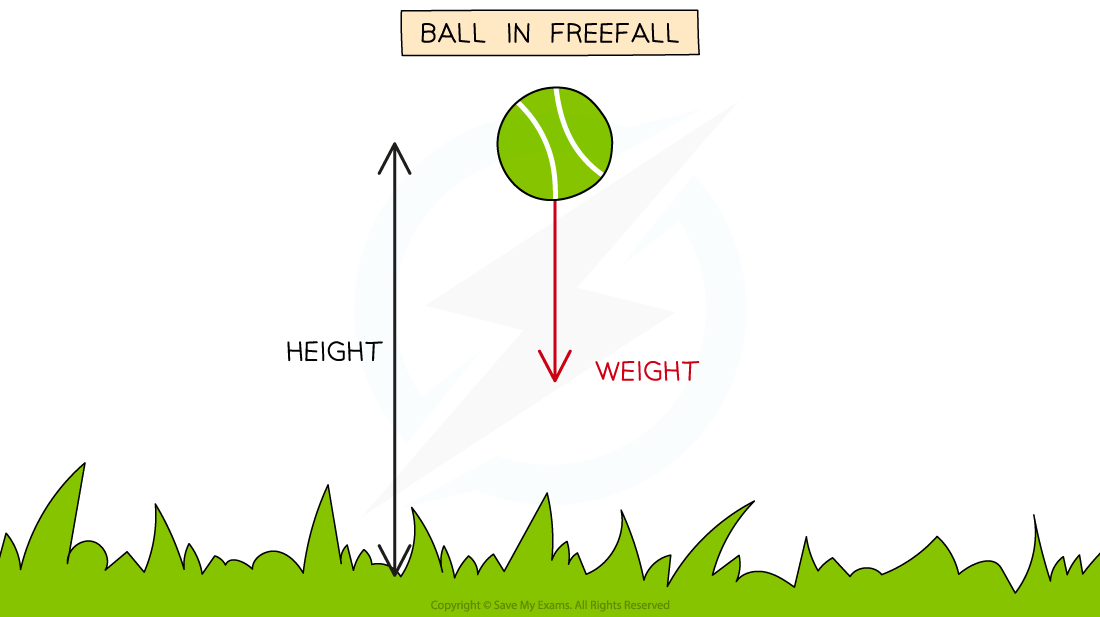
The weight on the ball produced by the gravitational field does work on the ball over a distance
-
Work is done when a bird flies through the air
- A force is required to overcome the drag force
- Work is done against the drag force as the bird flies over a distance
- Energy is transferred as work is done
Work done by a bird
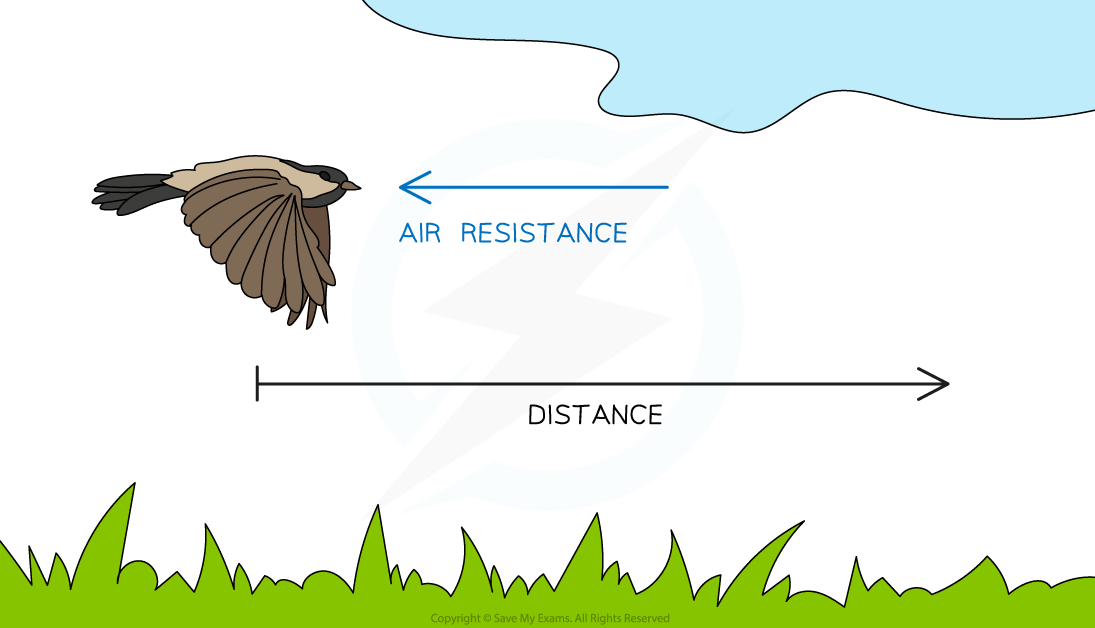
The bird does work against air resistance (drag) as it flies through the air
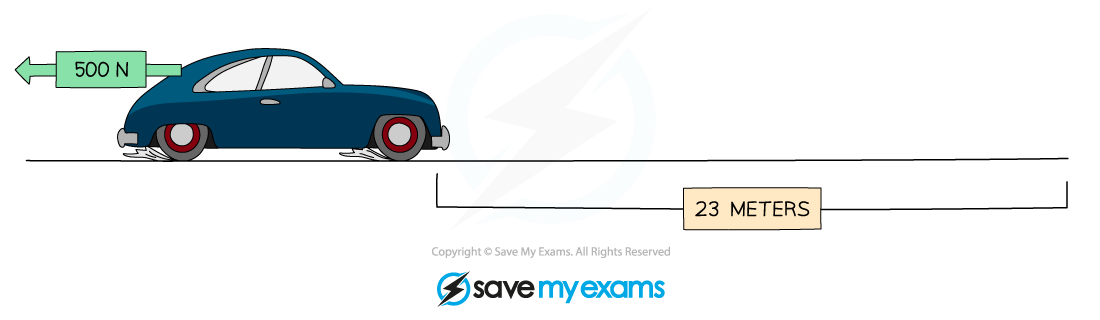
Worked Example A car moving at speed begins to apply the brakes. The brakes of the car apply a force of 500 N, which brings it to a stop after 23 m.
Calculate the work done by the brakes in stopping the car.
Answer:
Step 1: List the known quantities
- Distance,
- Force,
Step 2: Write out the work done equation
Step 3: Calculate the work done on the car by the brakes
Step 4: Round to an appropriate number of significant figures
- The lowest number of significant figures in the input values is 1 s.f. (500 N)
- Therefore, the final answer must be rounded to 1 s.f.
Exam Hint Remember to always convert the distance into metres and force into newtons so that the work done is in joules or newton-metres
Video of Work done
Was this revision note helpful?
Build on this topic