The Sun as a Star (Cambridge International IGCSE Science)
Exam board Cambridge International · IGCSEUpdated 2025-12-19
The Sun as a star
- The Sun is a medium-sized star which lies at the centre of the Solar System
- It consists mostly of the two elements hydrogen and helium
- It radiates most of its energy in the infrared, visible and ultraviolet regions of the electromagnetic spectrum
Our Sun
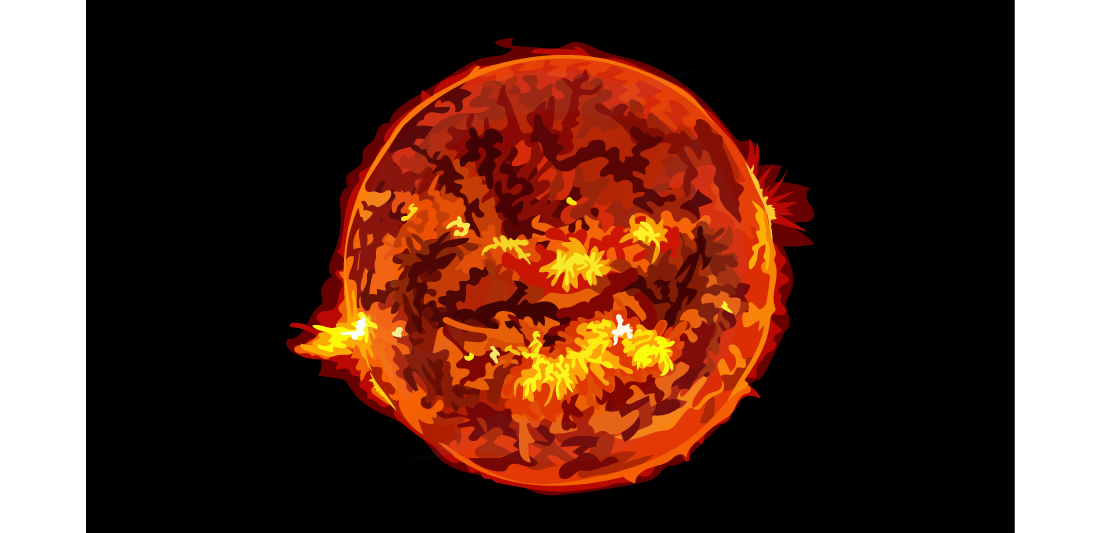
The Sun is a medium-sized star consisting of mostly hydrogen and helium
Nuclear fusion in stars
Extended Tier Only
- Stars are huge balls of (mostly) hydrogen gas
- In the centre of a star, hydrogen nuclei undergo nuclear fusion to form helium nuclei
- An equation for a possible fusion reaction is:
H _ 1 ^ 2 + H _ 1 ^ 3 -> He _ 2 ^ 4 + n _ 0 ^ 1
-
Where (deuterium) and
H _ 1 ^ 3(tritium) are both isotopes of hydrogen- These are formed through other fusion reactions in the star
-
A huge amount of energy is released in the reaction
-
All stable stars are powered by nuclear fusion reactions
Exam Hint It is useful to remember that hydrogen is the fuel within stars, but the details of the reaction between deuterium and tritium is not required at this level.
Was this revision note helpful?
Build on this topic