Images (Cambridge International IGCSE Science)
Characteristics of images
-
An image can be described using the following characteristics which compare it to the object:
- Enlarged/same size/diminished
- Upright/inverted
-
An image viewed through a magnifying glass is:
- Enlarged, bigger than the object
- Upright, has the same orientation as the object
An image viewed through a magnifying glass
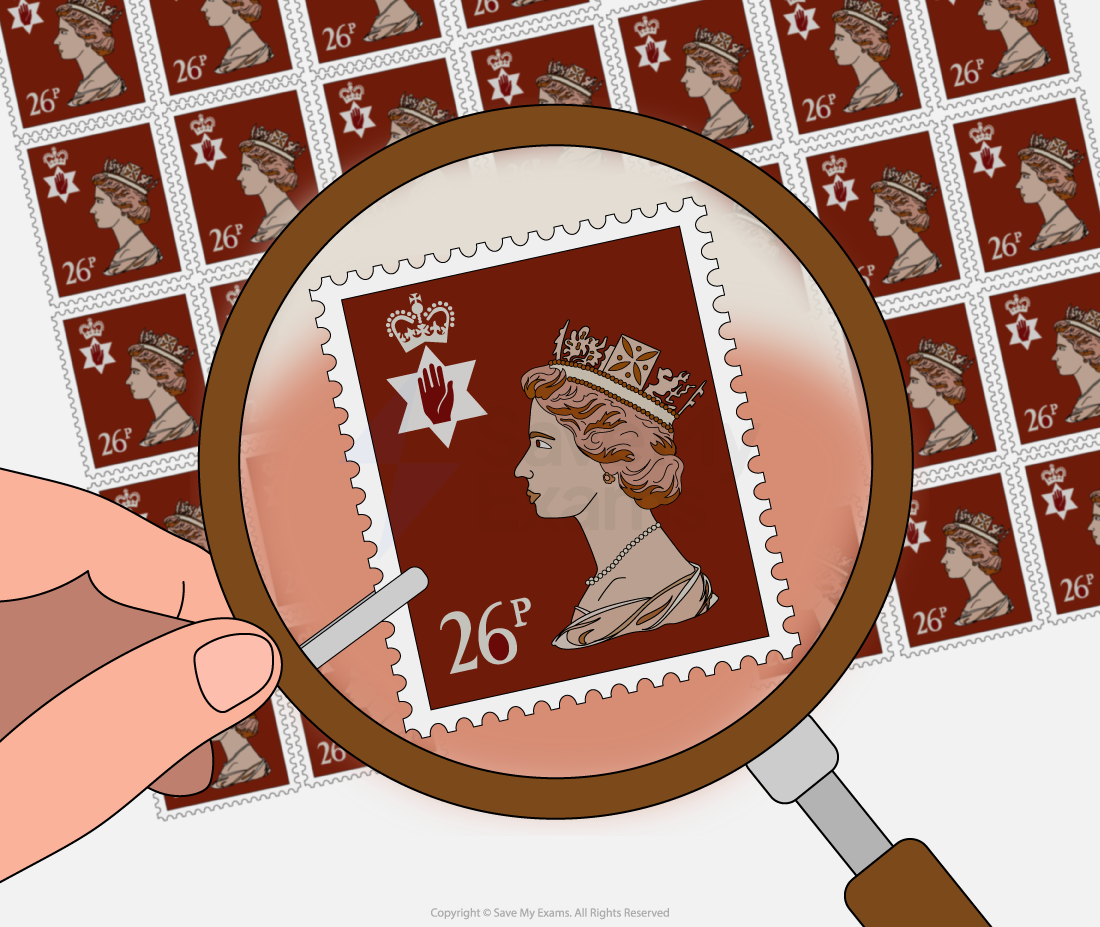
An image viewed through a magnifying glass is enlarged and upright compared to the object
-
An image viewed through an eye, a camera, or a glasses lens is:
- Diminished, smaller than the object
- Inverted, upside down compared to the object
An image viewed by the eye
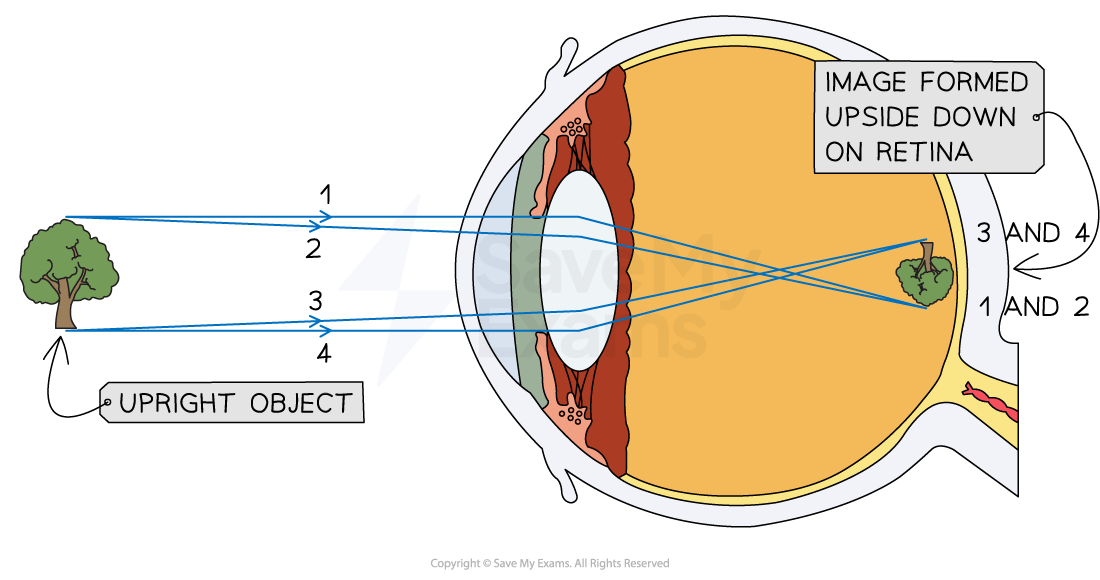
An image viewed by the eye is diminished and inverted compared to the object
Converging lens - real image
Constructing converging ray diagrams
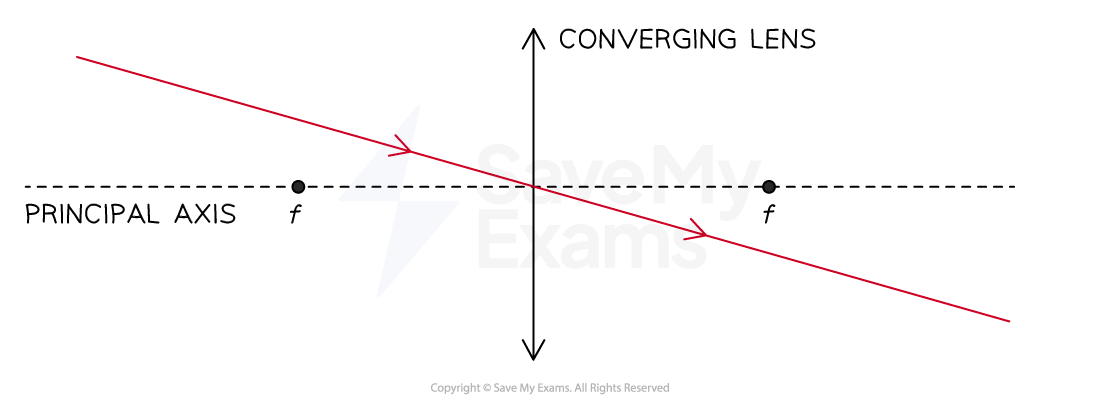
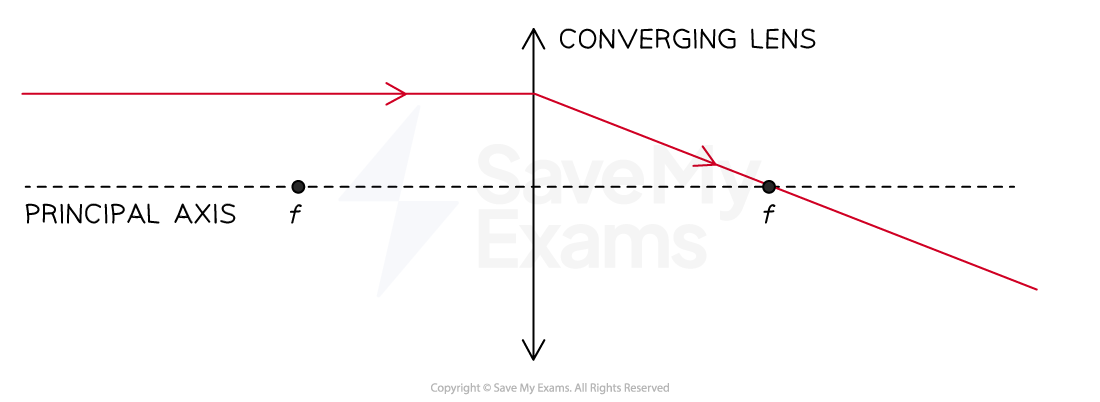
- The three main rules for constructing ray diagrams are as follows:
1. Rays passing through the principal axis will pass through the optical centre of the lens undeviated
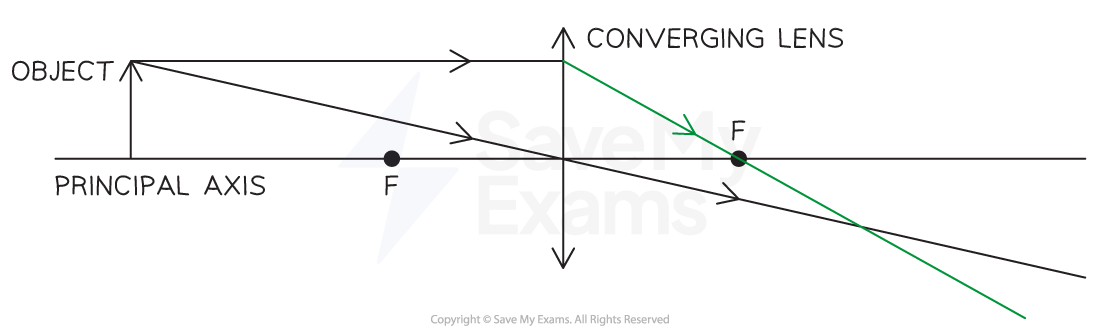
- Rays that are parallel to the principal axis will be refracted and pass through the focal point f
3. Rays passing through the focal point f will emerge parallel to the principal axis
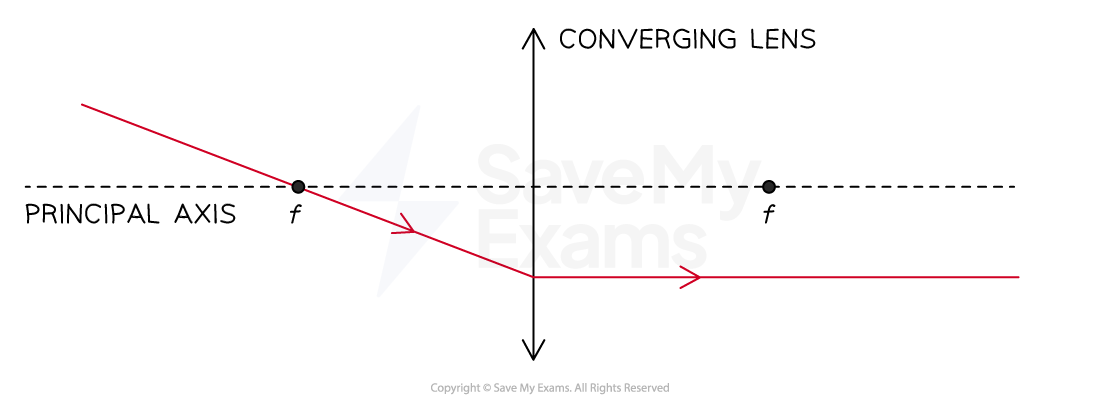
Drawing converging ray diagrams of real images
- For an object placed at a distance greater than 2 focal lengths...
A converging lens ray diagram for an object placed further than 2f
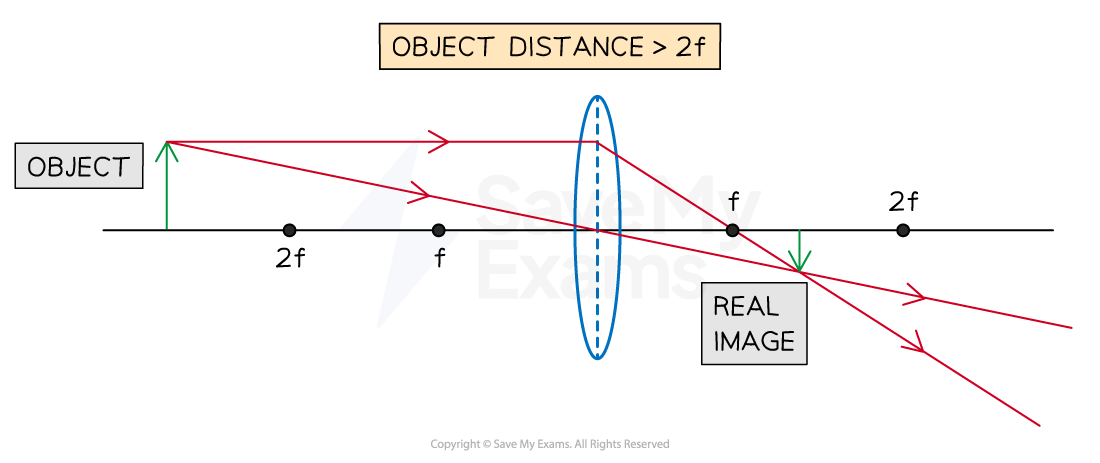
- The image that forms will have the following properties:
| The image forms... | between f and 2f |
|---|---|
| The nature of the image is... | real |
| The orientation of the image is... | inverted |
| The size of the image is... | diminished |
- For an object placed at a distance equal to 2 focal lengths...
A converging lens ray diagram for an object placed at 2f
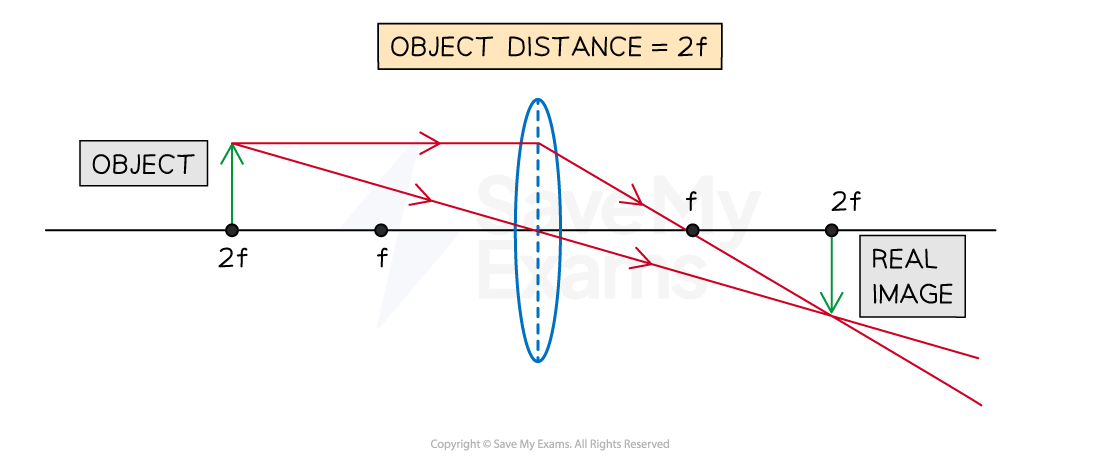
- The image that forms will have the following properties:
| The image forms... | at 2f |
|---|---|
| The nature of the image is... | real |
| The orientation of the image is... | inverted |
| The size of the image is... | the same |
- For an object placed at a distance between 1 and 2 focal lengths
A converging lens ray diagram for an object placed between f and 2f
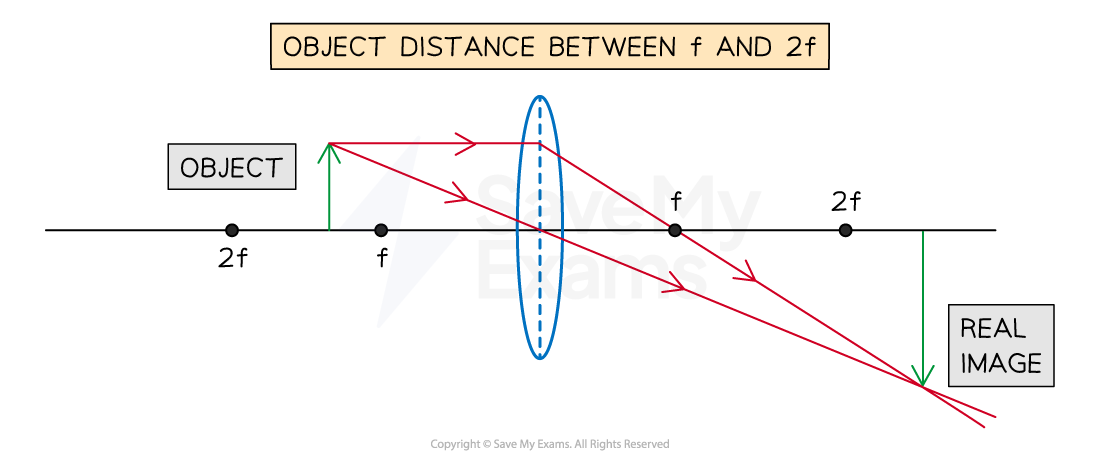
- The image that forms will have the following properties:
| The image forms... | beyond 2f |
|---|---|
| The nature of the image is... | real |
| The orientation of the image is... | inverted |
| The size of the image is... | magnified |
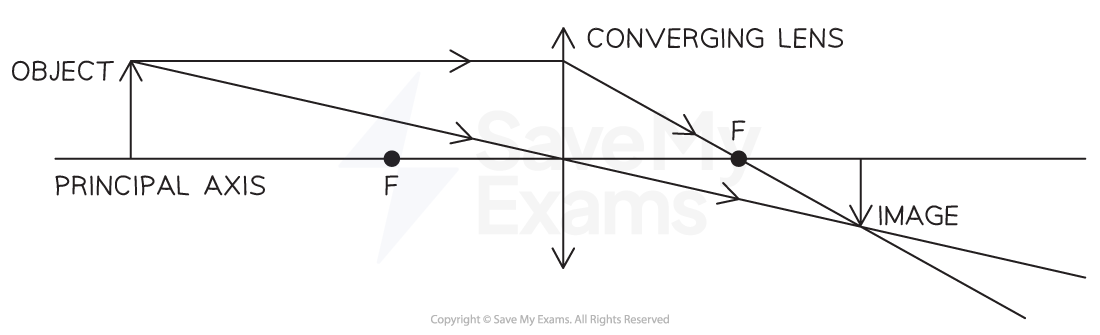
Worked Example Draw a ray diagram to show how a converging lens can be used to form a diminished image of a real object.
Label the object, image and principal foci of the lens on your diagram.
Answer:
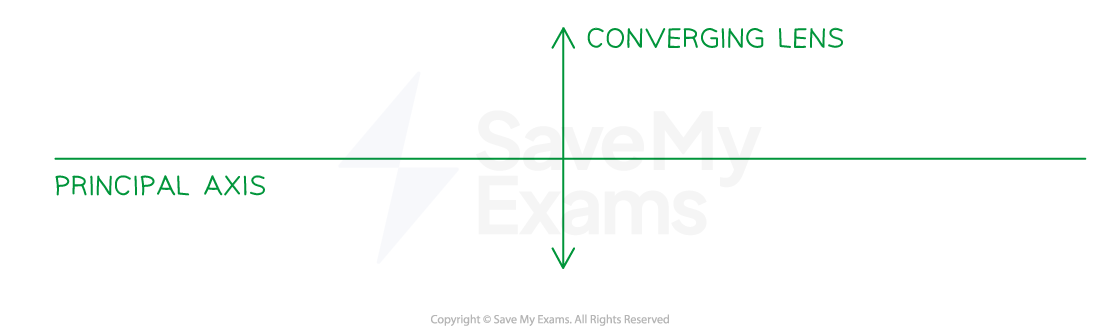
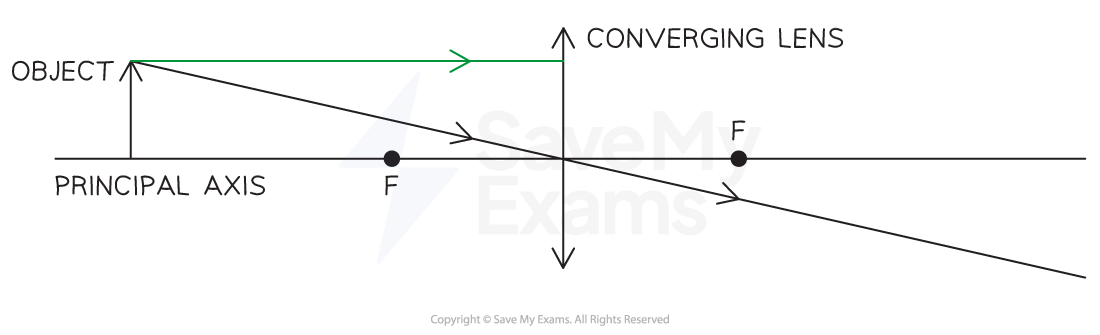
Step 1: Start by drawing and labelling a principal axis and the lens as a line or a very thin ellipse
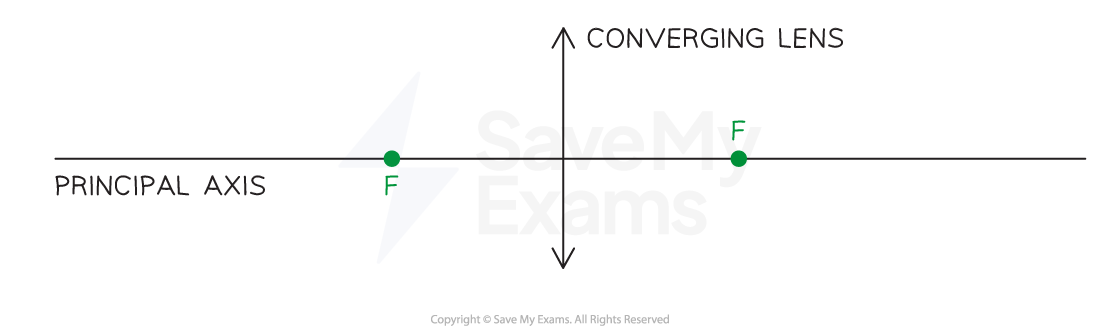
Step 2: Mark and label the focal points on each side of the lens
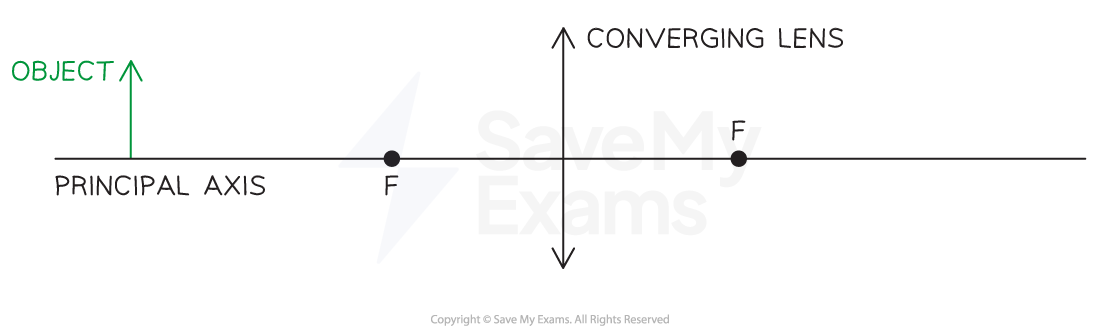
Step 3: Draw and label the object at a distance greater than the focal length on the left side of the lens
- Tip: For a diminished image the object should be placed a distance of at least 2F away from the lens
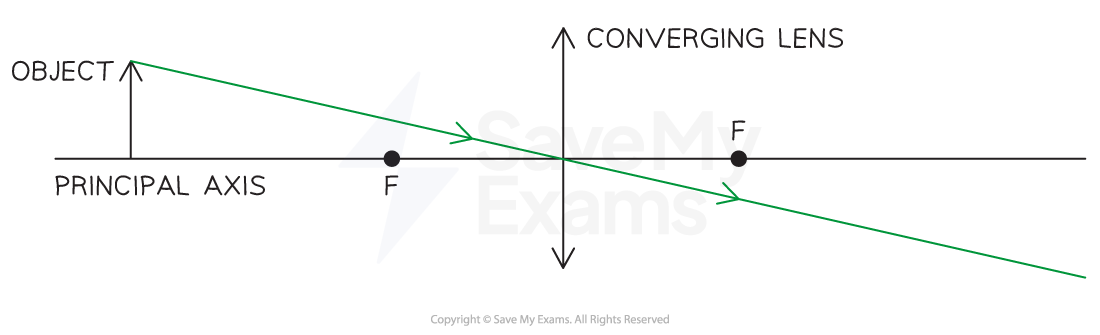
Step 4: Draw a ray through the optical centre of the lens
Step 5: Draw a second ray from the object to the lens which is parallel to the principal axis
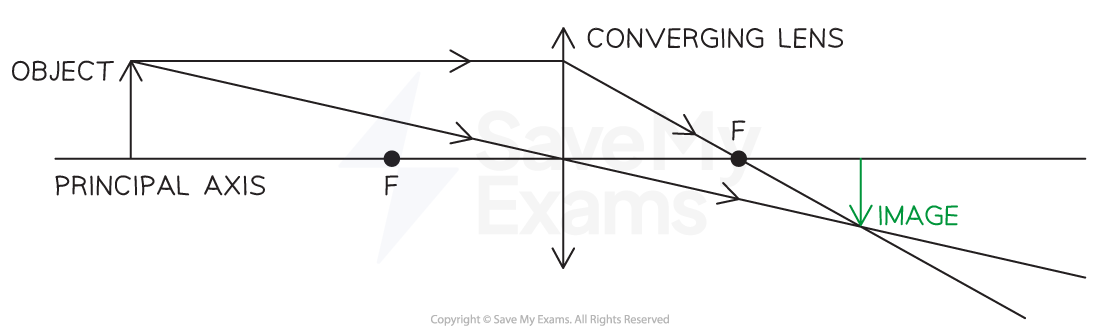
Step 6: Draw the continuation of the ray passing through the focal point on the right side of the lens
Step 7: Draw and label the image at the point where the rays meet
Step 8: Check your final image and make sure everything is included to gain the marks
For a three-mark question, examiners will be looking for:
- One ray drawn through the optical centre of the lens
- A second ray drawn which produces a diminished (smaller) image (which must pass through a labelled focal point)
- Both the object and the image must be drawn and labelled correctly
Was this revision note helpful?
Build on this topic