Combined Resistance (Cambridge International IGCSE Science)
Exam board Cambridge International · IGCSEUpdated 2025-12-19
Resistors in series & parallel
Combination of resistance in series
-
When two or more components are connected in series:
- The combined resistance of the components is equal to the sum of individual resistances
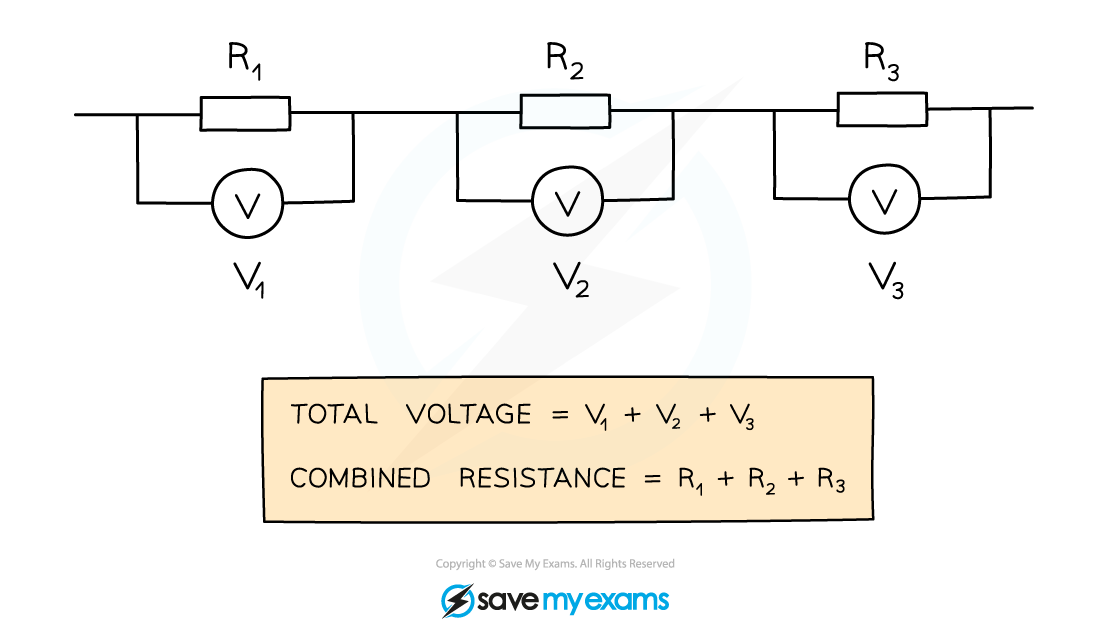
When several components are connected in series, their combined resistance is equal to the sum of their individual resistances
Combination of resistance in parallel
- When resistors are connected in parallel, the combined resistance is less than the resistance of any of the individual components
- If two resistors of equal resistance are connected in parallel, then the combined resistance will halve
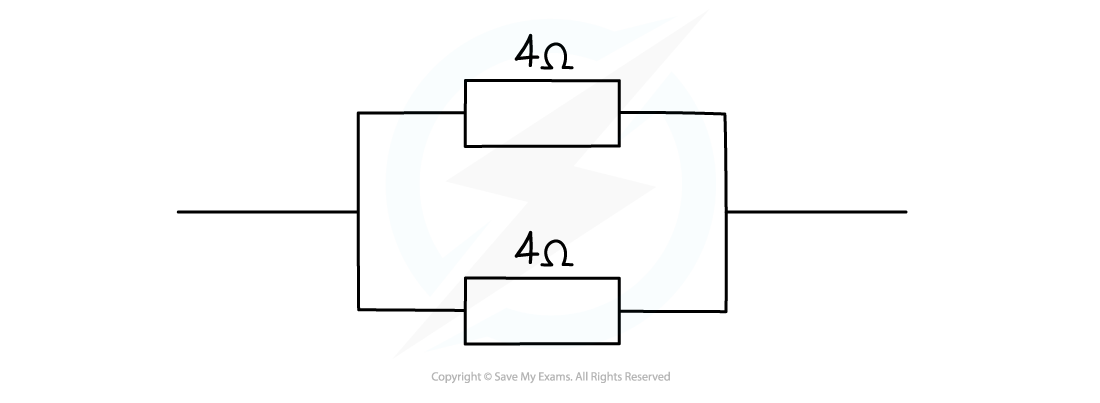
The above resistors will have a combined resistance of 2 Ω − half the value of each resistor in this case
Determining resistance in parallel
Extended Tier Only
- To determine the combined resistance of any combination of two resistors, you must use the equation:
-
Where:
- is the combined resistance in ohms, Ω
- is the resistance of resistor 1 in ohms, Ω
- is the resistance of resistor 2 in ohms, Ω
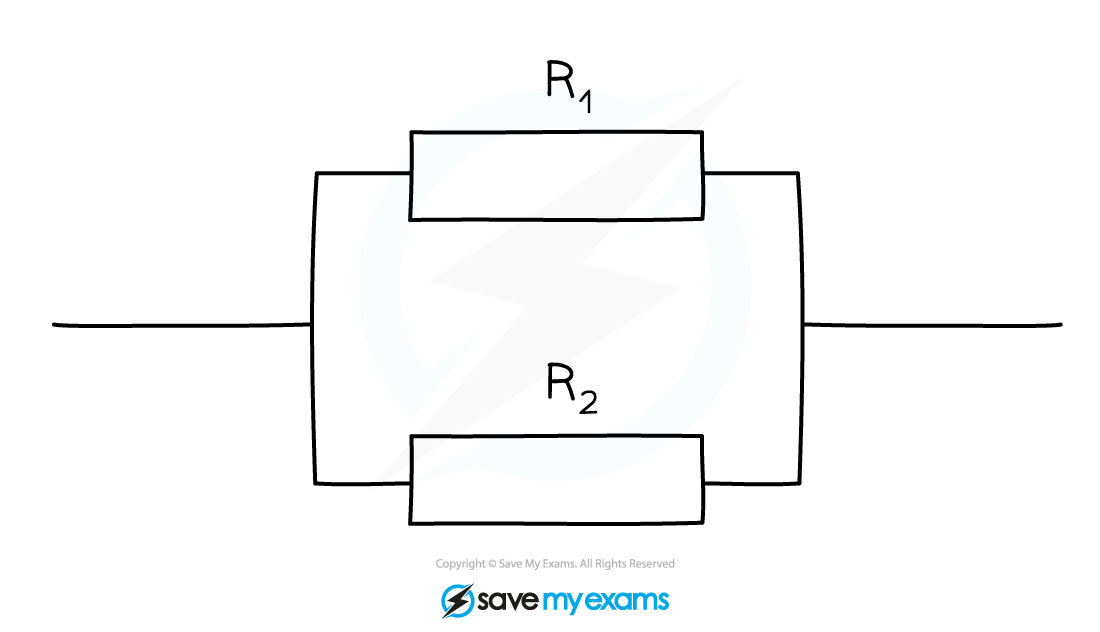

The combined resistance is always less than the resistance of either resistor individually
-
The method to calculate the resistance:
- First find the value of 1/R (by adding 1/R1+ 1/R2)
- Next find the value of R by using the reciprocal button on your calculator (labelled either x-1* *or 1/x, depending on your calculator)
Video of Resistance in Parallel
Video of Resistors in Series
Was this revision note helpful?
Build on this topic