Fission & Fusion (Cambridge International IGCSE Science)
Exam board Cambridge International · IGCSEUpdated 2026-07-02
Fission & fusion
Extended tier only
- The processes of nuclear fission and nuclear fusion are the splitting and joining of atoms
Nuclear fission
-
Nuclear fission is defined as: The splitting of a large, unstable nucleus into two smaller nuclei
-
During fission:
-
A neutron collides with an unstable nucleus
- The neutron and the nucleus are the reactants
-
The nucleus splits into two smaller nuclei (called daughter nuclei) and two or three neutrons
- The daughter nuclei and the neutrons are the products of the reaction
-
Gamma rays are also emitted
-
Nuclear fission process
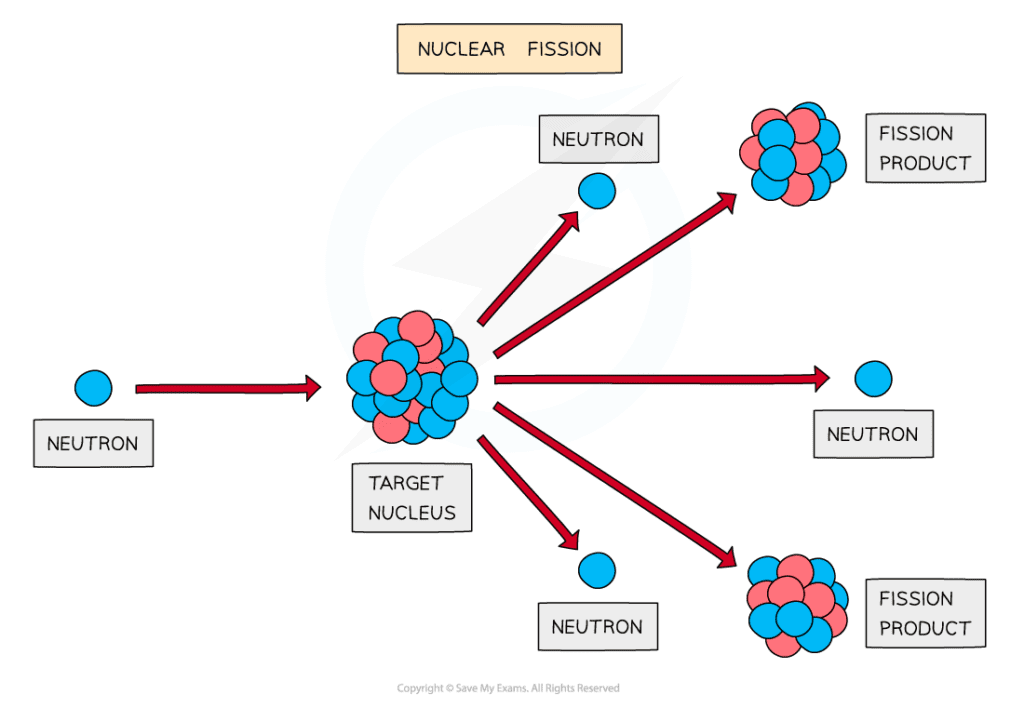
A neutron is fired into the target nucleus, causing it to split
Nuclear fission of uranium-235
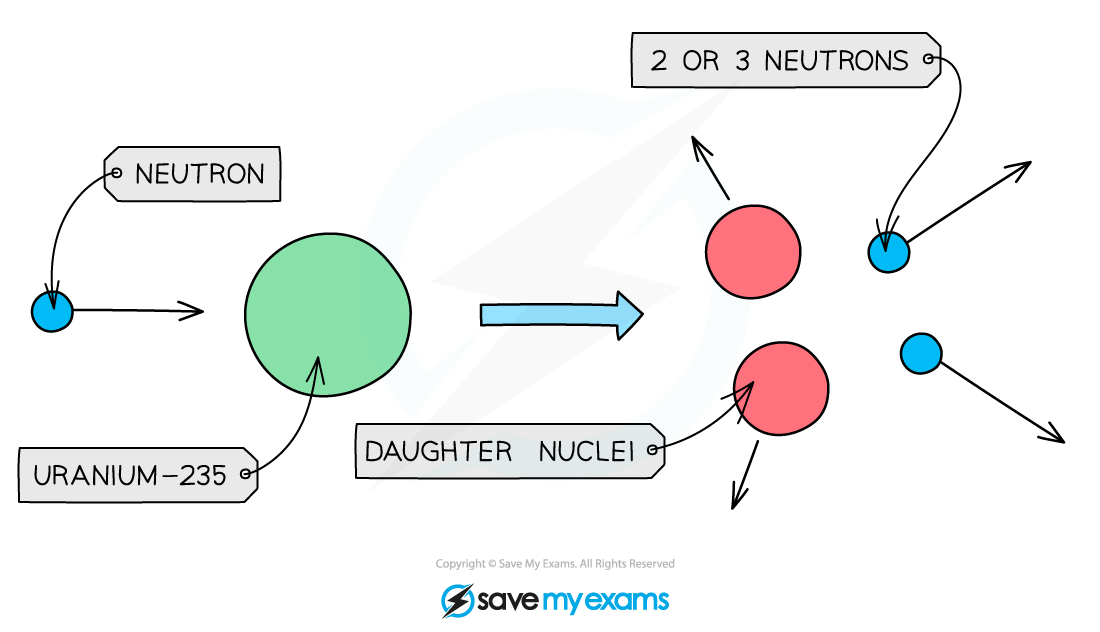
Large nuclei can decay by fission to produce smaller nuclei and neutrons with a lot of kinetic energy
Nuclear fusion
-
Nuclear fusion is defined as: When two light nuclei join to form a heavier nucleus
-
Stars use nuclear fusion to produce energy
- In most stars, hydrogen nuclei (light nuclei) are fused together to form a helium nucleus (heavier nucleus) and massive amounts of energy is produced
Nuclear fusion of hydrogen
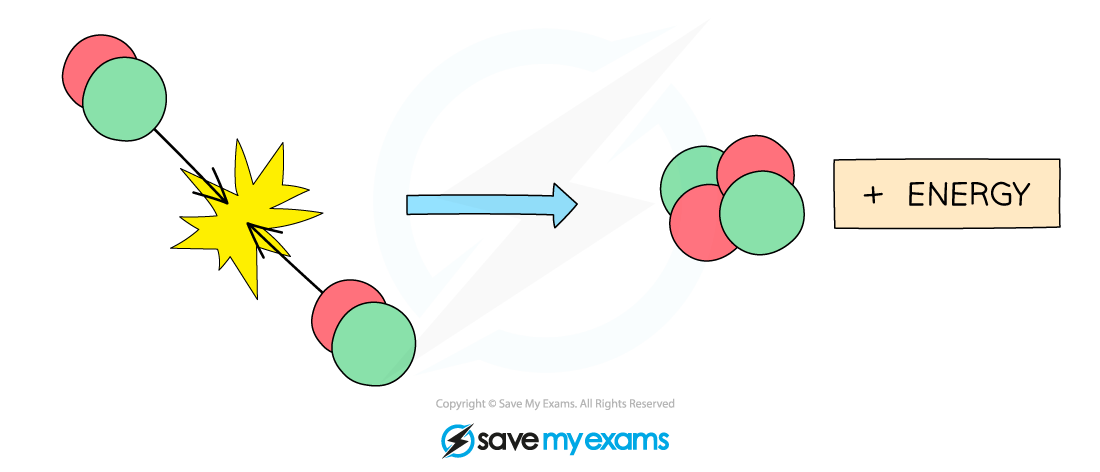
Two hydrogen nuclei fuse to form a helium nucleus
-
Nuclear fusion requires extremely high temperature and pressure
- So fusion is very hard to reproduce on Earth
Was this revision note helpful?
Build on this topic