Detailed Specific Example: Norway (Cambridge International IGCSE Geography)
Specification link
This page covers section 10.6.4 of the CIE IGCSE specification .
-
10.6.4- One detailed specific example of a named country to include:
- The energy mix.
- The impacts of the different types of energy being used.
- The strategies and techniques used to manage energy supplies; including sustainable.
Energy mix in Norway
Spec point — One detailed specific example of a named country to include: • the energy mix • the impacts of the different types of energy being used • the strategies and techniques used to manage energy supplies; including sustainable.
Energy mix in Norway
- Norway is a High Income Country (HIC) in northern Europe
- The demand for energy is one of the highest in the world
- The population is mainly urban with 83% of people living in towns and cities
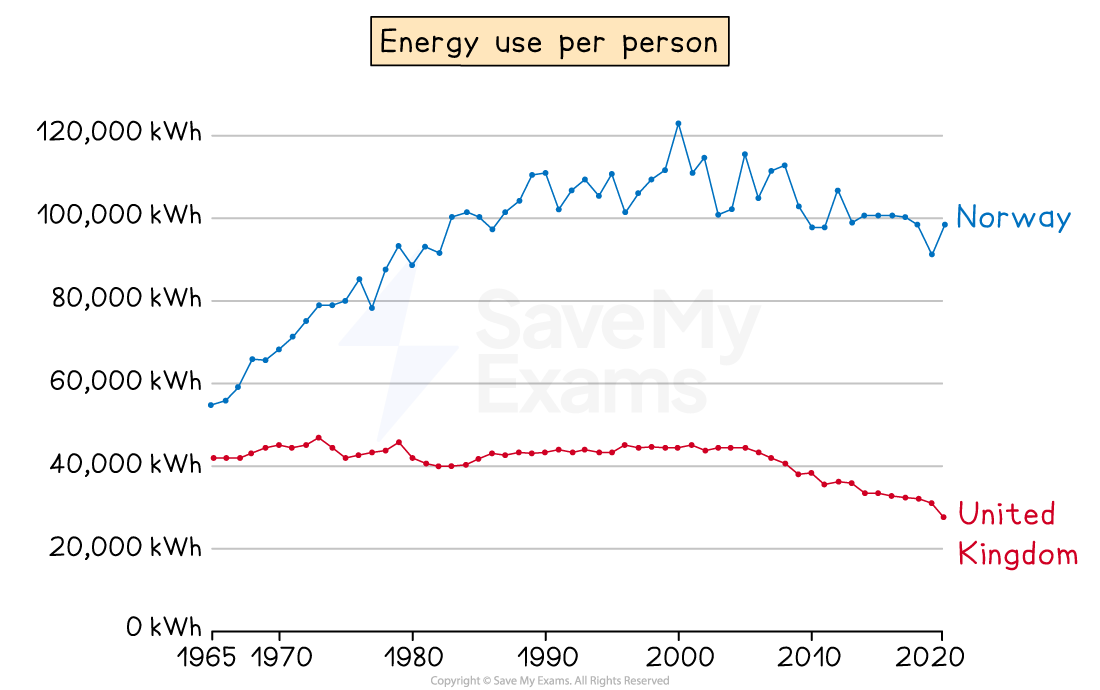
Graph showing the energy use in Norway and the UK
Energy resources
-
Norway has significant energy resources, including:
- 1% of the world's gas reserves (17th in the world)
- 0.3% of the world's oil reserves (22nd in the world)
- There are also some coal reserves
-
Norway is one of the world's largest energy exporters
-
Hydropower generates 90% of Norway's electricity and accounts for 65% of energy use
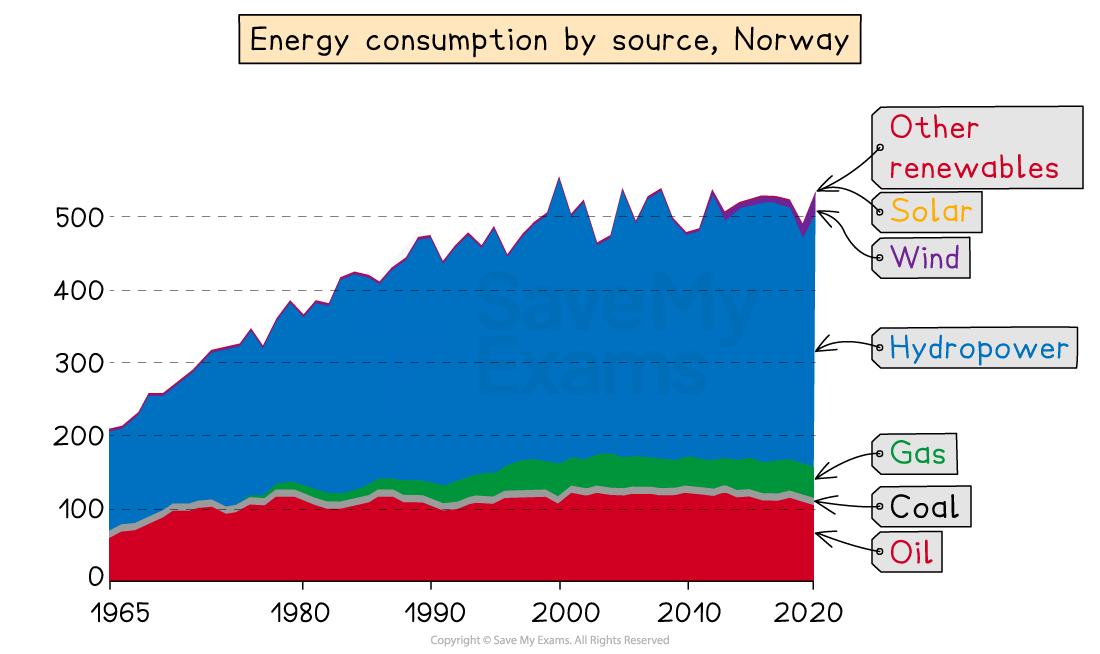
Graph showing the energy use in Norway and the UK
Impacts of energy types in Norway
Spec point — One detailed specific example of a named country to include: • the energy mix • the impacts of the different types of energy being used • the strategies and techniques used to manage energy supplies; including sustainable.
Impacts of energy types in Norway
-
The reliance on hydropower in Norway has several impacts, including:
- **Flooding **of large areas of land
- Dams create physical barriers to** fish migration** and impact on breeding areas
- River flow rates are impacted, which can negatively affect wildlife
- Water temperature and sediment levels are altered
- Habitat destruction
-
The production of hydropower can be impacted by climate conditions
- In 2022, Norway experienced drought conditions leading to a decrease in energy supply and an increase in energy prices
-
Although much of the oil and gas extracted by Norway is exported, the extraction impacts the environment by:
- Increasing the risk of oil spills and leaks
- Underwater noise pollution affects marine life
- The burning of the fossil fuels increases greenhouse gas emissions and contributes to global warming
Strategies used to manage energy supplies in Norway
Spec point — One detailed specific example of a named country to include: • the energy mix • the impacts of the different types of energy being used • the strategies and techniques used to manage energy supplies; including sustainable.
Strategies used to manage energy supplies in Norway
-
There are over 1500 hydropower plants in Norway
-
Due to the issue of reliance on hydropower during the dry season and the environmental impact of large hydropower plants Norway is expanding other renewable energy sources
-
Demand continues to increase
-
Norway is expanding the number of wind farms:
-
There are currently 53 wind farms
-
Plans for 36 additional onshore and offshore are due to be started or completed by 2030
- Includes the world's first floating wind farm
-
-
Norway is also investing in solar energy:
- Homeowners in Oslo get a 30% subsidy for installing solar panels
-
To reduce the consumption of oil, Norway is encouraging the population to move to electric cars:
- In 2021, 66% of all new car sales in Norway were electric
Was this revision note helpful?
Build on this topic