Tropical Storms (Cambridge International IGCSE Geography)
Specification link
This page covers sections 2.3.4 and 2.3.5 of the CIE IGCSE Geography specification.
- 2.3.4- The distribution and impacts of tropical storms: cyclones, hurricanes, and typhoons.
- 2.3.5 - An evaluation of the strategies and techniques used to manage the impacts of tropical storms: preparation, planning, protection, and prediction.
Tropical storm distribution
Spec point — The distribution and impacts of tropical storms: cyclones, hurricanes, and typhoons
-
Tropical storms are rotating, intense low-pressure systems (below 950mb)
-
They are known as:
- Typhoons in the South China Sea and west Pacific Ocean
- Hurricanes in the Gulf of Mexico, Caribbean Sea and west coast of Mexico
- Cyclones in the Bay of Bengal, Indian Ocean and northern Australia
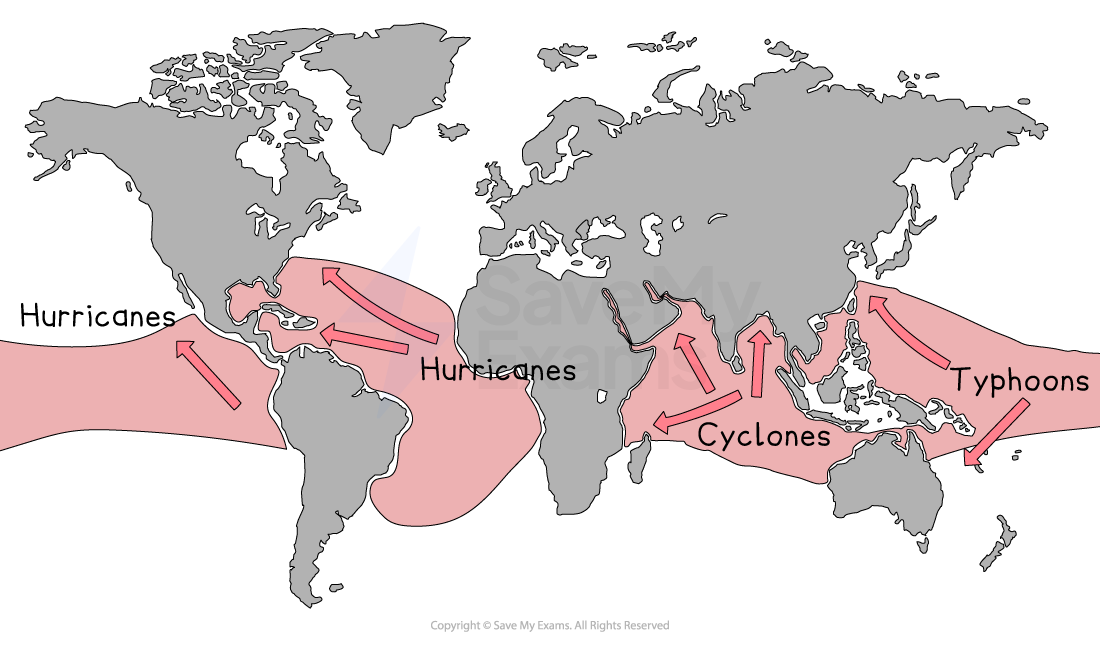
Distribution of tropical storms
-
Tropical storms need specific conditions to form
- Ocean temperatures must be in excess of 27°C and to a depth of 50-60 metres
- Between 5° and 30° north and south of the equator, but not on the Equator, as there is no Coriolis effect
-
Tropical storms begin when tropical oceans are at their warmest, which is usually late summer (Nov-April in the southern hemisphere and June-Nov in the northern hemisphere)
- The Pacific Ocean sees the largest number of tropical storms, followed by the Indian Ocean, and lastly, the Atlantic
- Tropical storms in the western Pacific are the strongest
Characteristics of tropical storms affect impacts
-
Characteristics include:
- lasting 7-14 days
- large diameter
- heavy rainfall
- high wind speeds (over 119 km/h)
- high waves and storm surges
-
Tropical storms can vary in diameter (100 and 1000 km) but generally ranges from 200 to 500 km (124 to 311 miles)
-
The winds of the storm are not constant across its diameter
- The outer edges of the storm have lighter wind speeds, smaller and more scattered clouds, less intense rain, and temperatures begin to increase
- The strongest and most destructive winds are found within the eyewall, with spiralling storm clouds, torrential rainfall and low temperatures
-
Tropical storms are rated on the five-point Saffir-Simpson scale based on wind speeds
-
Tropical storms are considered major when they reach category 3 and have wind speeds between 111 and 129 miles (178 and 208 kilometres) per hour
-
A category 5 storm can deliver wind speeds of more than 157 miles (252 km) an hour
Impacts of tropical storms
-
The primary impacts of tropical storms
- High winds up to 250 km/h uprooting trees, damaging infrastructure and buildings, causing injury and loss of life
- Intense rainfall leading to flash flooding, damaging property and injuring people from fast-flowing water
- Storm surges from large areas of low pressure allow the sea level to rise, which, combined with high winds, forces a large mass of water towards land. This erodes beaches, damage sea defences and contaminates farmland and freshwater
- Coastal flooding caused by intense rainfall and storm surges can affect large areas of low-lying land, including farmland and the tourist industry
- Landslides are triggered because soil becomes saturated due to intense rainfall and in areas with steep slopes, where the soil can no longer hold its position, sliding down the slope
-
The secondary impacts of tropical storms include
-
People are made homeless, causing distress, poverty, ill health or death due to a lack of shelter. The cost of rebuilding can be expensive and some people may not have insurance
-
Blocked or destroyed roads prevent rescue and emergency vehicles, and aid from getting through
-
Life support systems, hospitals, shops and homes left without power supplies when electricity lines are damaged/destroyed
-
There are risks of fires and explosions as gas lines are broken
-
Clean water supplies are contaminated as sewage overflows, bringing the increased risk of waterborne diseases and death
-
Economic impact to business owners and potential unemployment as businesses are destroyed
-
Storm surge can drown people or cause injuries from the rushing water. Crops, livestock and habitats are destroyed, leading to a shortage of food and potentially famine
- For instance, Cyclone Idai destroyed almost 715,000 hectares of crops in March 2019, resulting in food shortages in Mozambique
- The cyclone killed over 1,000 people and affected over 15 million in Mozambique, Malawi, and Zimbabwe
- It was the second-deadliest tropical cyclone ever seen in the southern hemisphere
-
Exam Hint The storm's impact increases with the number of settlements and businesses, affecting more people and properties.
Planning, preparation, protection, and prediction of tropical storms
Spec point — An evaluation of the strategies and techniques used to manage the impacts of tropical storms: preparation, planning, protection, prediction.
-
The level of preparation depends on accurate forecasting and then communications but also level of development
-
High-income countries (HICs) are able to spend money on preparation and high-tech systems of prediction and notification
-
Middle-income countries (MICs) and low-income countries (LICs) may find it difficult to buy satellites and monitoring systems or communicate the information to people likely to be affected
-
The 4 P's are used to manage tropical storms: planning, preparation, protection, and prediction(for the future)
-
These aim to:
- Save lives
- Protect personal property and infrastructure
-
Planning provides long-term strategies to mitigate the impacts of tropical storms
-
Examples include building homes and businesses away from high-risk areas, such as the coast
-
Implement building standards to ensure structures can withstand hurricane-force winds and storm surges
- Areas of poverty lead to poor construction of housing, which is more easily damaged: regardless of level of development
-
-
Preparation involves taking measures to minimise risks and ensure readiness before a tropical storm strikes
-
Examples include developing emergency response plans
-
Stockpiling supplies and advising people to maintain a survival kit
-
Educating residents about evacuation routes and safety procedures
-
Reinforcing buildings and securing loose objects that could become projectiles in high winds are also sensible preparations
- People who know how to react are more likely to survive, as they will evacuate safely
- Survival kits can help those who are trapped to survive whilst waiting for help
-
-
Protection involves creating structures that help lessen the effects of tropical storms on both people and property
-
This includes things like building seawalls, levees, and storm surge barriers that can prevent flooding
-
Mangroves are nature's own defence system and can play a crucial role in reducing the impacts of storm surges and coastal erosion when planted
- Buildings are less likely to be destroyed, so less people will die from collapsing buildings and falling debris
- Buildings will not be flooded This reduces the risk of flooding from overflowing rivers, or from storm surges
-
-
Prediction is understanding where the storm is headed and how strong it’s going to be
-
Early warning systems alert those who are at risk
-
Meteorological agencies combine satellite imagery and weather models with historical data to predict how tropical storms will develop and move
- This allows time for evacuation, which will reduce the number of deaths and injuries
- It also means people can protect their homes and businesses from strong winds and flooding
-
Was this revision note helpful?
Build on this topic