Impacts of Water Pollution (Cambridge International IGCSE Environmental Management)
Water pollution & infectious diseases
-
Water pollution harms both people and the environment
- Pollutants can come from industry, agriculture and households
-
Polluted water can lead to infectious diseases
Risk of infectious bacterial diseases: cholera
-
Polluted water can contain bacteria, including Vibrio cholerae, which causes cholera
- Cholera spreads when people drink or use untreated sewage-contaminated water
-
Causes severe diarrhoea and dehydration
- Severe diarrhoea can cause the loss of significant amounts of water and ions from the body, causing the tissues and organs to stop working properly
- Can lead to death if not treated quickly
-
Common where sewage systems are poor or after floods that mix human waste with drinking water
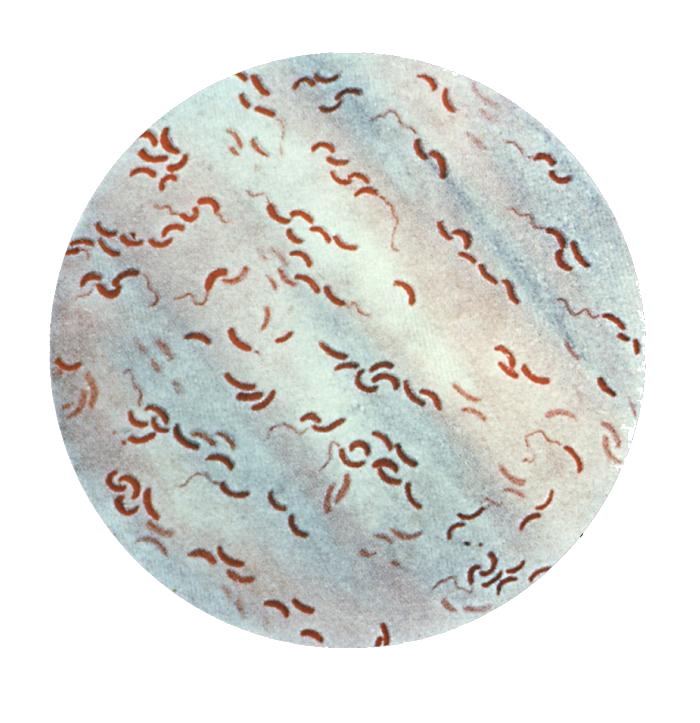
The pathogen Vibrio cholerae can cause cholera (CDC, Public domain, via Wikimedia Commons)
Bioaccumulation & biomagnification of toxic substances
Accumulation of toxic substances from industrial processes
-
Factories may release heavy metals (e.g. lead, mercury) or chemicals into rivers and lakes
- These substances do not break down easily
-
Mercury is a common example of an industrial pollutant
- Can enter water from metal processing, mining or waste disposal
- Causes nerve damage and serious health problems in humans and wildlife
-
Toxic substances can poison aquatic plants and animals
- Fish may suffer kidney damage, deformities or death
-
Toxic chemicals can enter human drinking water supplies
- This can lead to long-term health risks
Bioaccumulation & biomagnification of toxic substances
Bioaccumulation
-
Bioaccumulation is the gradual build-up of toxic substances in a single organism over time
-
This happens because organisms absorb toxins faster than they can remove them
-
For example:
- A fish absorbs small amounts of mercury each time it feeds
- Over months or years, mercury levels in the fish grow to dangerous amounts
-
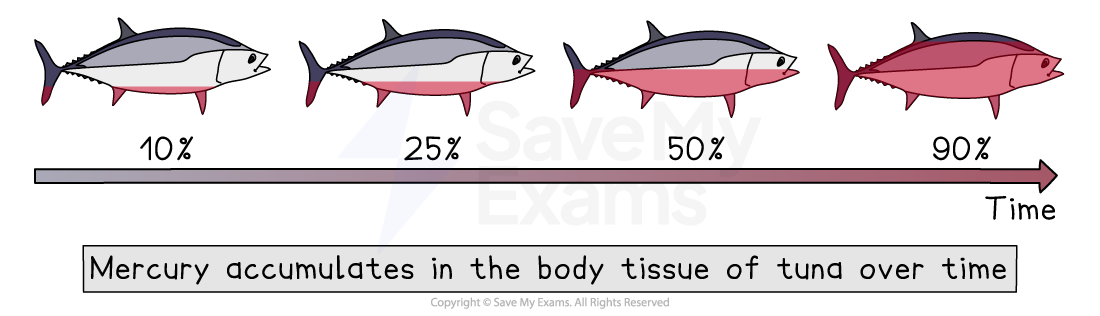
The bioaccumulation of mercury in tuna
Biomagnification
-
Biomagnification occurs when toxin concentrations increase as they pass up the food chain
- Predators eat many contaminated organisms, increasing toxin levels in their bodies
-
Top predators (e.g. large fish or birds of prey) have the highest toxin levels
- This can cause reproductive problems, weakened shells in birds, or poisoning in mammals
-
DDT, a pesticide, is a well-known example:
- DDT was a widely used insecticide in the mid-20th century that was found to have harmful effects on birds of prey such as eagles and falcons
- When DDT was sprayed on crops, it would leach into waterways and eventually enter freshwater and marine ecosystems
- DDT would then enter food chains (via plankton) and accumulate in the bodies of fish
- These fish would then be eaten by birds, which would accumulate higher concentrations of DDT
- Because DDT is persistent and does not break down easily, it can continue to accumulate in the bodies of animals at higher trophic levels (such as birds of prey)
- This lead to harmful effects such as thinning of eggshells and reduced reproductive success
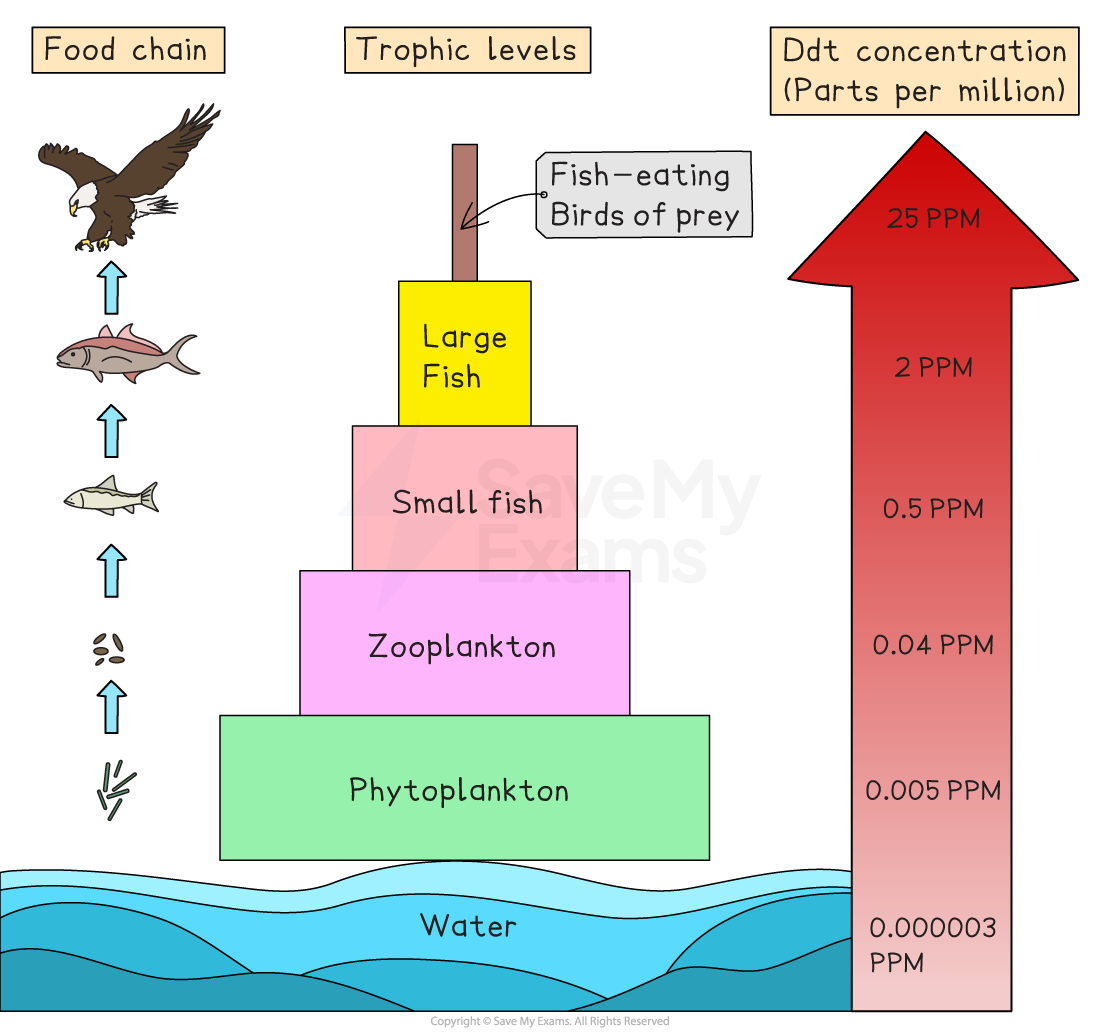
The process of biomagnification through the use of DDT in the environment
Exam Hint Students often mix up bioaccumulation and biomagnification. Remember: bioaccumulation happens in one organism, and biomagnification happens up the food chain. Please ensure you understand this distinction.
Acid rain
-
Acid rain forms when gases from burning fossil fuels (e.g. sulphur dioxide, nitrogen oxides) mix with rainwater
- Produces weak acids that fall into rivers and lakes
-
Acid rain lowers the pH of water
- Many fish and aquatic insects cannot survive in acidic conditions
- Damages fish gills and kills eggs
- This reduces populations of these organisms and can disrupt food chains
-
Acid rain can also leach toxic metals like aluminium from the soil into rivers and lakes
- This further harms aquatic life
The impact of acid rain on fish
Leaching & nutrient enrichment
Leaching of nutrients
-
Fertilisers from farms can be washed into rivers and lakes
- Rainwater dissolves nitrates and phosphates and carries them away
- These nutrients can cause rapid plant and algae growth in water
Eutrophication
- Excess nutrients lead to algal blooms
- Algae cover the water surface
- Algae block sunlight
- Aquatic plants below cannot photosynthesise and die
- Decomposers break down dead plants and algae
- This uses up oxygen, creating low-oxygen (hypoxic) water
- Fish and other animals suffocate
- This can leads to ecosystem collapse and loss of biodiversity in rivers and lakes
Stages of eutrophication
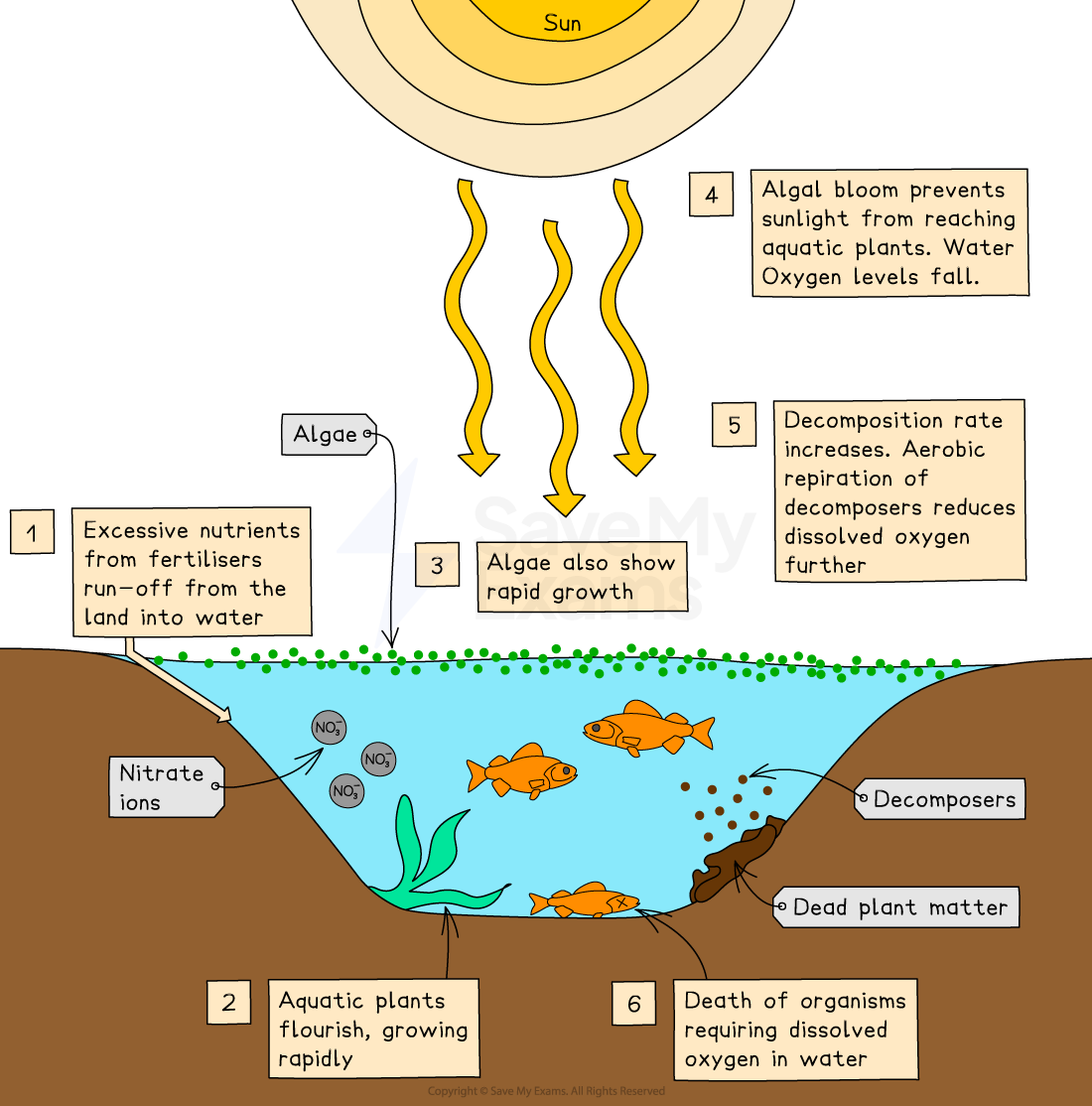
The sequence of events causing eutrophication
Was this revision note helpful?
Build on this topic