Strategies to Manage Impacts of Acid Rain (Cambridge International IGCSE Environmental Management)
Strategies to manage impacts of acid rain
Flue gas desulphurisation (FGD)
-
FGD is important because SO₂ emissions are a health and environmental hazard
-
FGD systems can remove up to 95% of SO₂ from flue gases
-
FGD is the main way to reduce sulphur dioxide emissions from coal-fired power stations
-
Emissions are passed into a scrubbing chamber where
- They are sprayed with a wet slurry of calcium oxide and calcium carbonate
- The calcium compounds react with sulphur dioxide to produce calcium sulphate
- The cleaned gas is then emitted from the chimney
-
Flue gas desulphurisation
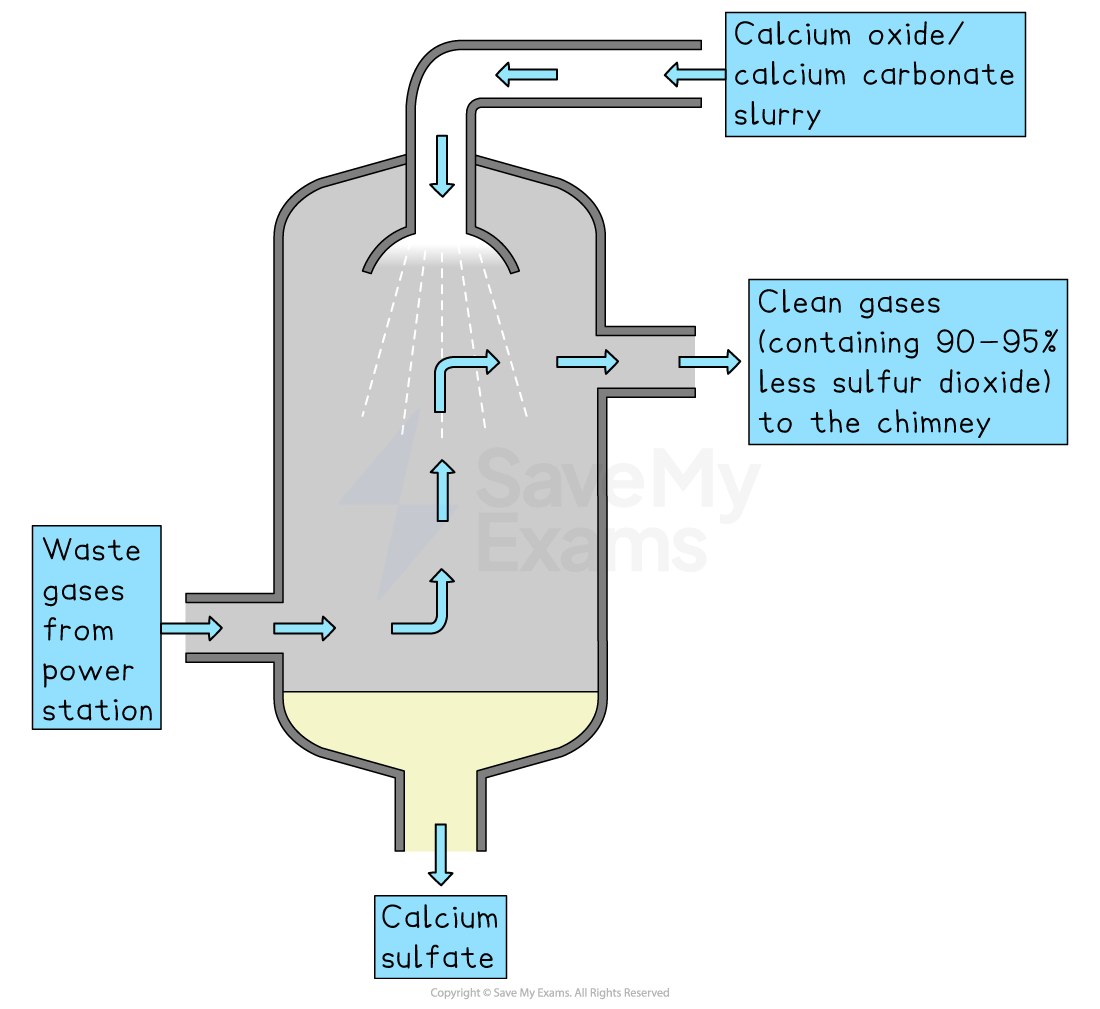
The scrubber sprays a lime slurry over the waste gases to remove 90-95% of the sulphur dioxide
-
Scrubbers remove building exhaust gases and particles
-
Wet scrubbers
- Wet scrubbers use limestone to neutralize sulphur dioxide before it leaves exhaust stacks
- These pipes pass gases through a water-sprayed chamber
- Particulates and dissolved gases are then filtered from the liquid
- After cleaning (scrubbing), the exhaust is emitted
- There is a sludge collection system that traps polluted water for later disposal
-
Dry scrubbers
- Exhaust gases are neutralised or converted by dry chemical scrubbers
- The converted materials are recovered from the gas stream, with the cleaned gases being emitted
- Calcium oxide is a common dry scrubber additive which reacts with SO₂ to form calcium sulphite
Catalytic converter
- Catalytic converters are devices fitted to petrol and diesel vehicles and sometimes on kerosene heaters and stoves to reduce harmful emissions
- They contain a series of transition precious metal catalysts, such as platinum and rhodium
- The metal catalysts are in a honeycomb within the converter to increase the surface area available for reaction
- The system is attached to the exhaust system and converts toxic gases like CO, NOₓ, and hydrocarbons into less toxic compounds like CO₂, O₂, N₂, and water
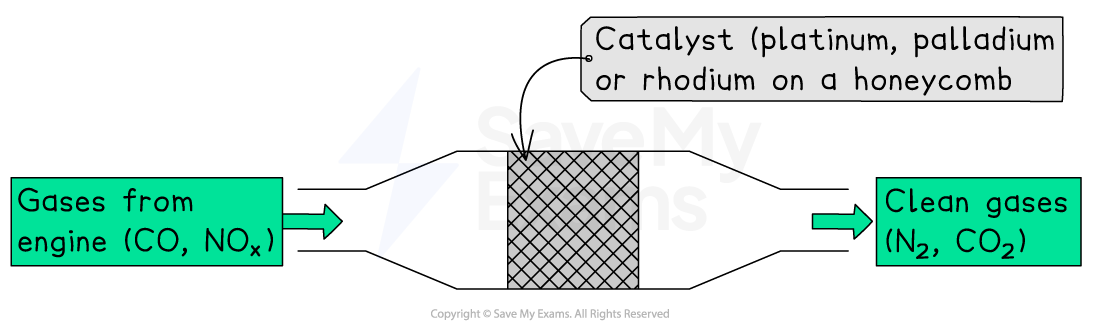
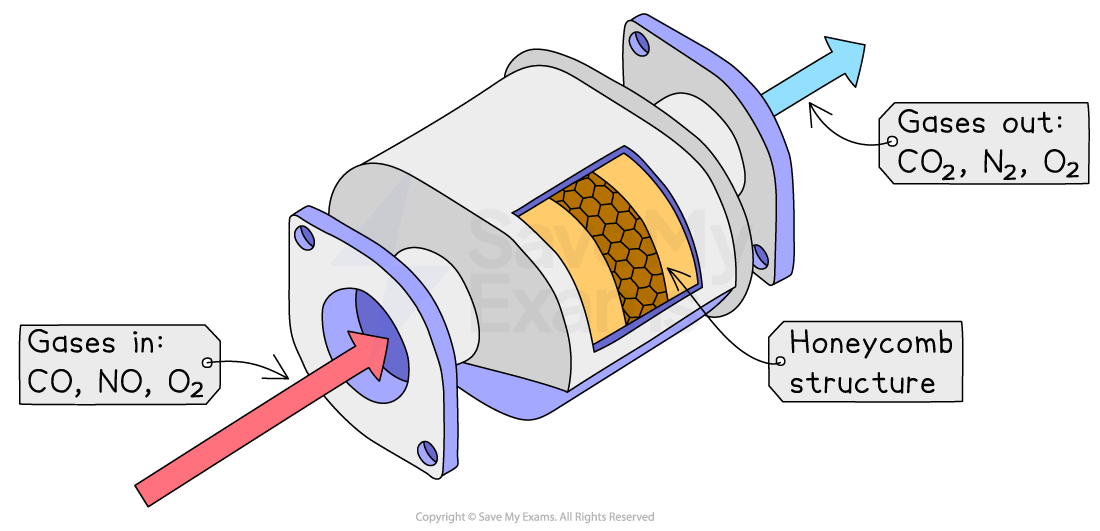
Catalytic converters are designed to reduce the polluting gases produced in car exhausts
Transport policies
- Transport policies can help mitigate the effects of acid rain by using fewer fossil fuels
- In many countries, it is compulsory for vehicles to have catalytic converters
- By providing larger subsidies, governments can promote the use of public transport
- Walking, cycling, and carpooling reduce emissions
- Increasing the number of electric vehicles (EV) on the road can also help
Benefits & limitations of strategies to manage impacts of acid rain
Flue gas desulphurisation
- They help lower harmful gases released into the air
- They can reduce SO₂ emissions by up to 90%
- However, the flue gas exiting the absorber is highly corrosive because it's saturated with water and still contains SO₂ that can damage equipment
- Using corrosion-resistant materials or reheating the gasses above dew point minimises corrosion but adds to the costs
Catalytic converters
-
Motor vehicles generate more air pollution than any other single human activity
- Catalytic converters may improve air quality; however, they are expensive to replace and can increase fuel consumption, as extra fuel is needed to keep the converter hot enough to work
- Also catalytic converters are a target for thieves who remove them for the precious metals
Transport policies
-
Carpooling leads to a reduction in the number of cars in city centres and is also a more economical way to travel
- Leeds city council operates a policy to encourage car sharing by the use of high-occupancy vehicle lanes, available for cars carrying two or more passengers, hence encouraging people to share cars to enable them to get to work quicker
- However, carpooling offers limited flexibility and can cause additional wear and tear on vehicles, leading to increased maintenance costs
-
Using public transport
- The introduction of bus lanes and improved transport information services has made public transport more attractive and sped up journey times
- However, in some countries, the cost, availability and reliability of public transport means people will continue to use their cars
-
Cycling can often be the quickest way to make short journeys
- But cycle tracks in towns and cities need improvement and expansion
-
Walking
- The introduction of pedestrianisation in city centres has increased the number of walkers
- As with cycling, walking is also a healthy way to travel as it increases physical fitness with no emissions
-
Promoting efficient motoring
- Maintaining slower speeds, fuel is conserved, and less carbon dioxide is emitted
- However, many people will and do ignore speed restrictions
-
Electric vehicles (EVs)
- An EV’s electric motor is highly efficient compared to an internal combustion engine
- EVs produce no tailpipe emissions but still contribute to emissions when the raw materials are mined, refined and manufactured
- EVs may also source energy from a grid that uses fossil fuels
- EVs are fitted with lithium-ion batteries that use a lot of energy and raw materials
-
Traffic management schemes
-
Traffic management schemes reduce the amount of traffic in city centres
- Paris has experimented with a scheme that allows cars with an even number plate to enter the city on one day and those with odd number plates on the next
-
Was this revision note helpful?
Build on this topic