Consequences of Changes in Foreign Exchange Rates (Cambridge International IGCSE Economics)
What happens when exchange rates change?
Spec point — effects of changes in foreign exchange rates on prices and demand for exports and imports
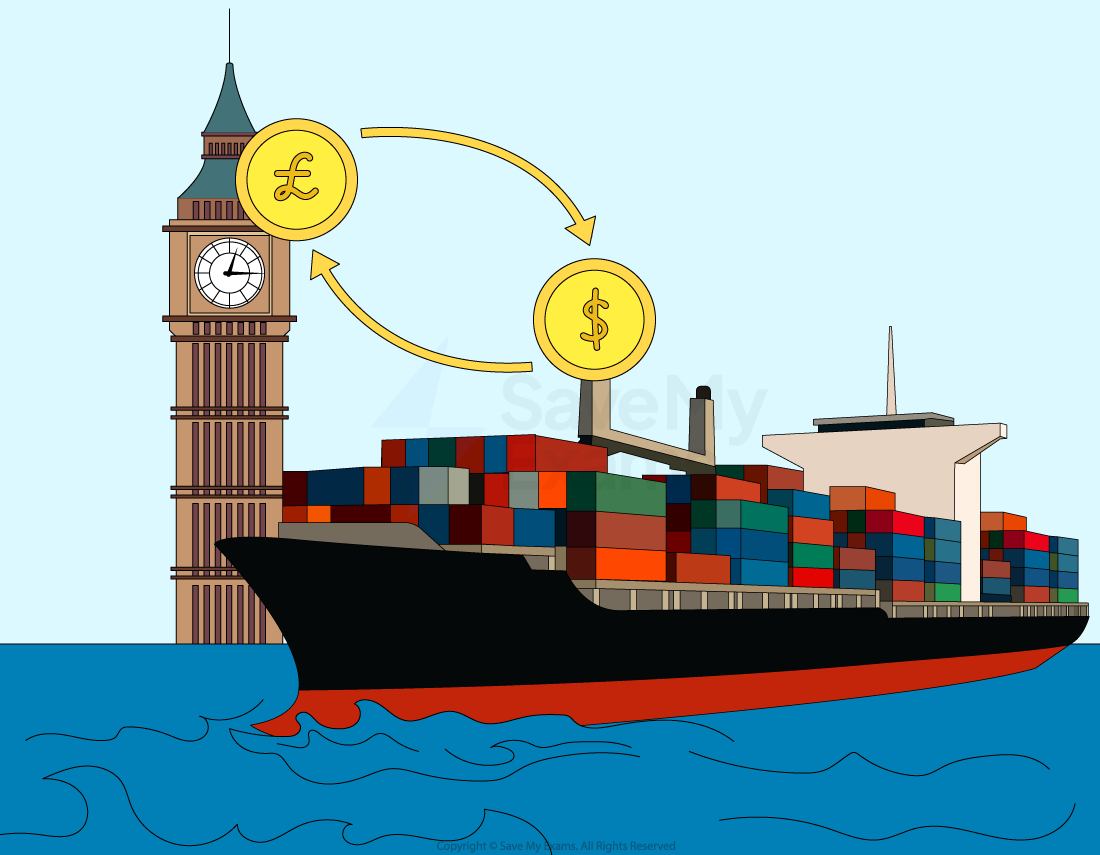
A change in the exchange rate affects the relative price of domestic and foreign goods. This influences how much consumers and firms buy and sell internationally.
- If the currency appreciates (gets stronger), exports become more expensive for other countries, and imports become cheaper for domestic consumers
- If the currency depreciates (gets weaker), exports become cheaper, and imports become more expensive
Effects of currency appreciation
| Impact Area | Effect of appreciation |
|---|---|
| Exports | - Become more expensive to foreigners → demand falls |
| Imports | - Become cheaper → demand rises for foreign goods |
| Domestic firms | - Exporters may lose customers; less revenue from overseas sales |
| Consumers | - Benefit from cheaper imported goods and foreign travel |
| Inflation | - Likely to fall as imported goods are cheaper and reduce cost pressures |
| Balance of Payments | - May worsen if exports fall and imports rise, increasing the Current Account deficit |
Effects of currency depreciation
| Impact area | Effect of depreciation |
|---|---|
| Exports | - Become cheaper to foreigners → demand increases |
| Imports | - Become more expensive → demand falls for foreign goods |
| Domestic firms | - Exporters benefit from higher sales → more output and possibly more jobs |
| Consumers | - Face higher prices for imported goods such as electronics and fuel |
| Inflation | - Likely to rise as cost of imported goods and raw materials increases |
| Balance of Payments | - May improve if exports rise and imports fall, reducing the Current Account deficit |
Case Study The UK Pound Depreciation After the 2016 Brexit Vote
In June 2016, the UK voted to leave the European Union (Brexit). As a result, there was major uncertainty in financial markets, and the value of the British pound (GBP) fell sharply against other major currencies.
- Before the referendum: £1 ≈ $1.45
- After the vote: £1 fell to ≈ $1.20 — a 17% depreciation
This depreciation affected trade, consumer prices, and the wider economy.
Impact
The weaker pound had the following effects:
Exports became cheaper for foreign buyers
- British-made goods and services were more affordable abroad
Imports became more expensive
- The UK had to pay more for imported products like fuel, food, and electronics
UK firms saw a rise in overseas demand but also higher input costs for imported raw materials
Consumers in the UK faced rising prices for everyday items due to more expensive imports
Macroeconomic result
- UK exporters benefited, especially in manufacturing and tourism, as foreign customers took advantage of favourable exchange rates
- Inflation rose in 2017, peaking at 3%, partly due to the higher import costs
- The Current Account deficit narrowed slightly, helped by stronger exports and weaker import growth
- Consumers faced reduced purchasing power, especially for imported goods, leading to pressure on real incomes and the standard of living
Was this revision note helpful?
Build on this topic