Taxation (Cambridge International IGCSE Economics)
The classification of taxes
Spec point — examples of the different classifications of tax: progressive, regressive, proportional; direct, indirect
-
The main source of government revenue is taxation
-
Direct taxes are taxes imposed on income and profits
-
They are paid directly to the government by the individual or firm
- E.g., income tax, corporation tax, capital gains tax, national insurance contributions and inheritance tax
-
-
Indirect taxes are imposed on spending
- The less a consumer spends, the less indirect tax they pay
- Examples of indirect tax include Value Added Tax(19% VAT rate in the European Union in 2022), taxes on demerit goods and excise duties on fuel
Progressive, regressive and proportional tax systems
- Tax systems can be classified as progressive, regressive or proportional
- Most countries have a mix of progressive (direct taxation) and regressive (indirect taxation) taxes in place
Progressive tax system
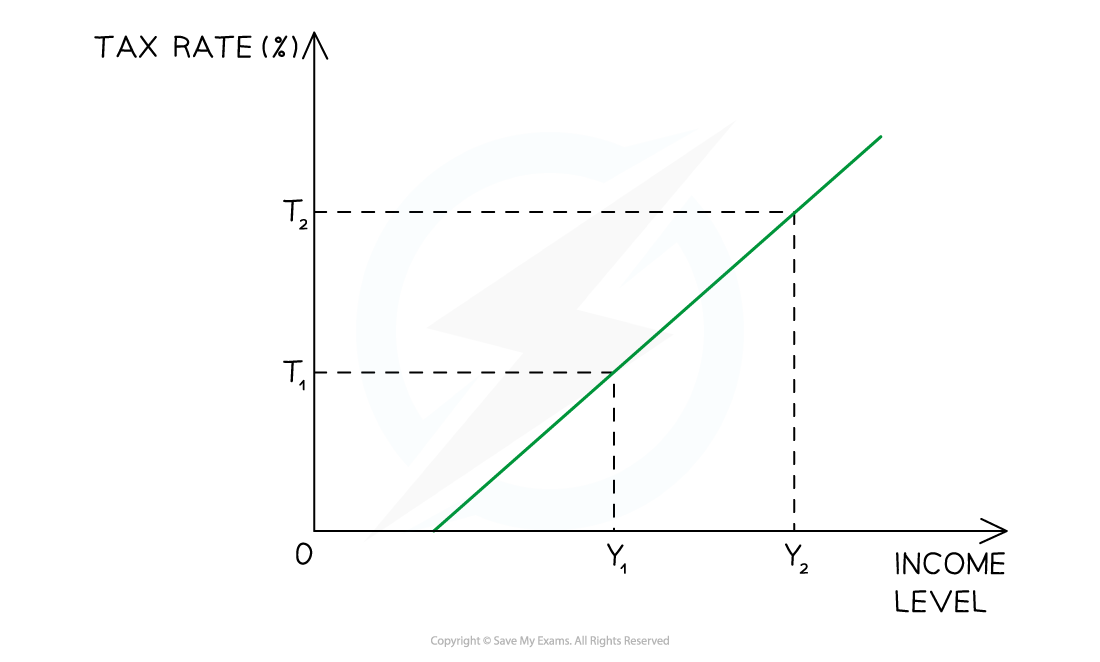
- As income rises, a larger percentage of income is paid in tax
- In the diagram, when personal income rises from Y1 to Y2, the tax rate rises from T1 to T2
Regressive tax system
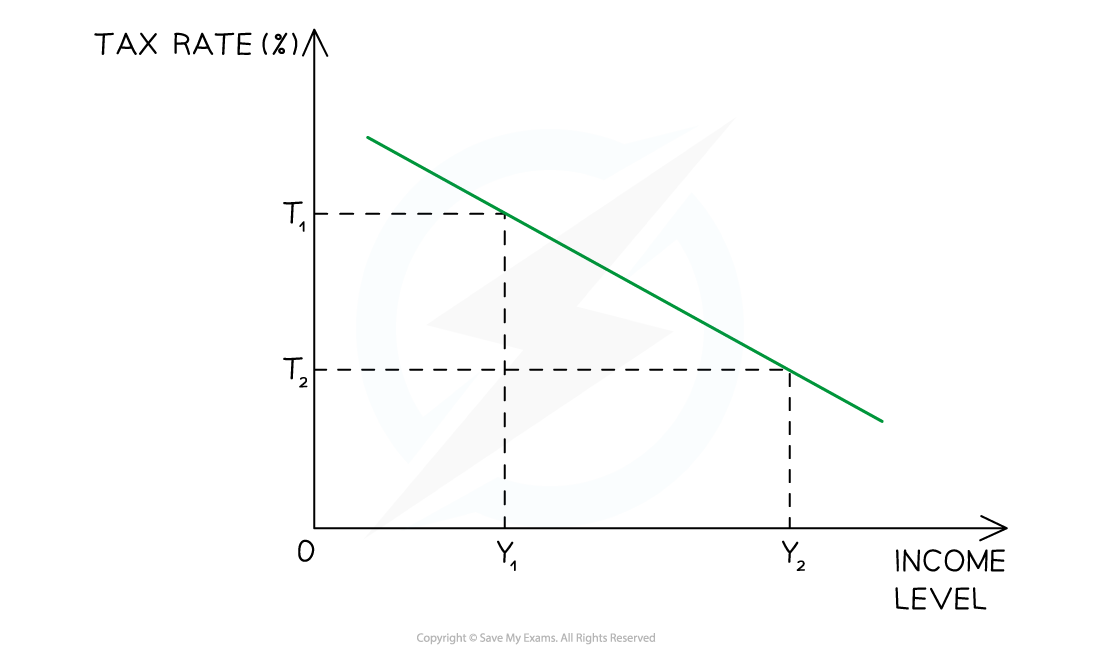
Regressive taxation
- As income rises, a smaller percentage of income is paid in tax
- In the diagram, when personal income rises from Y1 to Y2, the tax rate falls from T1 to T2
- All indirect taxes are regressive
- In the USA, Federal income tax is progressive but almost all State taxes are regressive (the bottom 20% of income earners pay as much as 6x the % of their income than the top 20%)
Proportional tax system
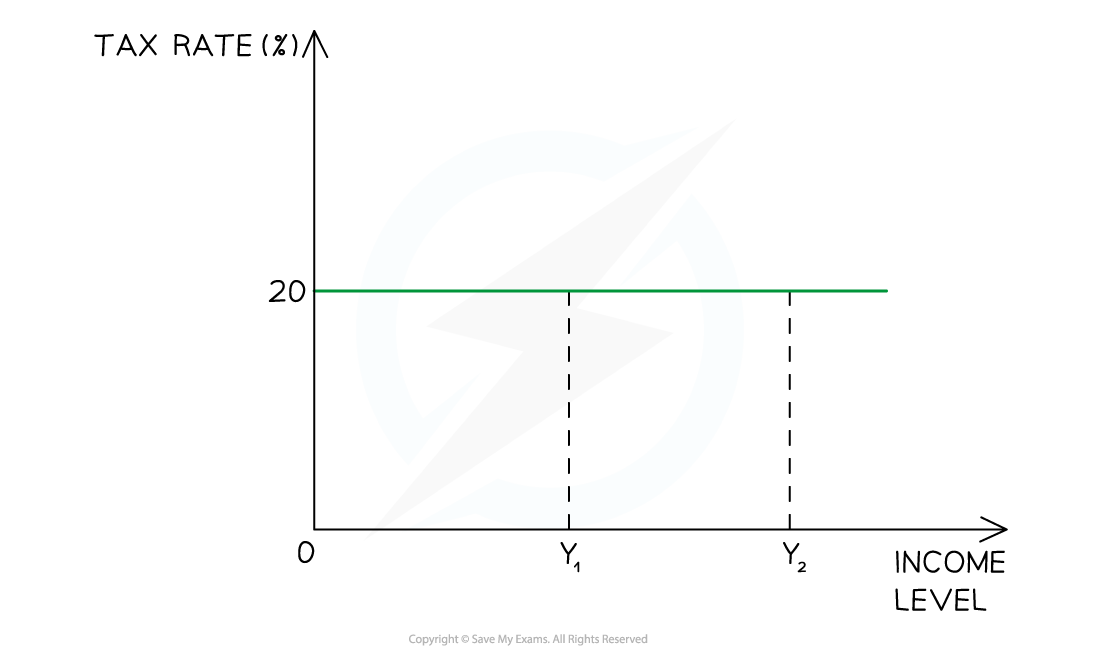
A proportional tax system
- As income rises, the same percentage of income is paid in tax
- In the diagram, when personal income rises from Y1 to Y2, the tax rate remains constant at 20%
- In 2022, Bolivia was using this system with a proportional tax rate of 13%
Exam Hint MCQ frequently test your knowledge of the different tax systems by presenting you with a table and asking you to identify the type of tax system illustrated
Identify the type of tax system illustrated below:
Weekly Income ($) 100 150 200 250 Weekly Tax ($) 20 30 40 50 It is a proportional tax system with a constant tax rate of 20%
The impact of taxation
Spec point — impact of taxation on consumers, workers, producers/firms, the government and the economy
Impact on consumers
-
Higher prices
- Indirect taxes increase the price of goods and services, reducing consumers’ purchasing power
-
Reduced consumption
- Higher prices may cause people to buy less, especially for non-essential goods
-
Behaviour changes
- High taxes on harmful goods (e.g. cigarettes) can discourage consumption
-
Lower disposable income
- Direct taxes (e.g. income tax) reduce the amount of income consumers can spend or save
Impact on workers
-
Lower take-home pay
- Income tax reduces the amount workers keep from their wages
-
Reduced incentive to work
- Higher taxes may discourage overtime or seeking higher-paid jobs
-
Impact on employment
- If firms cut costs to pay higher taxes, jobs may be lost or wage growth may slow
Impact on producers/firms
-
Higher costs of production
- Indirect taxes (e.g. VAT) make production more expensive
-
Reduced sales
- Higher prices can lower demand, especially for price-sensitive goods
-
Lower profits
- Increased costs and reduced sales can reduce profitability
-
Business decisions
- Firms may relocate to countries with lower taxes or invest less in expansion
Impact on the government
-
Revenue generation
- Taxation is the main source of government income for funding public services (e.g. healthcare, education)
-
Economic control
- Taxes can discourage harmful consumption (e.g. sugar tax) or reduce imports (e.g. tariffs)
-
Redistribution of income
- Progressive taxes (higher rates for higher earners) can reduce income inequality
Impact on the economy
-
Reduced spending and investment
- High taxes can slow economic growth if they reduce consumption and business activity
-
Inflationary pressures
- Indirect taxes can raise prices, contributing to inflation
-
Improved public services
- Tax revenue allows the government to invest in infrastructure, education and healthcare, which can boost productivity in the long term
-
Balancing effects
- The overall impact depends on tax rates, how revenue is used and the state of the economy
Was this revision note helpful?
Build on this topic