External Costs & Benefits (Cambridge International IGCSE Business)
External costs of business decisions
-
External costs are unwanted side effects of business activity that affect people or the environment outside the business
- These costs are not paid by the business, but by society
-
External costs can lead to public pressure, government regulation or reputational damage, which may eventually affect the business’s profits or operations
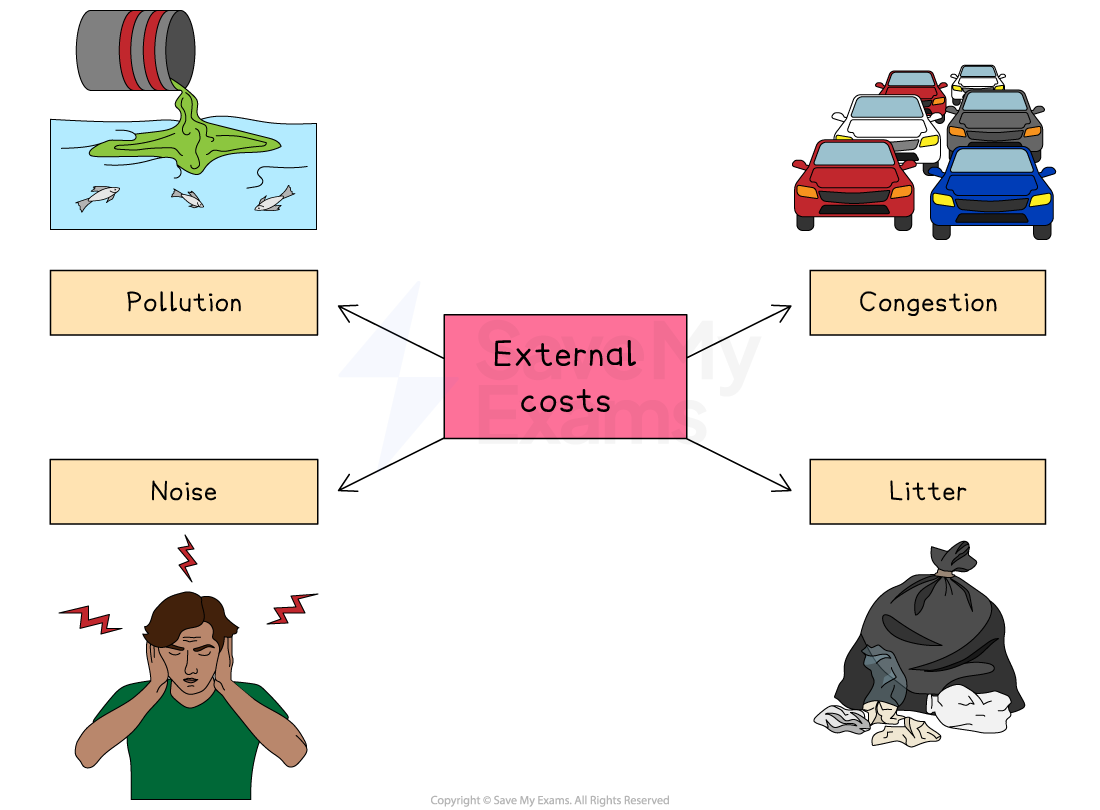
Examples of external costs
Environmental damage
-
Business activity can lead to pollution, deforestation, and resource depletion.
- For example, oil spills from BP’s Deepwater Horizon disaster in 2010 caused severe marine pollution in the Gulf of Mexico
- The clean-up costs and environmental impact were huge, affecting local fishing and tourism industries
Traffic congestion
-
Businesses that rely on large transport fleets or attract many customers can cause road congestion and longer travel times for others
- For example, large out-of-town retail parks in the UK, such as Bluewater Shopping Centre, have been criticised for increasing traffic congestion, especially during peak shopping periods
Noise pollution
-
Factories, airports, and construction projects can create disruptive noise for local residents and businesses
- For example, Indonesian residents living near the Soekarno-Hatta International Airport have complained about constant aircraft noise, especially at night, which affects sleep, health and quality of life
Waste and litter
-
Businesses that produce packaging or operate food outlets may contribute to local waste problems
- For example, fast food chains like McDonald’s have faced criticism over the amount of litter left around their stores, particularly in busy city centres
Exam Hint Don’t confuse external costs with private costs. External costs affect society (e.g. pollution), while private costs affect the business (e.g. wages, materials). Examiners often see students mix these up—be precise, as clear definitions and examples secure higher marks
External benefits of business decisions
-
External benefits are advantages that a business’s activities provide to people or the environment outside the business
- These benefits are not paid for by those who receive them
-
External benefits can help improve a business’s reputation, build good relationships with local communities and make it easier to operate in different countries
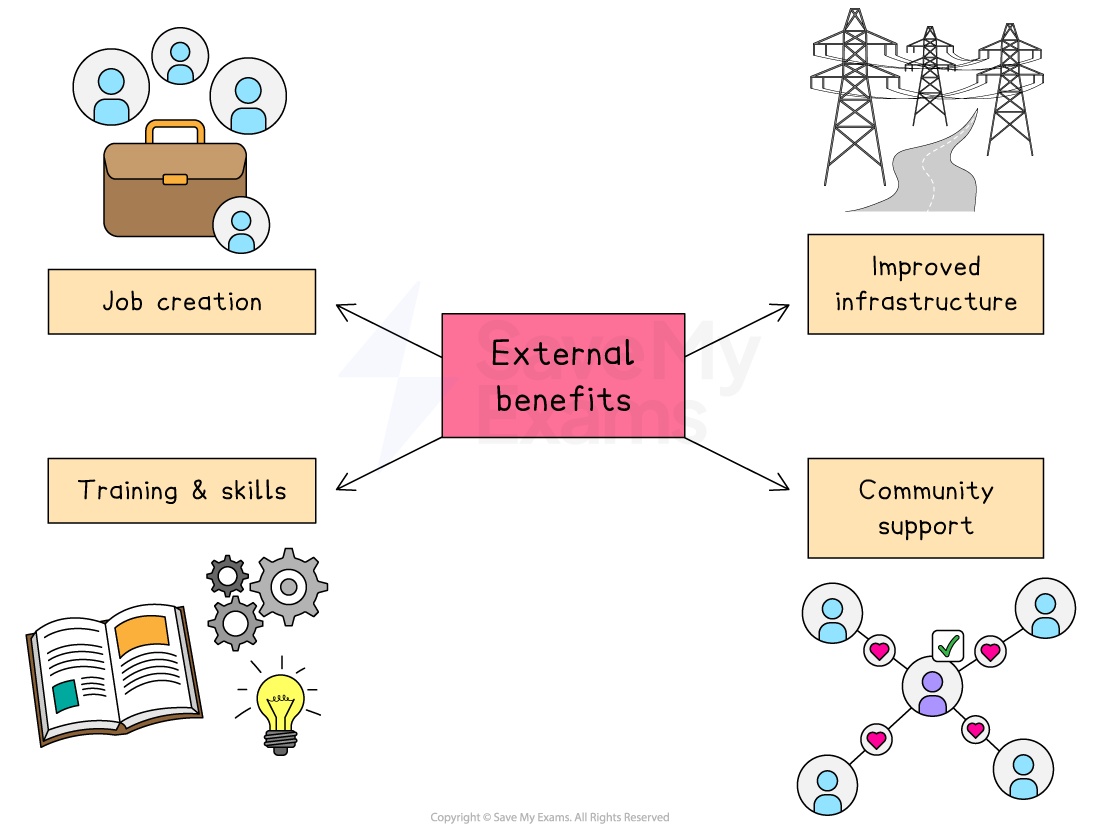
Examples of external benefits
Job creation
-
Businesses that open new factories, offices, or stores provide employment for local people
- For example, when Toyota opened its manufacturing plant in Durban, South Africa, it created thousands of jobs
- This boosted the local economy and reduced unemployment in the region
Improved infrastructure
-
Business investment can lead to improvements in roads, public transport or utilities, which benefit the wider community
- For example, the development of Silicon Valley in the USA led to better roads, high-speed internet, and power supply in surrounding areas
- These benefited not just tech firms, but also schools, hospitals and residents
Training and skills development
-
Some businesses offer training that improves workers' skills, which they can later use in other jobs or industries
- For example, Samsung in Vietnam provides extensive training for factory workers, increasing the overall skill level of the workforce
Support for local services
-
Large businesses may donate to schools, hospitals, or community projects near their operations
- For example,Coca-Cola in Kenya has supported clean water and sanitation programmes in rural areas, helping to improve public health
Was this revision note helpful?
Build on this topic