Product: Products and Brand Image (Cambridge International IGCSE Business)
Introduction to the Marketing Mix
Spec point — "• The limitations and benefits of developing new products • Brand image; impact on sales and customer loyalty • The role of packaging"
Introduction to the marketing mix
-
The marketing mix provides a framework for businesses to create and implement successful marketing strategies
- Sometimes known as the 'Four P's', it represents the key elements of a marketing strategy: product, price, place, and promotion
- These four components work together to satisfy the needs and wants of a target market while achieving the company's objectives
-
By understanding and manipulating the marketing mix, businesses can differentiate themselves from competitors, maximise marketing impact and achieve long-term success
The four P's of the marketing mix
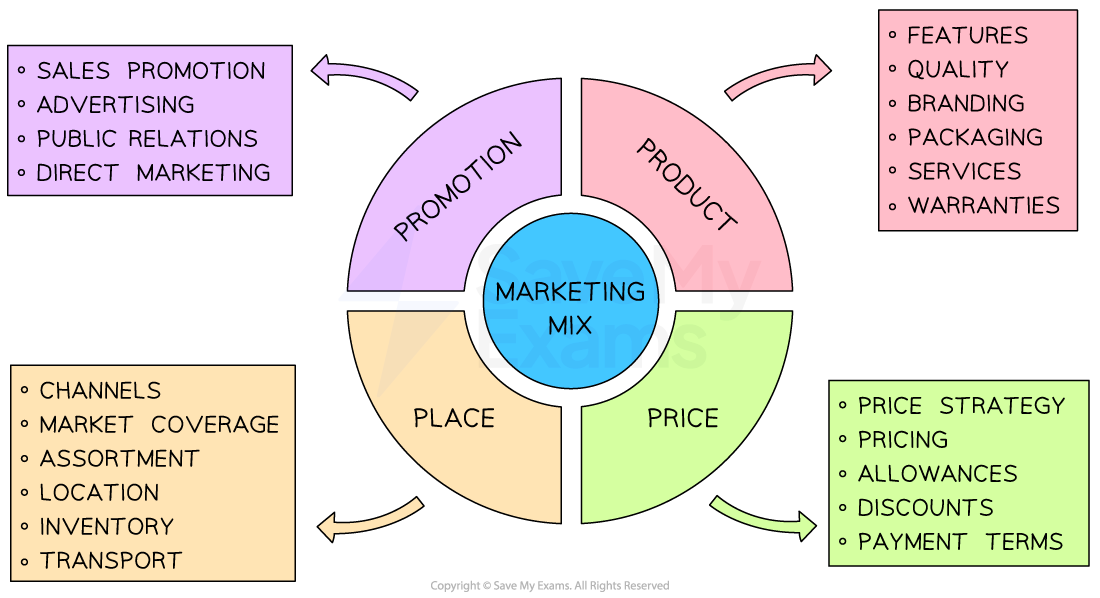
Businesses combine the 4 P's of the marketing mix in appropriate and unique ways to maximise their chances of success
1. Product
-
The product design mix refers to the combination of elements that make up a product's design
- These elements include function, aesthetics and cost
-
Balancing the elements of function, aesthetics and cost helps to ensure a product's design is both functional and attractive while also being cost-effective for both the manufacturer and the consumer
-
Many manufacturers aim to balance all three elements
- E.g., Fentimans ginger beer is relatively affordable and is packaged in eye catching bottles and the product itself is very good quality
-
Other manufacturers may focus on one aspect more than the others
- E.g., Asda's own brand of ginger beer is produced at the lowest possible cost and sold to consumers at a very low price
-
Businesses must take care to balance customers' quality expectations with these elements
- The target market may value quality less than price and will not be prepared to pay a high price for goods, even if they are of the highest quality
-
-
Most companies are market-orientated when developing new products
- They spend a lot of money researching consumers’ buying habits and their likes and dislikes
- They then design and package a product, which this research suggests people will want to buy
New Product Development
- One way to stay ahead of the competition is by developing new products and innovating existing ones
- The process of new product development involves a number of important stages
- Generate ideas
- New product concepts are discussed and brainstormed using customer suggestions, ideas from competitors’ products, employees’ ideas and information collected through market and technical research
- Select the best idea
- Ideas are weighed up with some dropped and others chosen for further research
- This decision relates closely to costs and likely demand
- Research includes looking into forecast sales, size of market share, and cost-benefit analysis for each product idea
- Develop a prototype
- This allows the operations department to see how the product can be manufactured, any problems or difficulties arising from its production and how to fix them
- Computer simulations are often used to produce 3D prototypes on screen
- Test launch
- The developed product is sold to on a small scale to a limited market to see how well it sells before its full launch
- Changes may be needed prior to an expensive, large scale launch
- Digital products like apps and software run beta versions, which is a method of test-launching
- Full launch of the product
- The finalised version of the product is launched to the entire target market
Evaluating new product development
| Costs | Benefits |
|---|---|
| - Market research collection and analysis regarding the new product is time-consuming | - Sell more products and services to existing customers - Making the most of existing relationships is cheaper than finding new customers |
| - Investment in Research and Development and design can be very expensive | - Developing new products **spreads fixed costs **like premises or salaries across a wider range of products |
| - The** costs of producing trial products,** including the costs of wasted materials, can be significant, especially if innovative materials or components are used | - Diversifying the products it offers means a business is less reliant on certain customers or markets |
| - Low sales if the target market is wrong or if market or technical research leads to the development of an inappropriate product or service for the market | - Can create a unique selling point by developing a new innovative product for the first time in the market - This USP can be used to charge a high price for the product as well as be used in advertising |
| - Damage to the brand if the new product fails to meet customer needs | - Charge higher prices for new products - Pricing strategies such as price skimming can be used for innovative new products |
The Importance of Brand Image
-
Developing a strong brand involves creating a unique and identifiable name, design, symbol or other feature that differentiates a product or service or company from its competitors
- This can help a business to add value as customers are often willing to pay higher prices for brands they recognise and trust
-
Branding is a strategic tool that helps businesses create awareness, develop strong customer relationships, generate loyalty and sets them apart from competitors
The three main types of branding
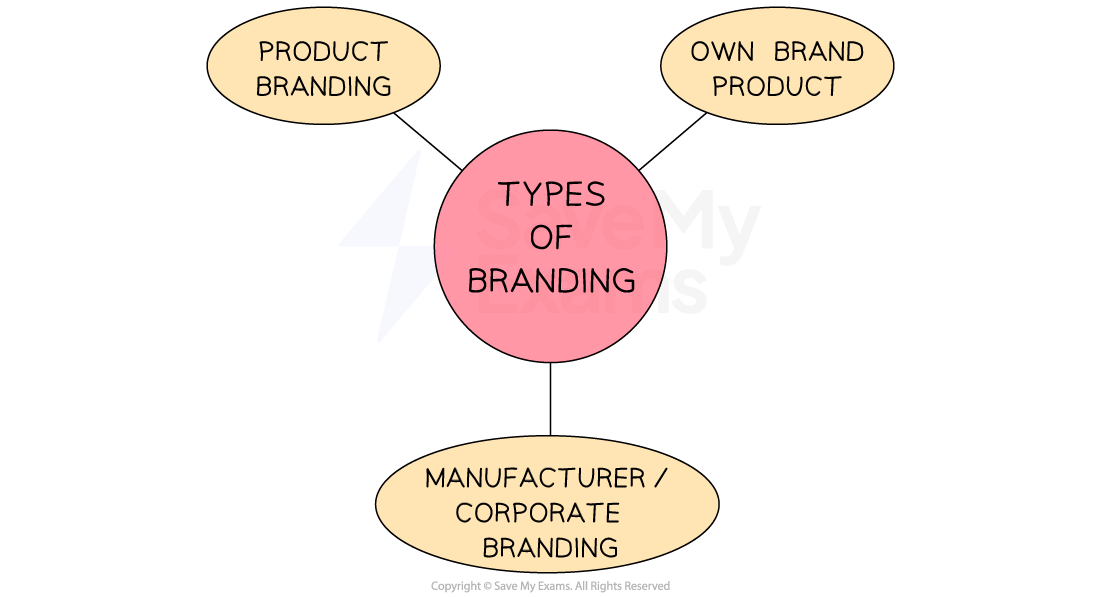
Building a brand using one of these three methods, or all of them, will help a business to develop a strong and loyal customer base
-
Manufacturer or corporate branding
-
Manufacturer or corporate branding refers to the use of a company name or logo to promote all the products or services offered by the company
- This type of branding is used by companies like Nestlé, Nike, and Apple
-
-
Product branding
-
Product branding refers to the use of a unique name, design, or symbol to promote a specific product
- E.g. KitKat, Coca-Cola, and McDonald's Big Mac
-
-
Own brand product
-
Own brand or private label branding refers to the use of a retailer's name to promote a specific product or service and is often used by supermarkets
- E.g., ASDA chocolate, Tesco's Finest range, and Sainsbury's Basics range
-
How are brands built?
-
Brands can be built using various methods, including
- Developing unique selling points
- Advertising
- Sponsorship
- Social media presence and activity
- Emotional branding
Examples of the ways that brands have been built
| Method | Explanation | Example |
|---|---|---|
| Unique selling points (USPs) | - USPs are the features that make a product or service **stand out **from its competitors - Brands can build their reputation by emphasising these unique qualities in their marketing efforts | - Apple is known for its innovative and sleek design and use of quality materials, which sets its products apart from its competitors - The company has built its brand around this USP and is recognised worldwide for its premium design |
| Advertising | - Brands can create compelling ads that resonate with their target audience, raise brand awareness, and communicate their value proposition - With the** right advertising strategy**, brands create a strong emotional connection with their audience and inspire brand loyalty | - Coca-Cola has successfully built its brand through advertising - Iconic ads over the years have become synonymous with the brand - E.g. The "Share a Coke" campaign encouraged people to buy Coca-Cola bottles with their friends' names on them and was a massive success |
| Sponsorship | - Partnering with events, organisations, or individuals can help brands gain exposure and build their reputation by aligning themselves with positive associations or values | - Nike has sponsored many high-profile athletes and sports events, such as the Olympics and the World Cup - The business has built a reputation for being a brand that champions excellence and inspires people to be their best |
| Social media | - With the right social media strategy, brands can build a loyal following and create a community around their brand | - Glossier has a strong presence on platforms like Instagram and it engages with its audience and shares user-generated content - Glossier's social media strategy has helped the brand build a loyal following |
| Emotional branding | - A strategy where companies build strong emotional connections with their customers by appealing to their values, beliefs, and emotions | - Brands like Patagonia and TOMS have built their entire brand identities around their commitments to environmental and social causes, which resonates with customers who prioritise these values |
The benefits of branding to a business
1. Business differentiation
-
Branding differentiates a business from its competitors
- This supports marketing and advertising efforts to build memorable promotional materials and campaigns
2. Reduces price elasticity of demand
-
Customers are less sensitive to price changes of products with strong and appealing branding
- Customers who are loyal to a brand are more likely to continue purchasing the product even if the price increases
3. Ability to charge premium prices
-
Customers may be willing to pay more for a product that is associated with a well-established brand
- They often perceive products with strong branding to be of higher quality and therefore worth the extra cost
4. Establishes recognition and identity
-
Strong branding helps to build trust and credibility
- This can create an emotional connection with customers, which helps generate repeat purchases
The Role of Packaging
-
Packaging is the physical container or wrapping for a product. It is also used for promotion and selling appeal
-
Packaging is normally designed to
- **Present **products in the most practical yet attractive way
- Communicate the quality of the product
- Catch the customer's eye when they shop
- Provide** key information to customers**
- Establish the business brand image
-
To stand out from the competition and establish a long-lasting relationship with consumers, brands are investing more money than ever before in creative and environmentally friendly packaging designs
- This is becoming increasingly important for businesses as they place a greater emphasis on sustainability and their CSR policies
Exam Hint Brands are considered intangible assets on a company's balance sheet. A strong brand adds to the overall value of these intangible assets, which may be an important part of a company's net worth and make it more attractive to investors.
Was this revision note helpful?
Build on this topic