Coronary Heart Disease (Cambridge International IGCSE Biology)
Exam board Cambridge International · IGCSEUpdated 2026-08-27
Spec point —
9.2.5· Describe coronary heart disease in terms of the blockage of coronary arteries and state the possible risk factors including: diet, lack of exercise, stress, smoking, genetic predisposition, age and sex
Coronary heart disease
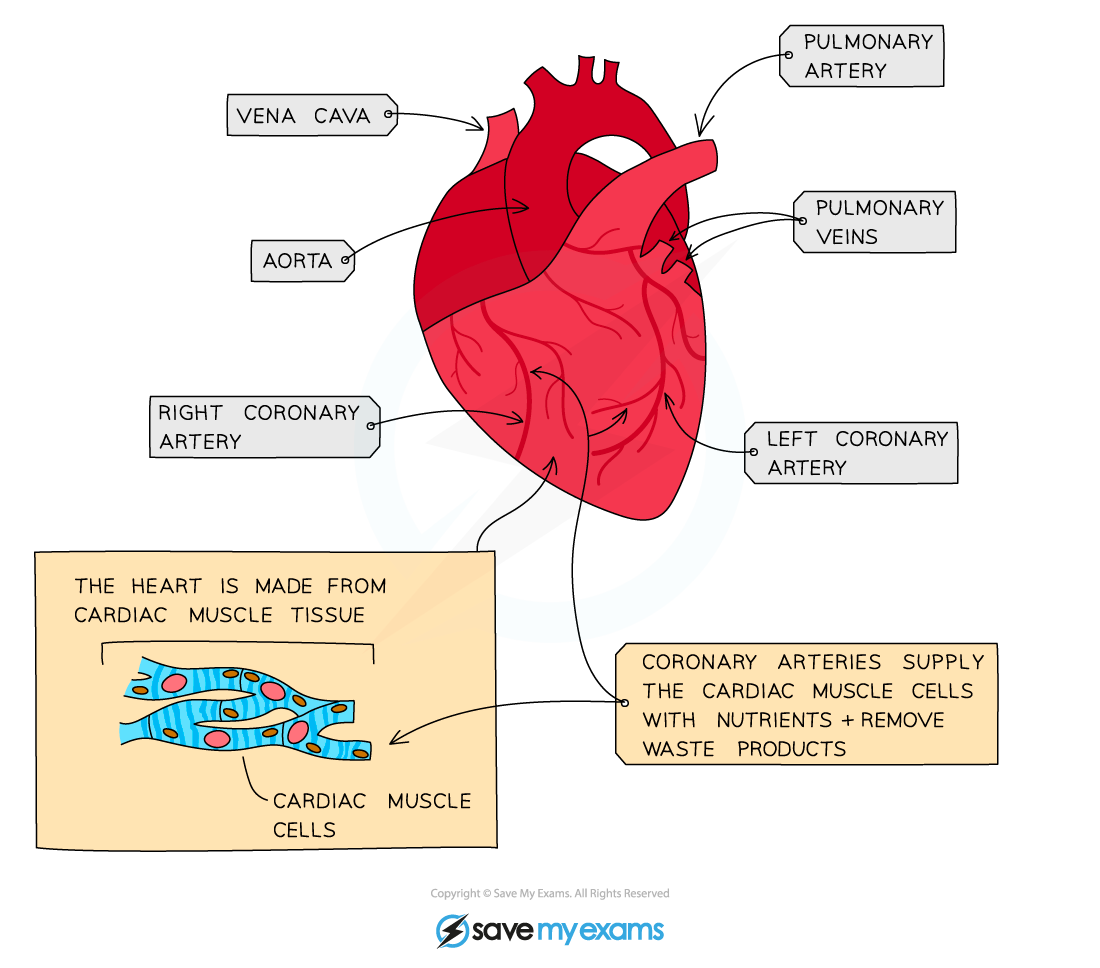
The coronary arteries
- The heart is made of muscle cells that need their own supply of blood to deliver oxygen, glucose and other nutrients and remove carbon dioxide and other waste products
- The blood is supplied by the coronary arteries
- If a coronary artery becomes partially or completely blocked by fatty deposits called ‘plaques’ (mainly formed from cholesterol), the arteries are not as elastic as they should be and therefore cannot stretch to accommodate the blood which is being forced through them - leading to coronary heart disease (CHD)
- Partial blockage of the coronary arteries creates a restricted blood flow to the cardiac muscle cells and results in severe chest pains called angina
- Complete blockage means cells in that area of the heart will not be able to respire and can no longer contract, leading to a heart attack
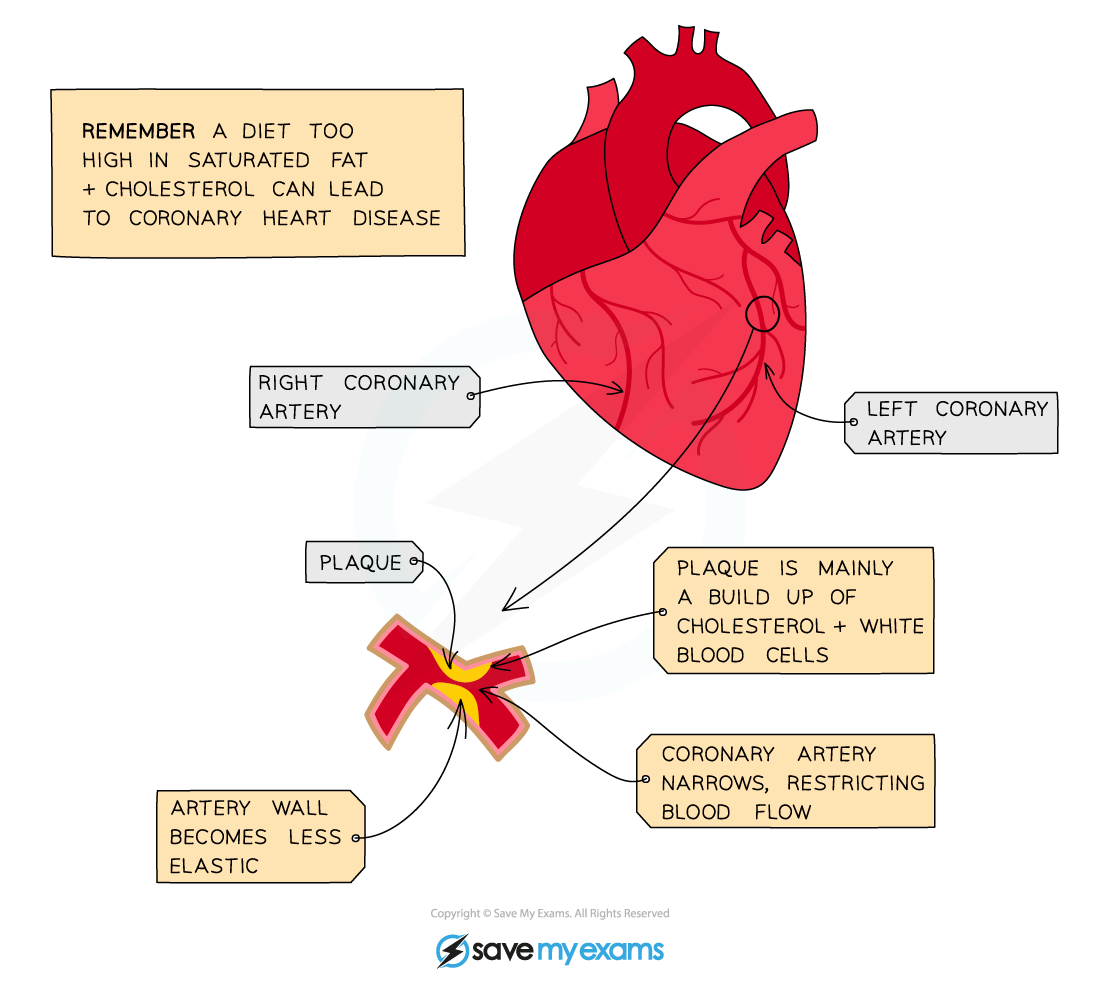
Buildup of plaque in the coronary arteries restricts blood flow
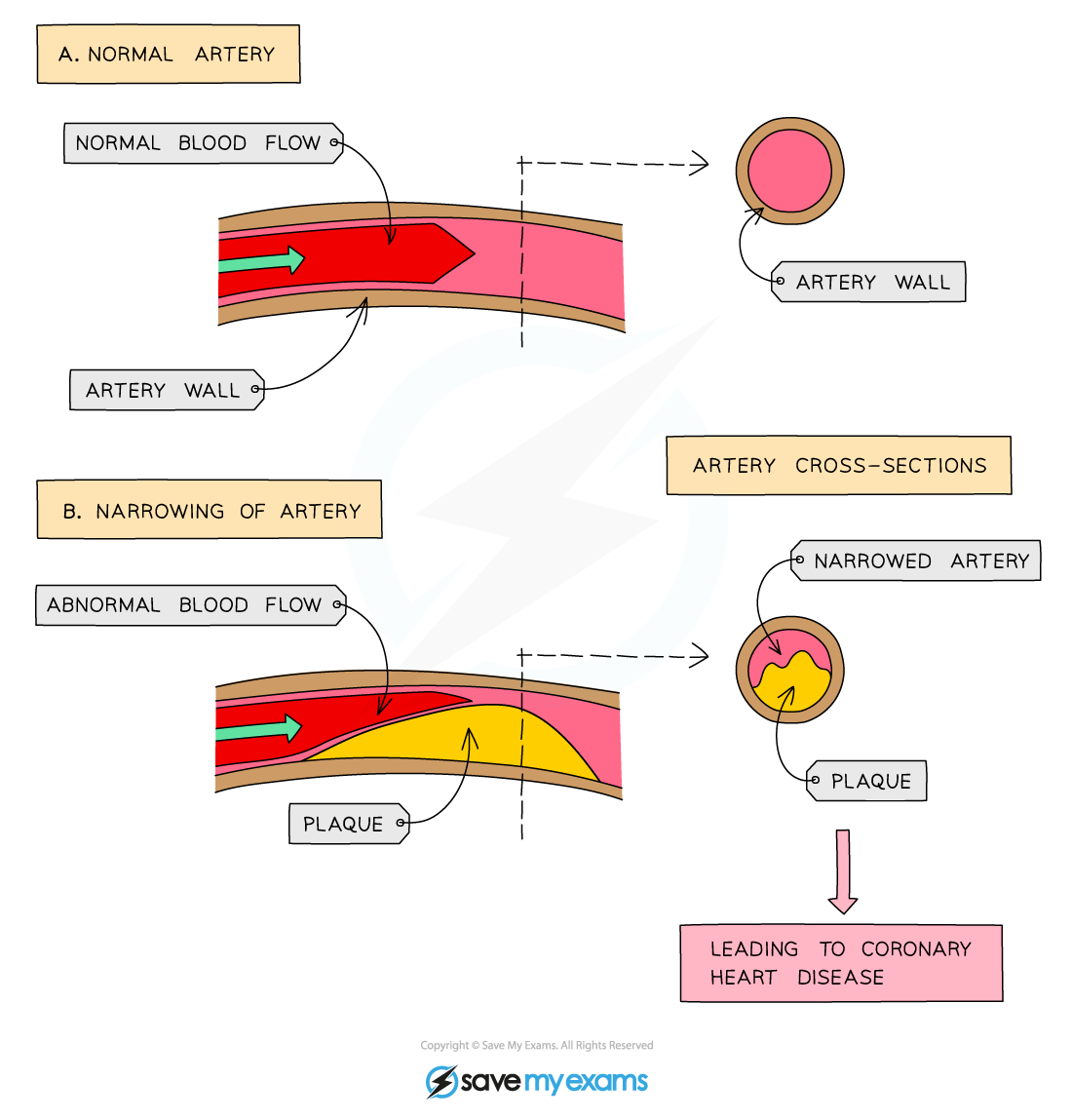
Effect of narrowing of arteries
Risk factors for CHD table
| Factor | Explanation |
|---|---|
| Poor diet | A diet high in saturated fat increases blood cholesterol levels, increasing the risk of fatty plaques building up in the artery walls |
| Stress | Stress can trigger the release of hormones that raise blood pressure, increasing the risk of damage to the coronary arteries and the buildup of fatty plaques |
| Smoking | Nicotine causes blood vessels to narrow, raising blood pressure and increasing the risk of fatty plaques building up in the coronary arteries |
| Genetic predisposition | People with a family history of CHD are more likely to develop it themselves, suggesting a genetic component to the condition |
| Age | The risk of developing CHD increases with age |
| Sex | Males are more likely to develop CHD than females |
Diet, exercise & coronary heart disease
Spec point —
9.2.6· Discuss the roles of diet and exercise in reducing the risk of coronary heart disease
-
There are a number of ways to reduce the risk of developing CHD:
- improve diet: reduce animal fats and eat more fruits and vegetables - this will reduce cholesterol levels in the blood and help with weight loss if overweight
- quit smoking - reduces the risk of blood vessels narrowing and blood pressure rising, lowering the risk of fatty plaques building up
- exercise regularly - this will help with weight loss, decrease blood pressure and cholesterol levels, and help reduce stress
Was this revision note helpful?
Build on this topic