The Synapse (Cambridge International IGCSE Biology)
Structure of a synapse: Extended
Spec point —
14.1.4· Describe the structure of a synapse, including the presence of vesicles containing neurotransmitter molecules, the synaptic gap and receptor proteins
- The junction between two neurones is known as a synapse
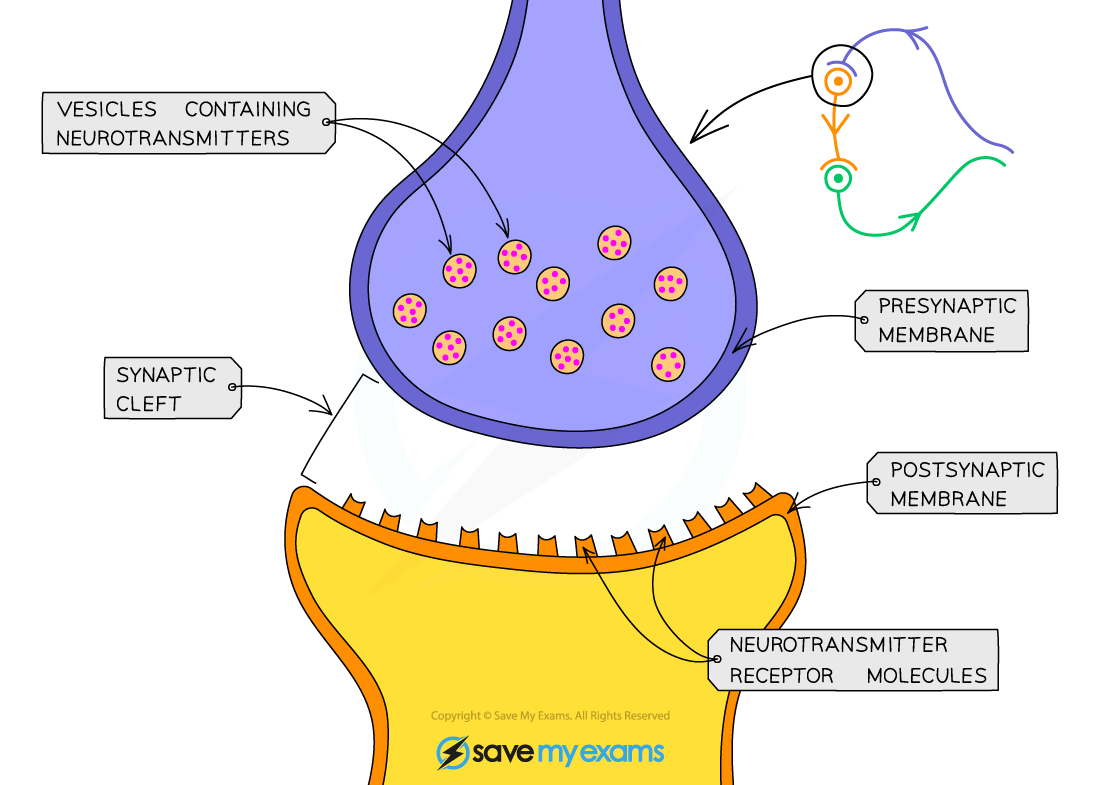
A synapse
Synapses & neurotransmitters: Extended
Spec point —
14.1.4· Describe the events at a synapse as: (a) an impulse stimulates the release of neurotransmitter molecules from vesicles into the synaptic gap (b) the neurotransmitter molecules diffuse across the gap (c) neurotransmitter molecules bind with receptor proteins on the next neurone (d) an impulse is then stimulated in the next neurone State that synapses ensure that impulses travel in one direction only
Synapses & neurotransmitters: Extended
-
Neurones are not directly connected to one another
-
The junctions (gaps) in between them are called synapses
-
Several events occur at a synapse to transmit an impulse from one neurone to the next:
- an impulse arrives at the end of an axon
- the impulse triggers the release of neurotransmitters from vesicles into the synaptic gap
- the neurotransmitter molecules diffuse across the synaptic gap
- the neurotransmitter molecules then bind with receptor proteins on the membrane of the next neurone
- an impulse is then stimulated in the next neurone
-
Synapses ensure that impulses only travel in one direction, avoiding confusion within the nervous system if impulses were travelling in both directions
-
Since this is the point in the nervous system where messages are transmitted chemically rather than electrically, synapses are a common target for drugs affecting the nervous system; for example, this is how heroin works
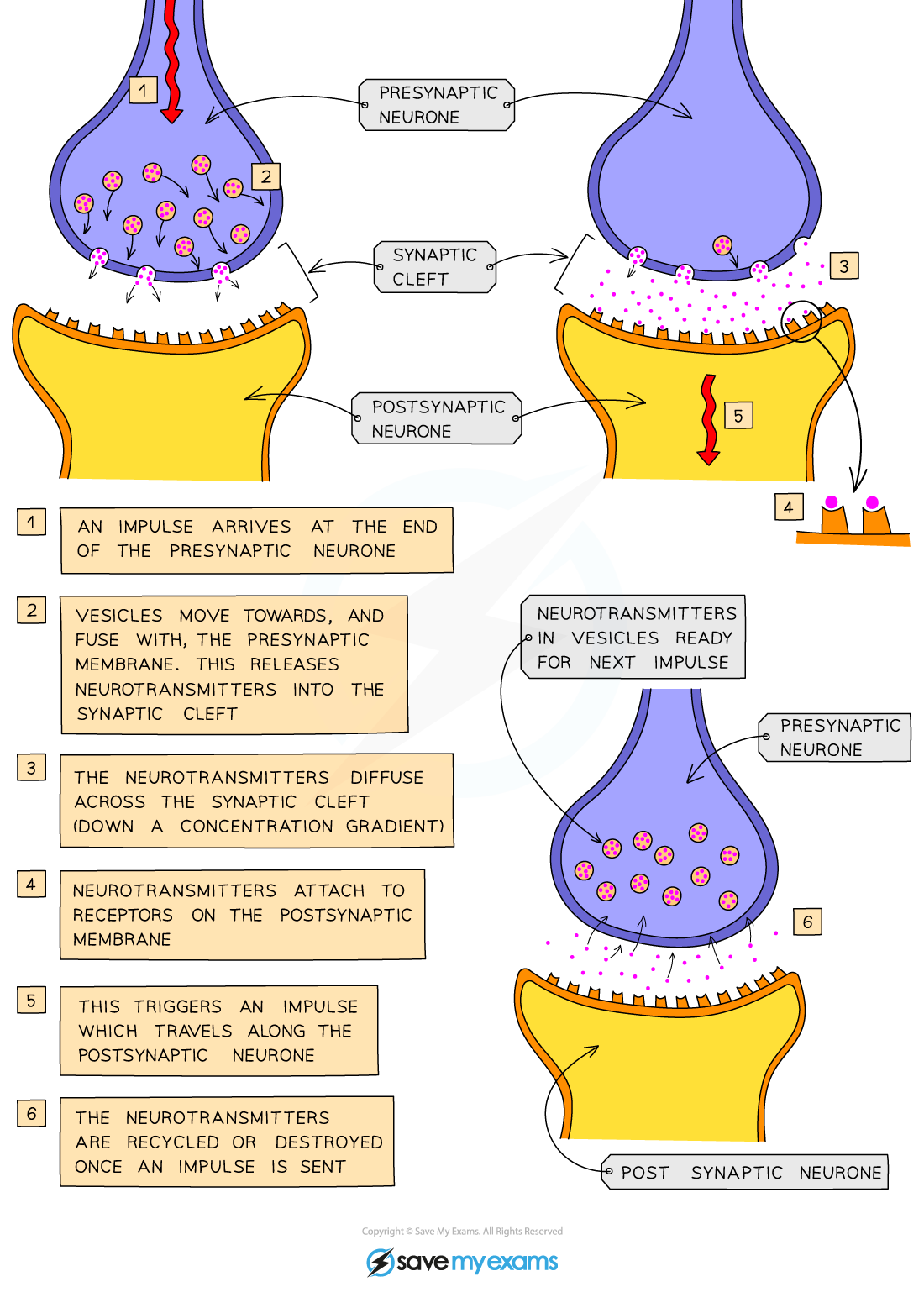
How an impulse is passed on at a synapse
Exam Hint For maximum marks you will need to be able to understand the structure and functioning of a synapse and explain what happens at each step.
Was this revision note helpful?
Build on this topic