Protein Synthesis (Cambridge International IGCSE Biology)
Exam board Cambridge International · IGCSEUpdated 2026-09-02
Transcription & translation: Extended
Spec point —
17.1.4· Explain how a protein is made, limited to: • the gene coding for the protein remains in the nucleus • messenger RNA (mRNA) is a copy of a gene • mRNA molecules are made in the nucleus and move to the cytoplasm • the mRNA passes through ribosomes • the ribosome assembles amino acids into protein molecules • the specific sequence of amino acids is determined by the sequence of bases in the mRNA (knowledge of the details of transcription or translation is not required)
Transcription & translation: Extended
- Proteins are made by ribosomes with the sequence of amino acids controlled by the sequence of bases contained within DNA
- DNA cannot travel out of the nucleus to the ribosomes (it is far too big to pass through a nuclear pore) so the base code of each gene is transcribed onto an RNA molecule called messenger RNA (mRNA)
- mRNA then moves out of the nucleus and attaches to a ribosome
- The ribosome ‘reads’ the code on the mRNA in groups of three
- Each triplet of bases codes for a specific amino acid
- In this way the ribosome translates the sequence of bases into a sequence of amino acids that make up a protein
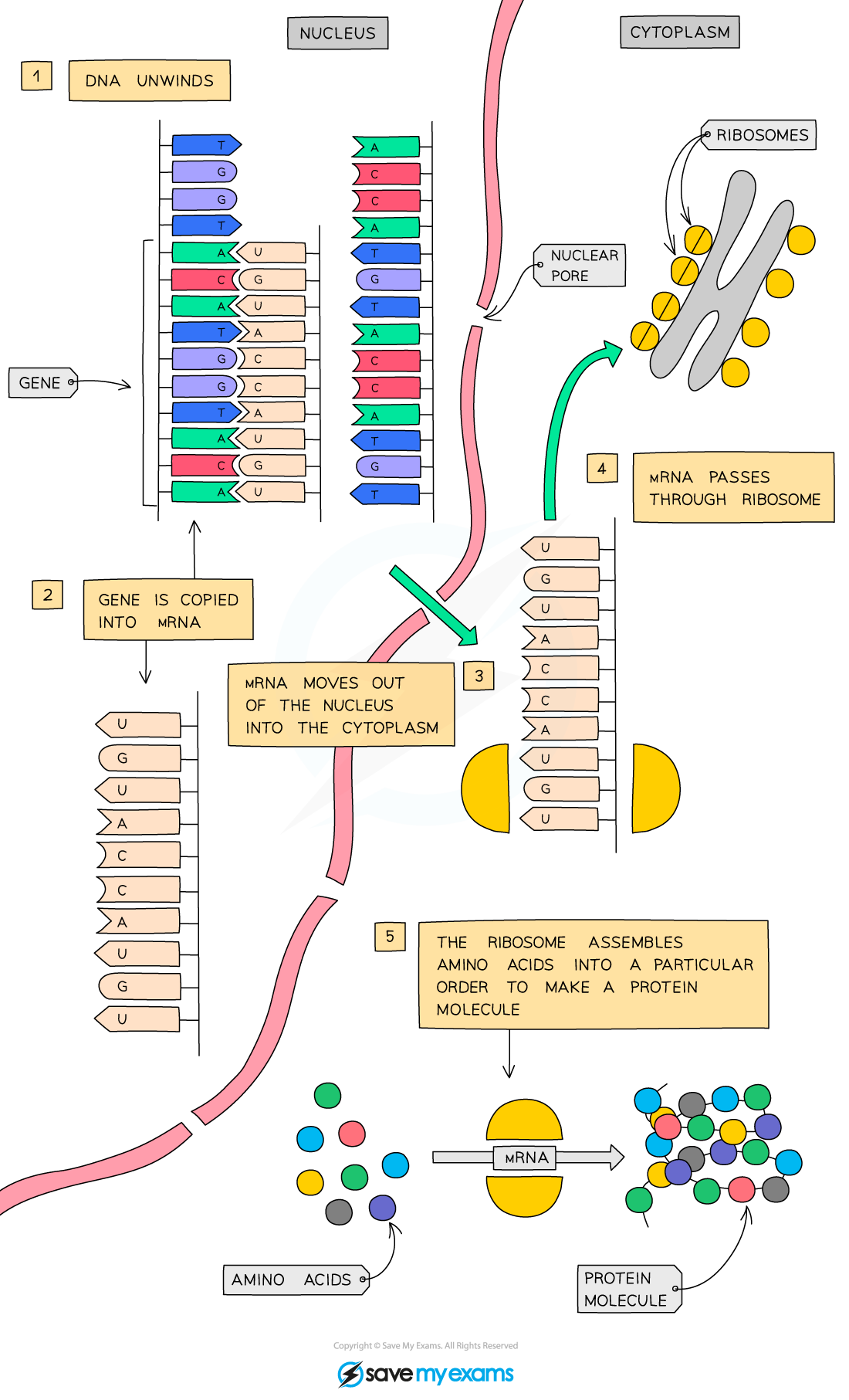
Protein synthesis
- Each tRNA molecule binds to, and carries, a single, specific amino acid from the cytoplasm to the ribosome for the assembly of the amino acid chain
- Once the amino acid chain has been assembled, it is released from the ribosome so it can fold and form the final structure of the protein
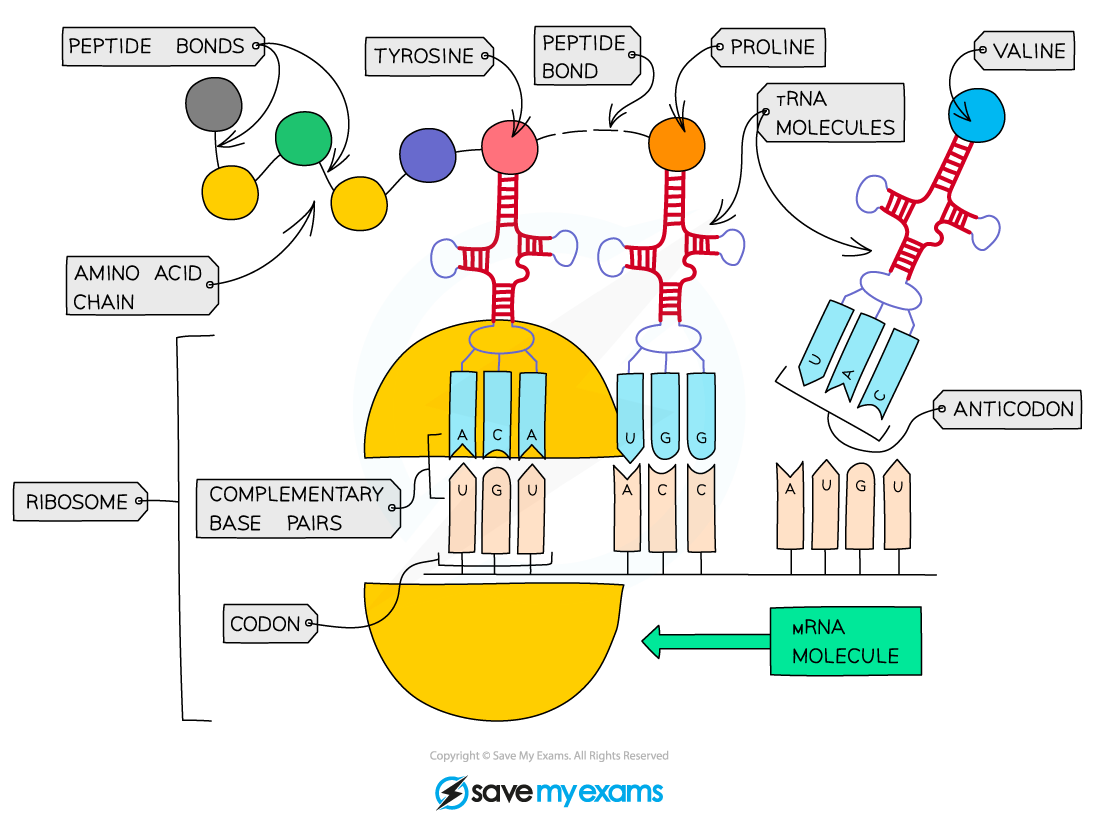
The triplet code of DNA (carried by mRNA) is read by the ribosome and amino acids are attached together in a specific sequence to form the protein
Was this revision note helpful?