Teeth & Digestion (Cambridge International IGCSE Biology)
Types of Human Teeth
Spec point — Identify in diagrams and images the types of human teeth: incisors, canines, premolars and molars Describe the functions of the types of human teeth in physical digestion of food
-
Mechanical digestion is the breakdown of food into smaller pieces without chemical change to the food molecules
-
It is carried out by the:
- chewing action of teeth
- churning action of the stomach
- emulsification of fats by bile in the duodenum
-
Teeth are located in the bone of the jaws
-
They are used for chewing to increase the surface area of the food
- This increases the food's exposure to saliva and digestive enzymes so that it can be broken down more quickly
-
Different teeth have different shapes, enabling them to perform slightly different functions:
- incisors are chisel-shaped for biting and cutting
- canines are pointed for tearing, holding and biting
- premolars and molars are large, flat surfaces with ridges for chewing and grinding up food
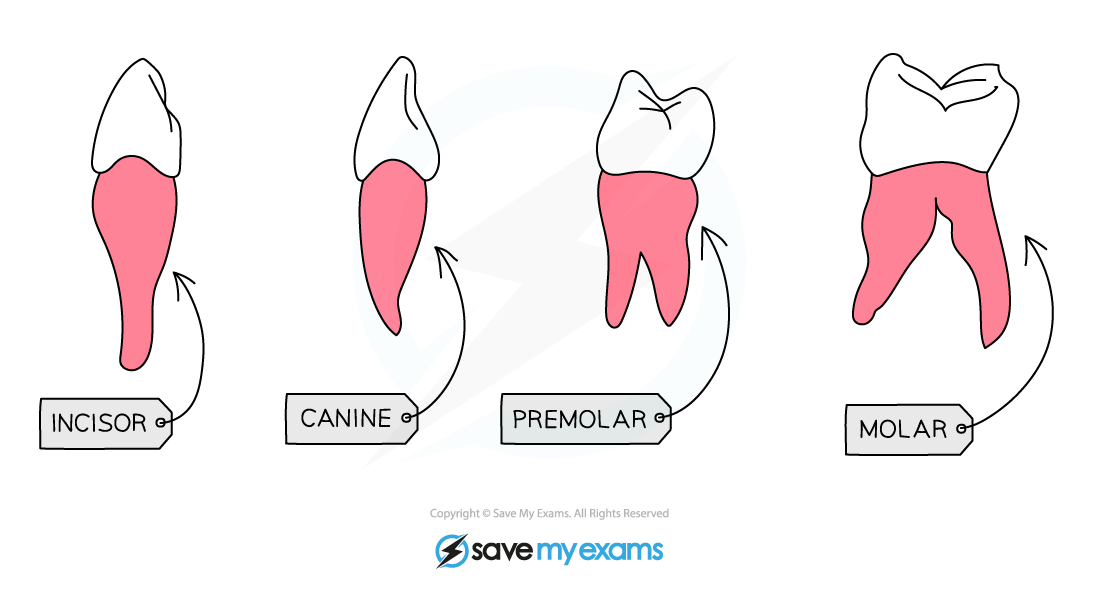
Teeth are shaped to carry out different roles in mechanical digestion of food
Structure of a Tooth
Spec point —
7.3.4· Describe the structure of human teeth, limited to: enamel, dentine, pulp, nerves, blood vessels and cement, and understand that teeth are embedded in bone and the gums
-
Teeth are embedded in the gums and within the bone of the jaw
-
The structure of human teeth includes:
- enamel: the hard, outer layer that protects the teeth
- dentine: the layer beneath the enamel that protects the nerves
- pulp: the soft, internal tissue of the tooth that contains nerves and blood vessels
- cement: a hard layer around the root of a tooth that helps to anchor it within the jaw
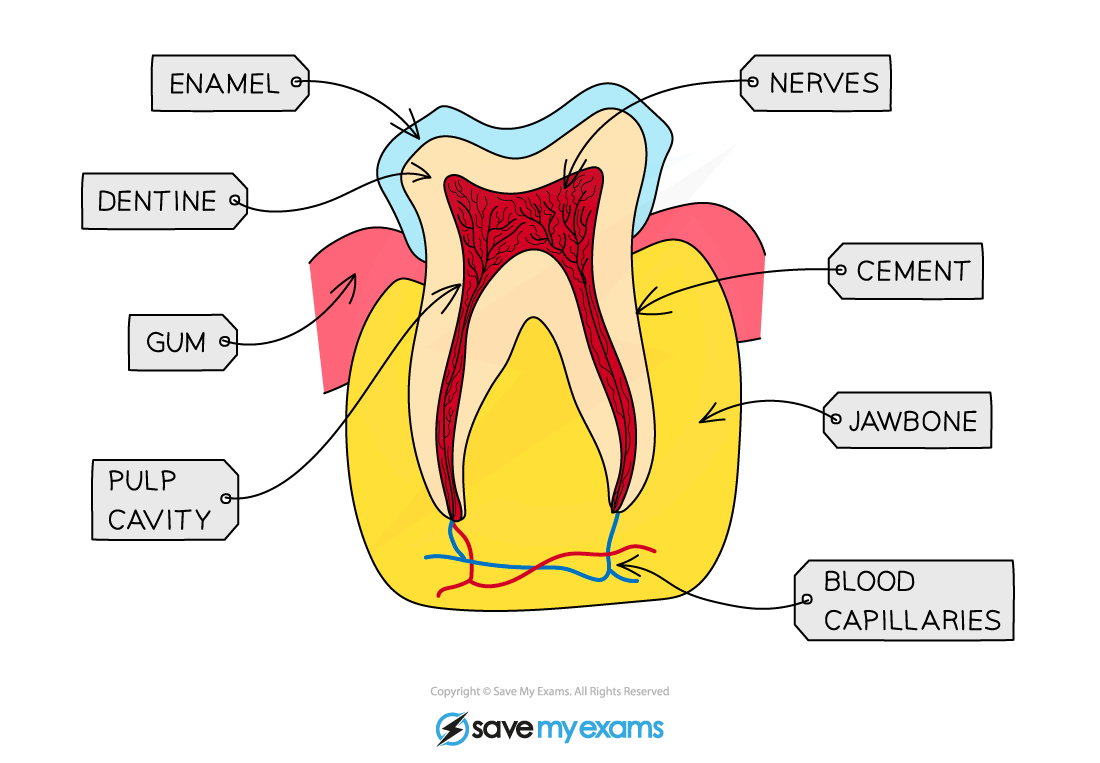
Teeth are embedded in the gums and within the bone of the jaw
Was this revision note helpful?
Build on this topic