DNA Structure (Cambridge International IGCSE Biology)
Structure of a DNA molecule: Extended
Spec point —
4.1.3· Describe the structure of a DNA molecule: (a) two strands coiled together to form a double helix (b) each strand contains chemicals called bases (c) bonds between pairs of bases hold the strands together (d) the bases always pair up in the same way: A with T, and C with G (full names are not required)
Structure of a DNA molecule: Extended
Extended Tier Only
- DNA, or deoxyribonucleic acid, is the molecule that contains the instructions for the growth and development of all organisms
- It consists of two strands of DNA wound around each other in what is called a double helix
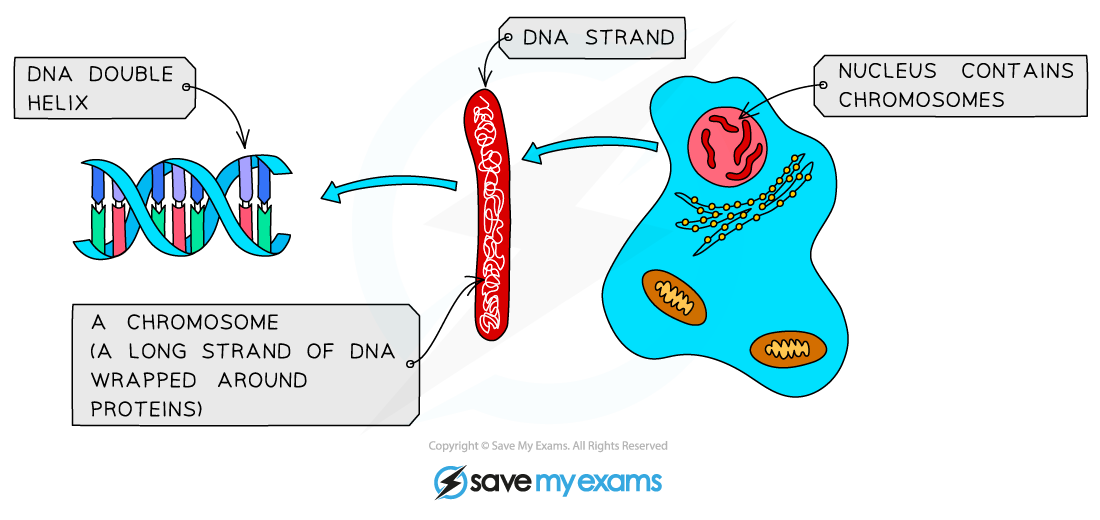
DNA, chromosomes and the nucleus
- The individual units of DNA are called nucleotides
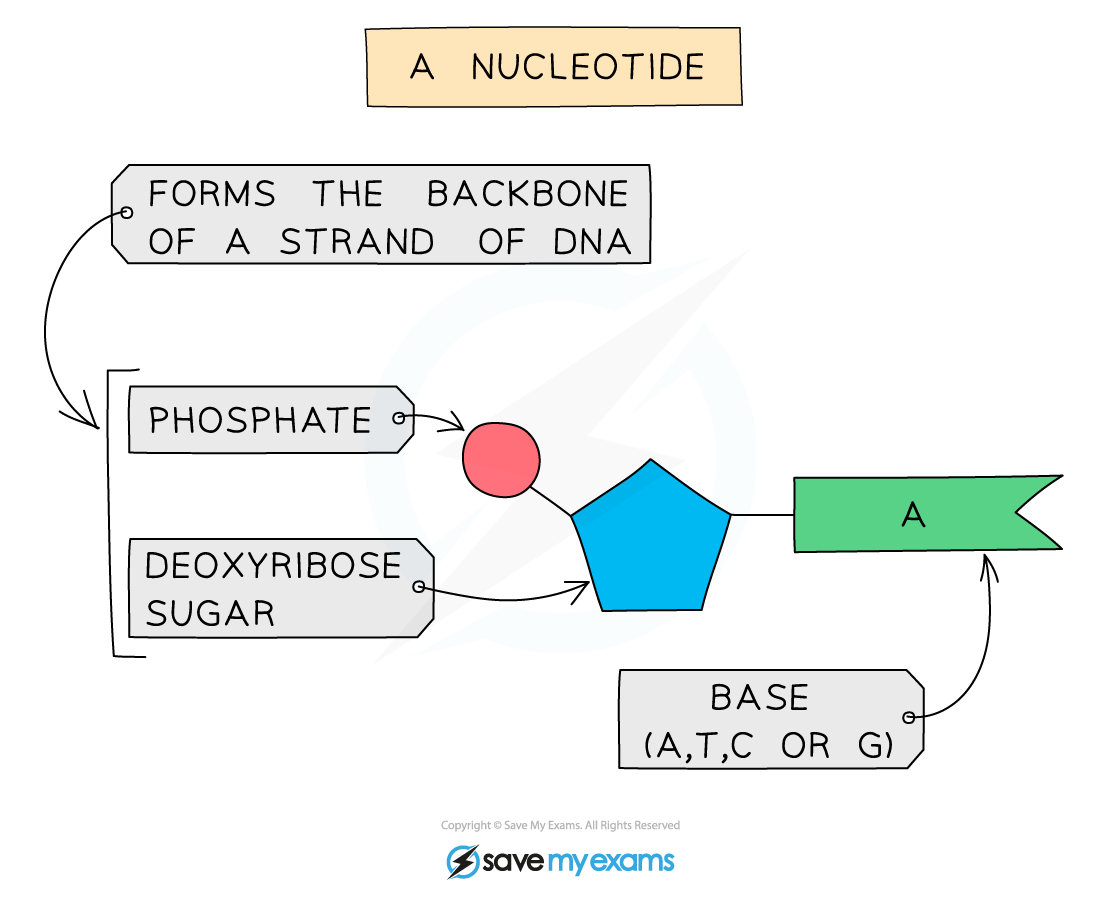
A nucleotide
-
All nucleotides contain the same phosphate and deoxyribose sugar, but differ from each other in the base attached
-
There are four different bases, Adenine (A), Cytosine (C), Thymine (T) and Guanine (G)
-
The bases on each strand pair up with each other, holding the two strands of DNA in the double helix
-
The bases always pair up in the same way:
- Adenine always pairs with Thymine (A-T)
- Cytosine always pairs with Guanine (C-G)
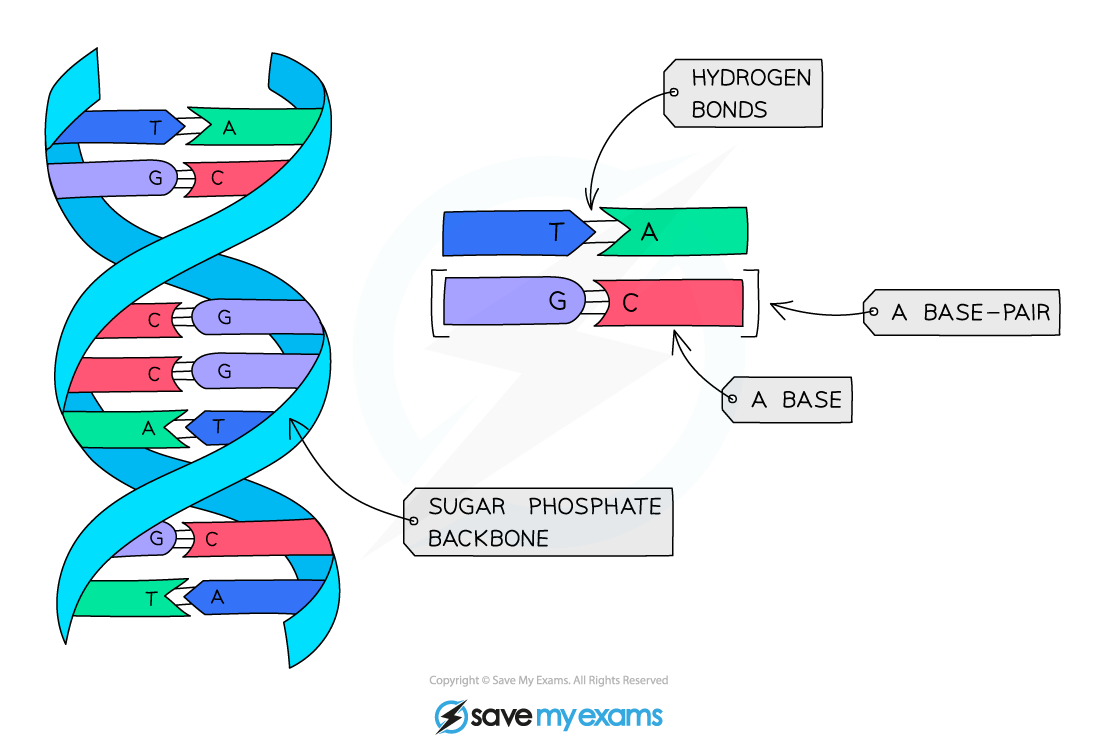
DNA base pairs
- The phosphate and sugar section of the nucleotides form the ‘backbone’ of the DNA strand (like the sides of a ladder) and the base pairs of each strand connect to form the rungs of the ladder
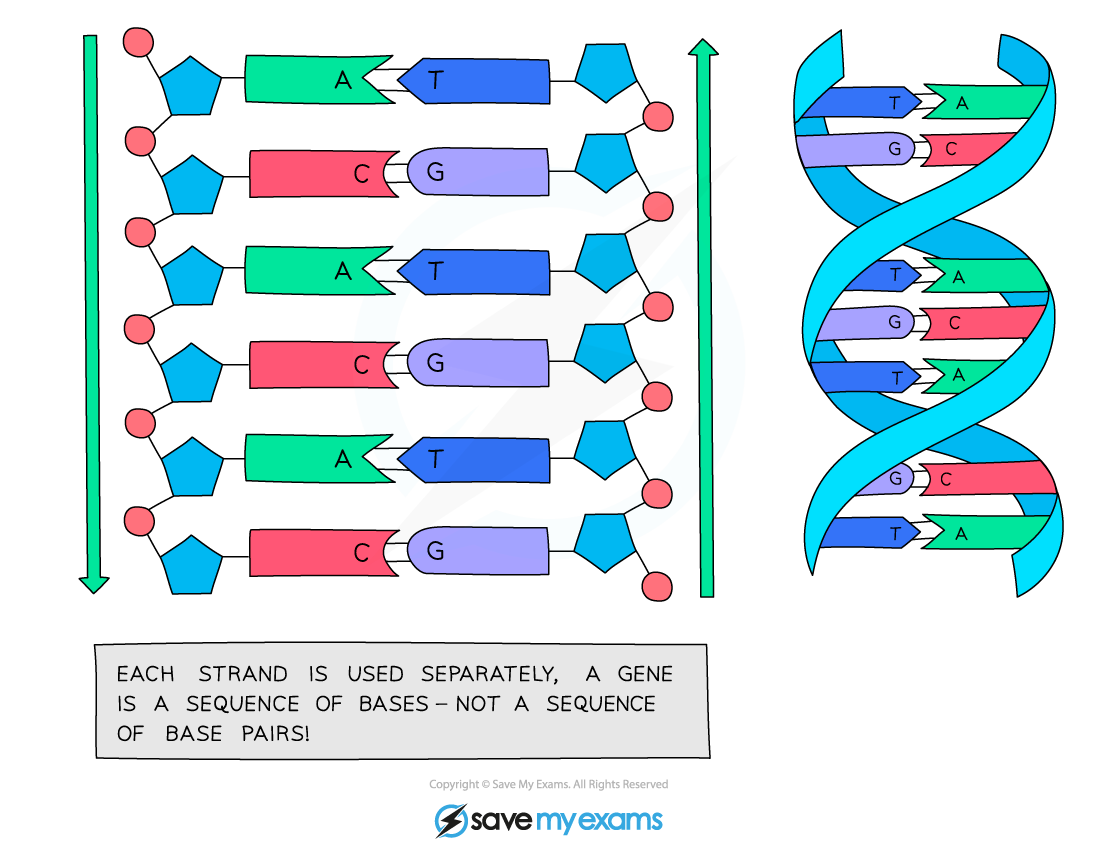
The DNA helix is made from two strands of DNA held together by hydrogen bonds
- It is this sequence of bases that holds the code for the formation of proteins
Exam Hint You do not need to learn the names of the bases, just their letter. Make sure you know which bonds with which, as this is the most commonly asked question about this topic.
Was this revision note helpful?
Build on this topic