Other Pollution (Cambridge International IGCSE Biology)
Exam board Cambridge International · IGCSEUpdated 2026-08-31
Plastic pollution
Spec point —
20.3.2· Describe the effects of non-biodegradable plastics, in both aquatic and terrestrial ecosystems
-
Plastics have a large negative impact on both land and water habitats due to their non-biodegradability
-
In marine habitats:
- animals often try to eat plastic or become caught in it, leading to injuries and death
- as the plastic breaks down it can release toxins that affect marine organisms
- once it has broken down into very small particles, it is commonly ingested by animals and enters the food chain
-
On land:
- plastic is generally disposed of by burying in landfills
- as it breaks down, it releases toxins into the surrounding soil and as such the land is no good for growing crops or grazing animals and can only be used for building on several decades after burial
Air pollution
Spec point —
20.3.3· Describe the sources and effects of pollution of the air by methane and carbon dioxide, limited to: the enhanced greenhouse effect and climate change
Methane and carbon dioxide
-
Both methane and carbon dioxide gases insulate the Earth and act as a 'blanket' in the atmosphere
-
Higher levels of both gases have led to global warming and climate change
-
Human activity has increased levels of both gases in the atmosphere:
- burning fossil fuels increases carbon dioxide
- keeping livestock generates methane gas
- global warming melts the permafrost in sub-polar regions, which results in even more trapped methane being released into the atmosphere
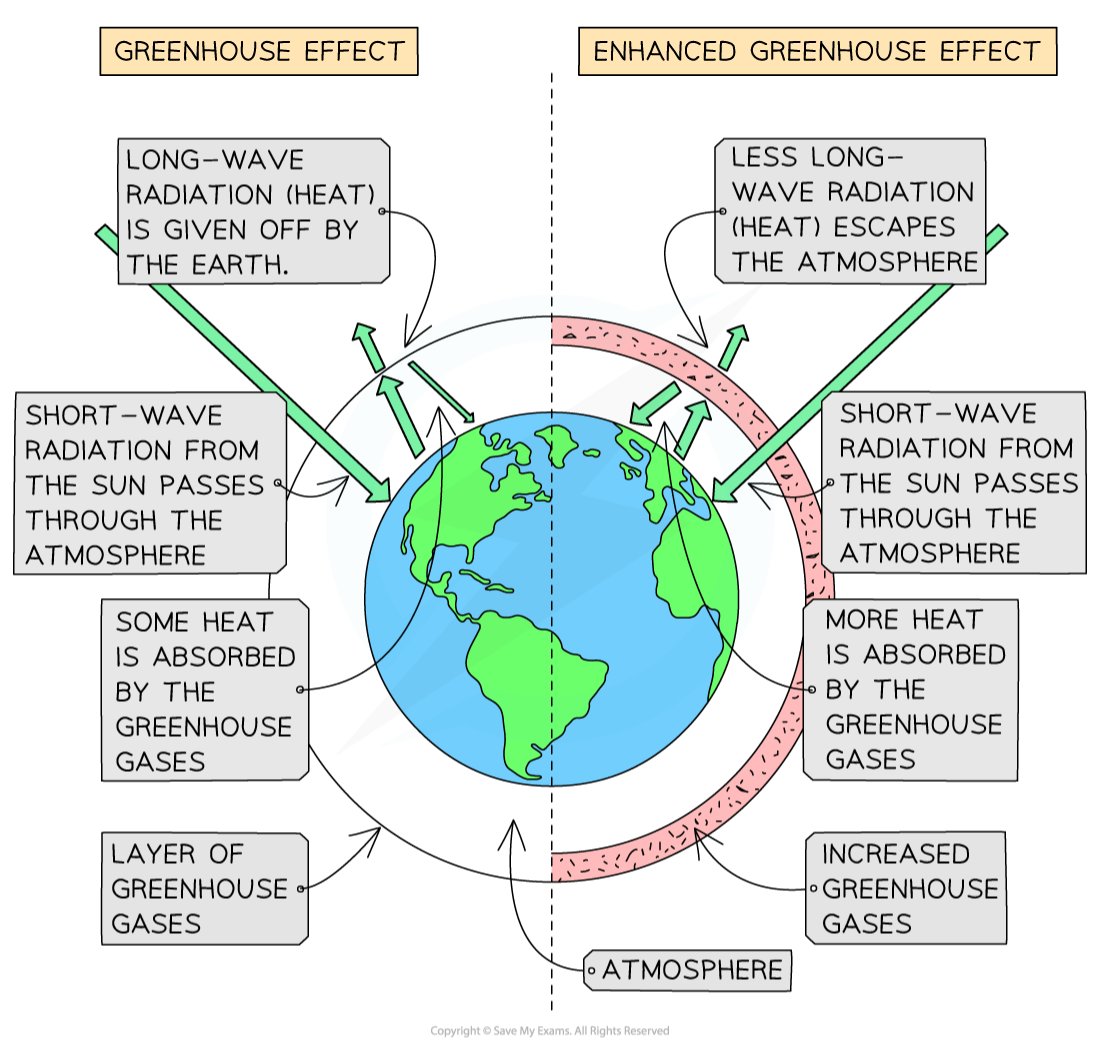
Natural and enhanced greenhouse effect
Was this revision note helpful?
Build on this topic