Homeostasis: Temperature Control (Cambridge International IGCSE Biology)
The skin & homeostasis: Extended
Spec point —
14.1.10· Identify in diagrams and images of the skin: hairs, hair erector muscles, sweat glands, receptors, sensory neurones, blood vessels and fatty tissue Describe the maintenance of a constant internal body temperature in mammals in terms of:insulation, sweating, shivering and the role of the brain
The skin & homeostasis: extended
-
Control of body temperature is a homeostatic mechanism
- Homeostasis is the maintenance of a constant internal environment
- This means that internal conditions within the body (such as temperature, blood pressure, water concentration and glucose concentration) need to be kept within set limits in order to ensure that reactions in body cells can function
-
The human body maintains the temperature at which enzymes work best: around 37 ℃
-
If body temperature increases too far above this, enzymes will denature and become less effective at catalysing reactions
The skin and temperature regulation
-
The skin plays an important role in the control of body temperature
-
Structures in the skin that are involved with temperature regulation include:
- sweat glands
- temperature receptors
- capillaries
- hairs
- hair erector muscles
- insulating fatty tissue
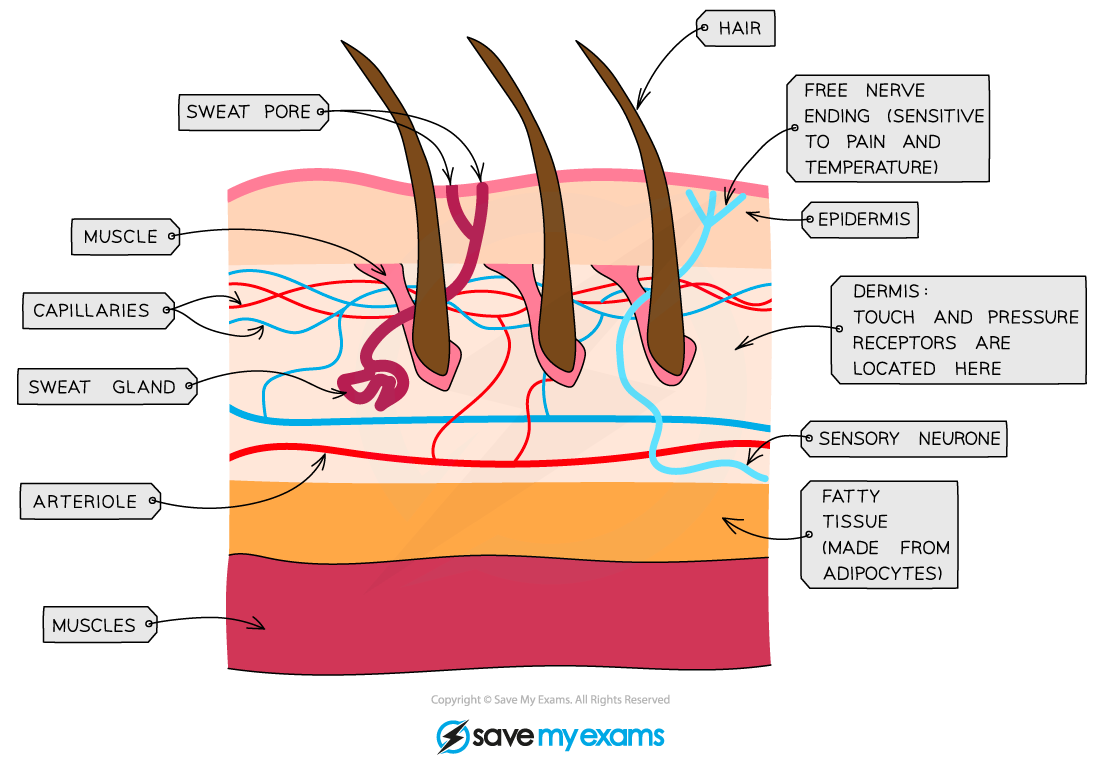
The skin plays an important role in the control of body temperature
-
When skin temperature changes, temperature receptors in the skin send nerve impulses to the brain via sensory neurones
-
The brain responds to this information by sending nerve impulses to effectors in the skin that act to maintain normal body temperature
-
The responses to an increase in body temperature are:
- sweat glands produce sweat which cools the skin by evaporation
- blood vessels that supply the skin capillaries dilate
- hairs on the skin surface lie flat
-
The responses to a decrease in body temperature are:
- sweat gland stop producing sweat
- blood vessels that supply the skin capillaries constrict
- hairs on the skin stand up to trap an insulating layer of air
- shivering generates heat in the muscles
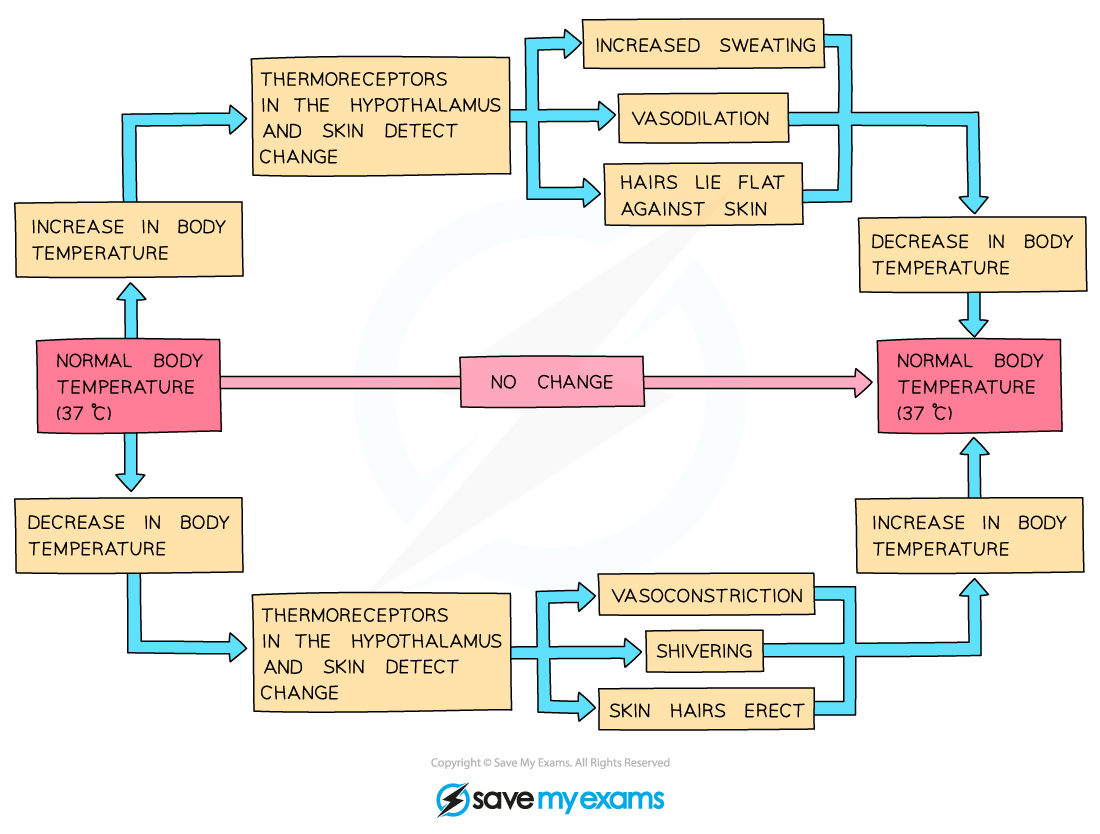
Regulating body temperature
Table comparing responses when body temperature is too high or low
| When the body detects an increase in body temperature | When the body detects a decrease in body temperature |
|---|---|
| Sweat is secreted by sweat glands. This cools skin by evaporation. Heat energy from the body is lost as liquid water in sweat becomes water vapour (a state change). | Skeletal muscles contract rapidly (the body shivers). These involuntary muscle contractions require energy from respiration, and some of this is released as heat. |
| Hairs lie flat against the skin, allowing air to freely circulate. This increases heat transfer to the environment by radiation. | Erect hairs trap a layer of air around the skin, which acts as an insulator, preventing heat loss by radiation. |
Vasoconstriction & vasodilation: Extended
Spec point —
14.1.10· Describe the maintenance of a constant internal body temperature in mammals in terms of vasodilation and vasoconstriction of arterioles supplying skin surface capillaries
- The blood vessels in and below the skin aid temperature regulation by vasoconstriction and vasodilation
Vasoconstriction
- When the body detects a decrease in body temperature, the blood vessels that supply capillaries in the skin constrict, or get narrower; this is known as vasoconstriction
- Vasoconstriction reduces blood flow to the skin, and so reduces the heat lost from blood by radiation at the skin surface
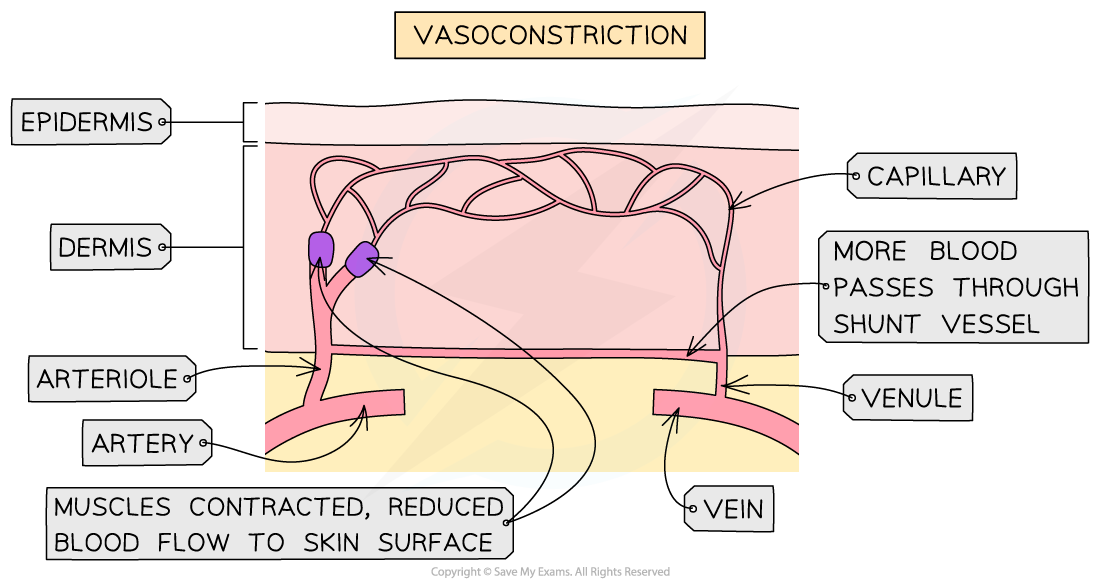
Vasoconstriction reduces blood flow to the skin, and so reduces the heat lost from blood by radiation
Vasodilation
- When the body detects an increase in body temperature, the blood vessels that supply capillaries in the skin dilate, or get wider; this is known as vasodilation
- Vasodilation increases blood flow to the skin surface, and so increases heat lost at the skin by radiation
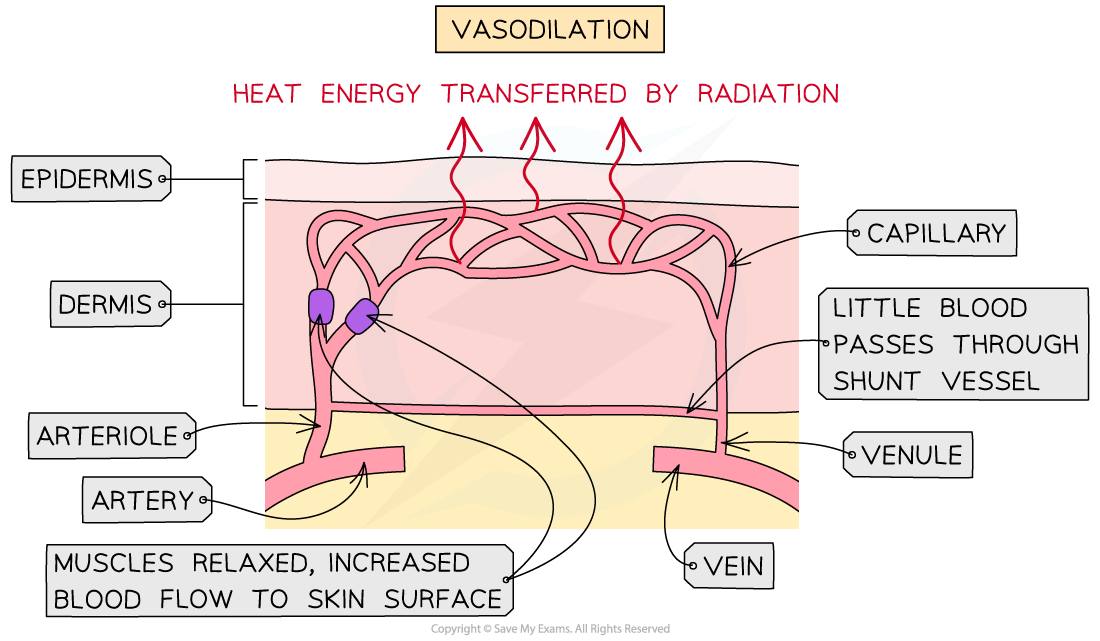
Vasodilation increases blood flow to the skin surface, and so increases heat lost at the skin by radiation
Was this revision note helpful?
Build on this topic