Bile (Cambridge International IGCSE Biology)
Bile: Extended
Spec point —
7.4.8· Explain that bile is an alkaline mixture that neutralises the acidic mixture of food and gastric juices entering the duodenum from the stomach, to provide a suitable pH for enzyme action
Extended Tier Only
- Cells in the liver produce bile which is then stored in the gallbladder
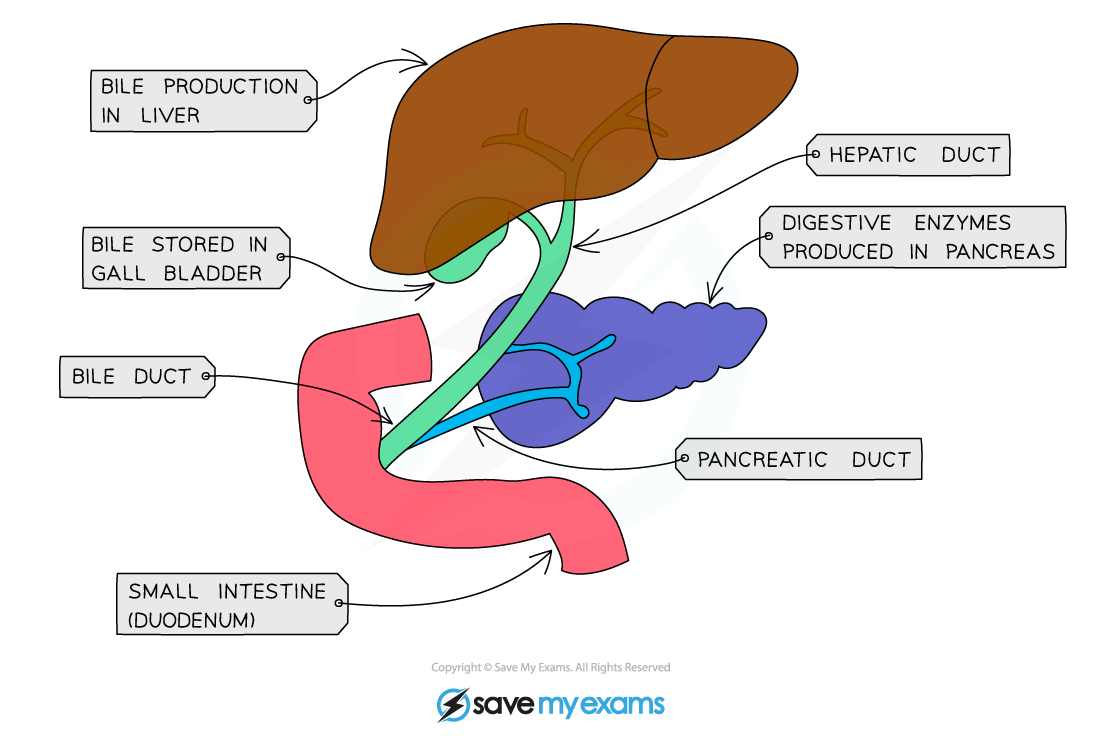
Bile production and secretion
-
Bile has two main roles:
-
It is alkaline to neutralise the hydrochloric acid which comes from the stomach
- The enzymes in the small intestine have a higher (more alkaline) optimum pH than those in the stomach
-
It breaks down large drops of fat into smaller ones. This is known as emulsification. The larger surface area allows lipase to chemically break down the lipid into glycerol and fatty acids faster
-
Exam Hint Emulsification is the equivalent of tearing a large piece of paper into smaller pieces of paper. This is an example of mechanical digestion, not chemical digestion – breaking something into smaller pieces does not break bonds or change the chemical structure of the molecules which make it up, which is the definition of chemical digestion. Make sure you're clear on the distinction.
Was this revision note helpful?
Build on this topic