Conversion of Fibrinogen (Cambridge International IGCSE Biology)
Exam board Cambridge International · IGCSEUpdated 2026-08-28
Conversion of fibrinogen: Extended
Spec point —
9.4.7· Describe the process of clotting as the conversion of fibrinogen to fibrin to form a mesh
Extended Tier Only
- Platelets are fragments of cells which are involved in blood clotting and forming scabs where the skin has been cut or punctured
- Blood clotting prevents continued / significant blood loss from wounds
- Scab formation seals the wound with an insoluble patch that prevents entry of microorganisms that could cause infection
- It remains in place until new skin has grown underneath it, sealing the skin again
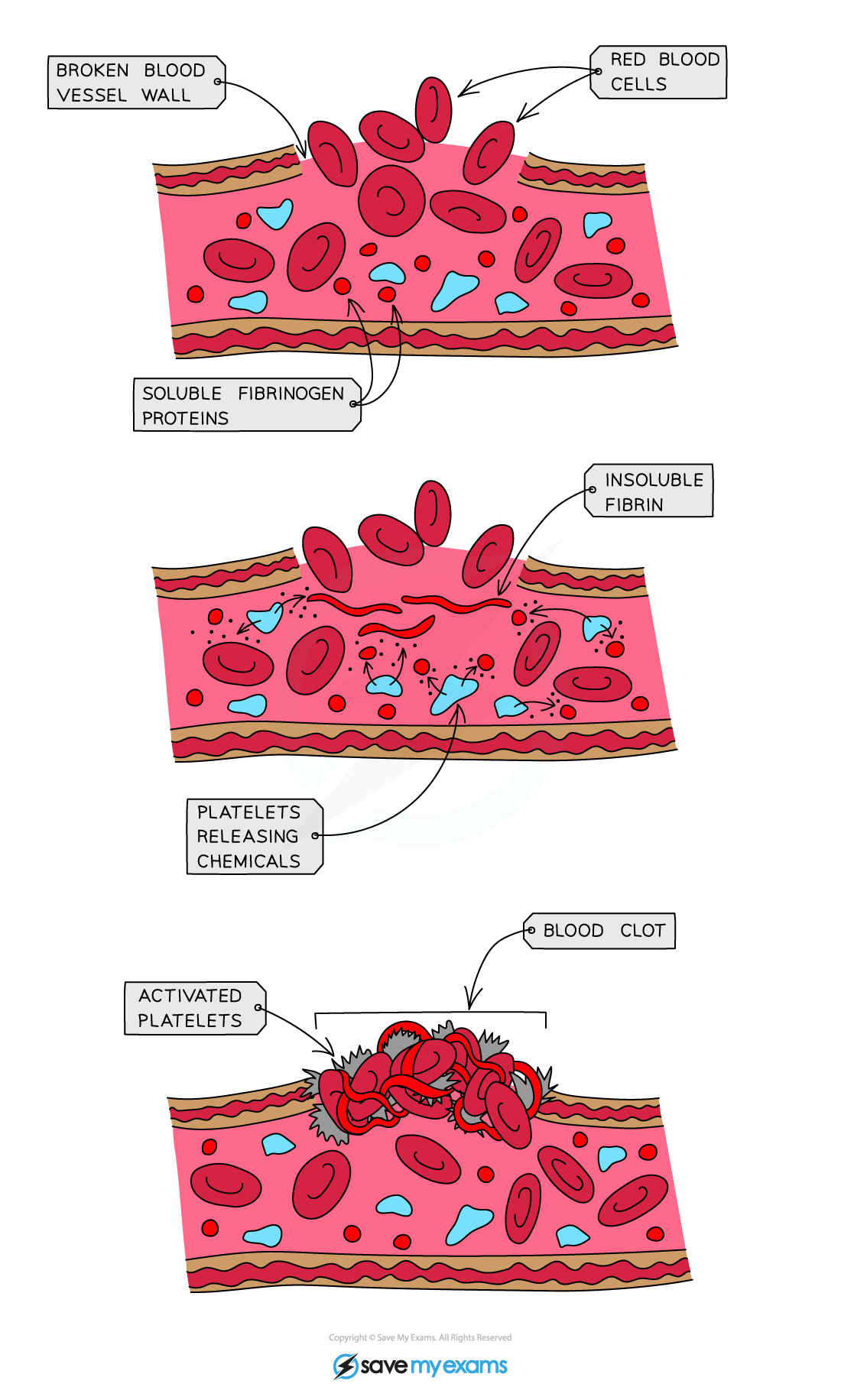
How the blood clots
- When the skin is broken (i.e. there is a wound) platelets arrive to stop the bleeding
- A series of reactions occur within the blood plasma
- Platelets release chemicals that cause soluble fibrinogen proteins to convert into insoluble fibrin and form an insoluble mesh across the wound, trapping red blood cells and therefore forming a clot
- The clot eventually dries and develops into a scab to protect the wound from bacteria entering
Was this revision note helpful?
Build on this topic