Variation in Biology (Cambridge International IGCSE Biology)
What is variation in biology?
Spec point —
18.1.1· nan
Types of Variation
What is variation in biology?
-
Variation is defined as differences between individuals of the same species
-
Phenotypic variation is the difference in features between individuals of the same species
-
Some of these differences are caused by differences in genes, which is genetic variation
-
Phenotypic variation can be divided into two types depending on how you are able to group the measurements:
-
continuous variation is when there are very many small degrees of difference for a particular characteristic between individuals and they are arranged in order and can usually be measured on a scale
- Examples include height, mass, finger length etc. where there can be many ‘in-between’ groups
-
discontinuous variation is when there are distinct differences for a characteristic
- For example, people are either blood group A, B, AB or O; are either male or female; can either roll their tongue or not - there are no ‘in-betweens’
-
-
When graphs of these data are plotted, continuous variation gives smooth bell curves (a result of all the small degrees of difference), whereas discontinuous gives a ‘step – like’ shape
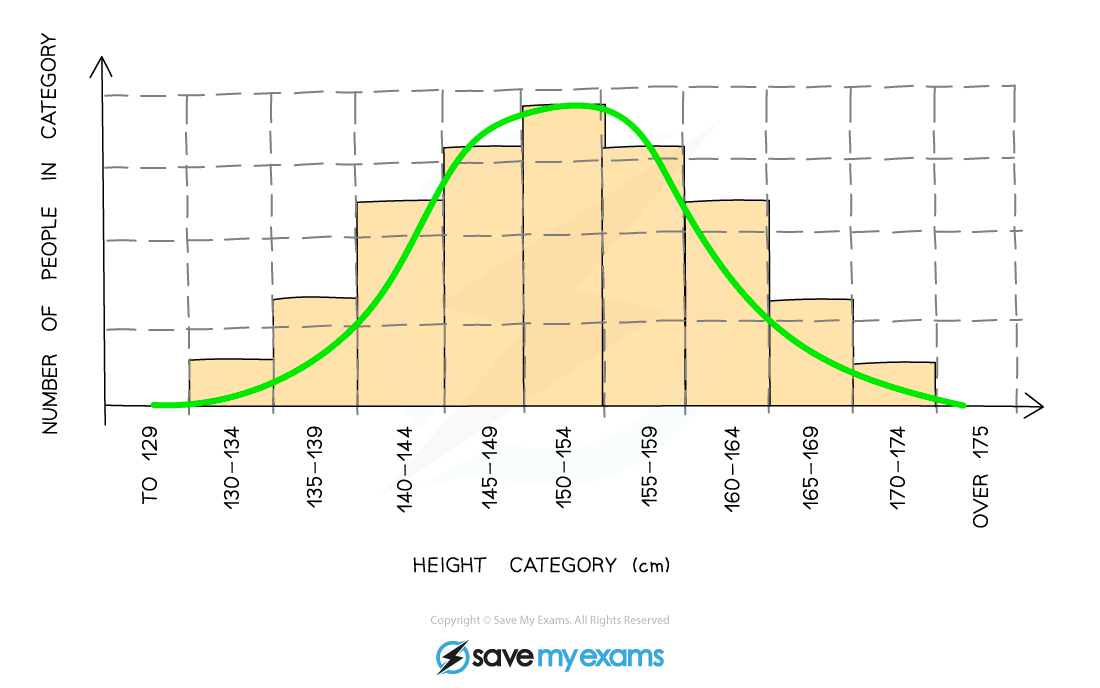
Height is an example of continuous variation which gives rise to a smooth bell-shaped curve when plotted as a graph
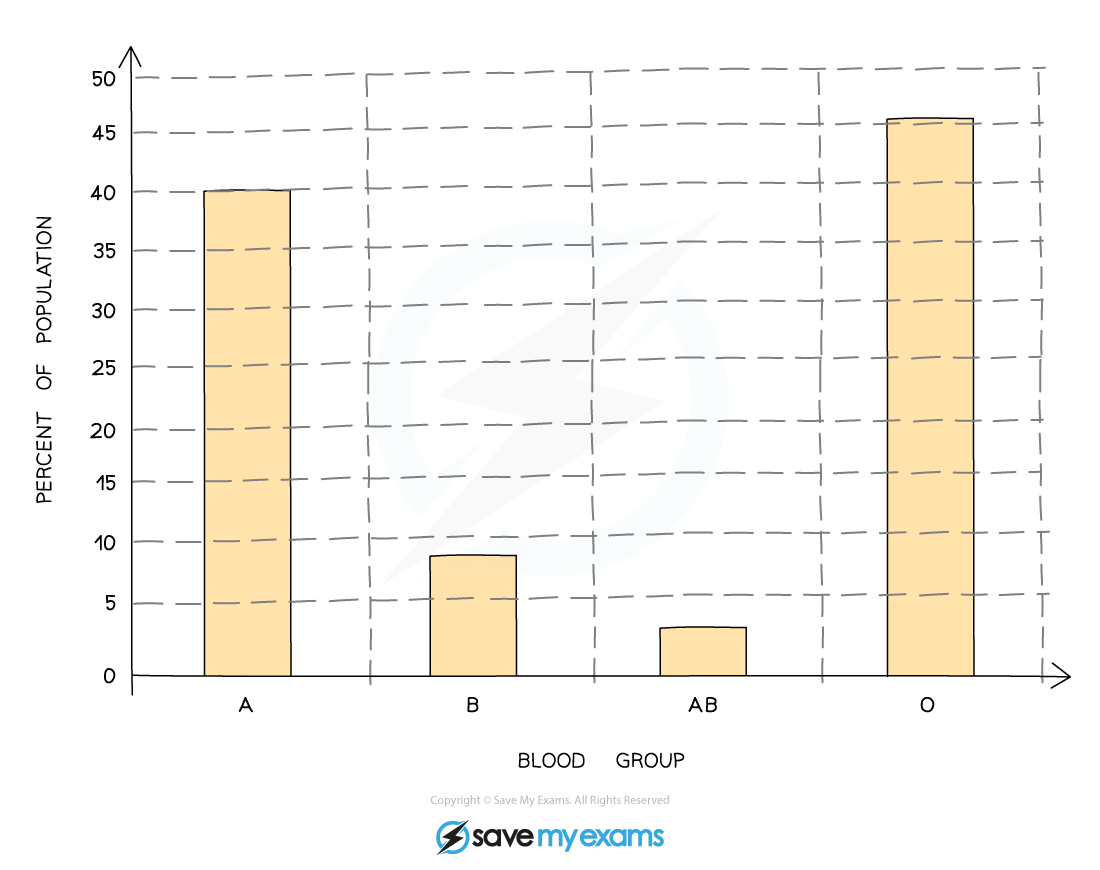
Blood group is an example of discontinuous variation which gives rise to a step-shaped graph
Phenotypic variation
-
Phenotypic variation can be caused in two main ways:
- it can be genetic - controlled entirely by genes
- or it can be environmental - caused entirely by the environment in which the organism lives
Genetic variation
-
Examples of genetic variation in humans include:
- blood group
- eye colour
- gender
- ability to roll tongue
- whether ear lobes are free or fixed
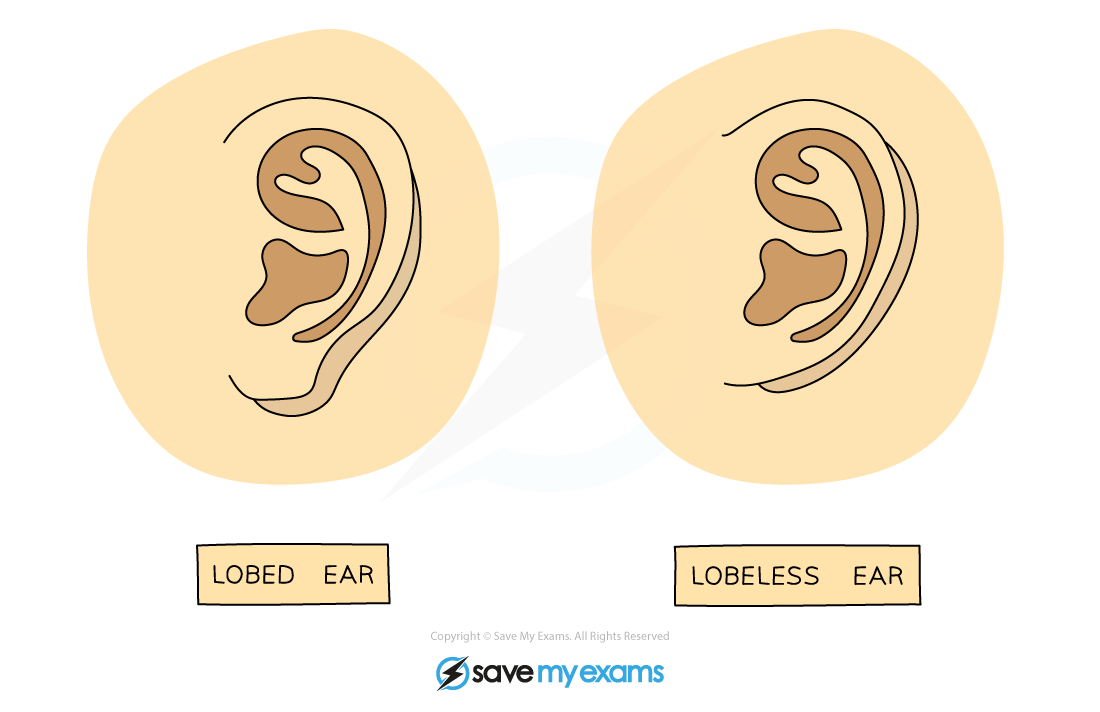
*Whether earlobes are attached (lobeless) or free (lobed) is an example of genetic variation *
Environmental variation
-
Characteristics of all species can be affected by environmental factors such as climate, diet, accidents, culture and lifestyle
-
In this instance ‘environmental’ simply means ‘outside of the organism’ and so can include factors like climate, diet, culture, lifestyle and accidents during lifetime
-
Examples include:
- an accident may lead to scarring on the body
- eating too much and not leading an active lifestyle will cause weight gain
- being raised in a certain country will cause you to speak a certain language with a certain accent
- a plant in the shade of a big tree will grow taller to reach more light
Genetic and environmental causes
-
Discontinuous variation is usually caused by genetic variation alone
-
Continuous features often vary because of a combination of genetic and environmental causes, for example:
- tall parents will pass genes to their children for height
- their children have the genetic potential to also be tall
- however if their diet is poor then they will not grow very well
- therefore their environment also has an impact on their height
-
Another way of looking at this is that although genes decide what characteristics are inherited, the surrounding environment will affect how these inherited characteristics develop
Mutation
Spec point —
18.1.1· nan
-
Mutations are genetic changes
-
Most mutations have no effect on the phenotype as the protein that a mutated gene produces may work just as well as the protein from the non-mutated gene
-
Rarely, mutations lead to the development of new alleles and so new phenotypes and if they do, most have a small effect on the organism
-
Occasionally, the new allele gives the individual a survival advantage over other members of the species
-
For example:
- a bird develops a mutation leading to a change in feather colours
- this makes it more attractive to birds of the opposite sex
- this causes the bird to breed more frequently and have more chances of passing on the mutated phenotype to the next generation
-
Mutations can also lead to harmful changes that can have dramatic effects on the organism - for example, sickle cell anaemia in humans
-
Mutations happen spontaneously and continuously but their frequency can be increased by exposure to the following:
- ionising radiation(e.g. gamma rays and X-rays) - which can damage bonds and cause changes in base sequences
- some non-ionising radiation (e.g. ultra-violet) - can also damage bonds and cause changes in base sequences
- certain types of chemicals - for example chemicals such as tar in tobacco
-
Increased rates of mutation can cause cells to become cancerous, which is why the above are linked to increased incidence of different types of cancer
Mutation: Extended
Spec point —
18.1.1· nan
-
Genetic variation in populations can be caused by a variety of sources:
- mutations: mutations are random genetic changes to the base sequence of DNA, forming new alleles
- meiosis - new allele combinations form through segregation
- random mating - which partnerships form for sexual reproduction
- random fertilisation - which sperm and egg combinations occur during sexual reproduction
Was this revision note helpful?
Build on this topic