Xylem & Phloem (Cambridge International IGCSE Biology)
The Xylem & Phloem
Spec point —
8.1.1· State the functions of xylem and phloem: (a) xylem – transport of water and mineral ions, and support (b) phloem – transport of sucrose and amino acids Identify in diagrams and images the position of xylem and phloem as seen in sections of roots, stems and leaves of non-woody dicotyledonous plants
The xylem & phloem
What is the function of the xylem and phloem
-
Plants contain two types of transport vessel:
- Xylem vessels (pronounced: zi-lem) transport water and minerals roots to the stem and leaves
- Phloem vessels (pronounced: flow-em) transport food materials (mainly sucrose and amino acids) made by the plant from photosynthesising leaves to non-photosynthesising regions in the roots and stem
-
These vessels are arranged throughout the root, stem and leaves in groups called vascular bundles
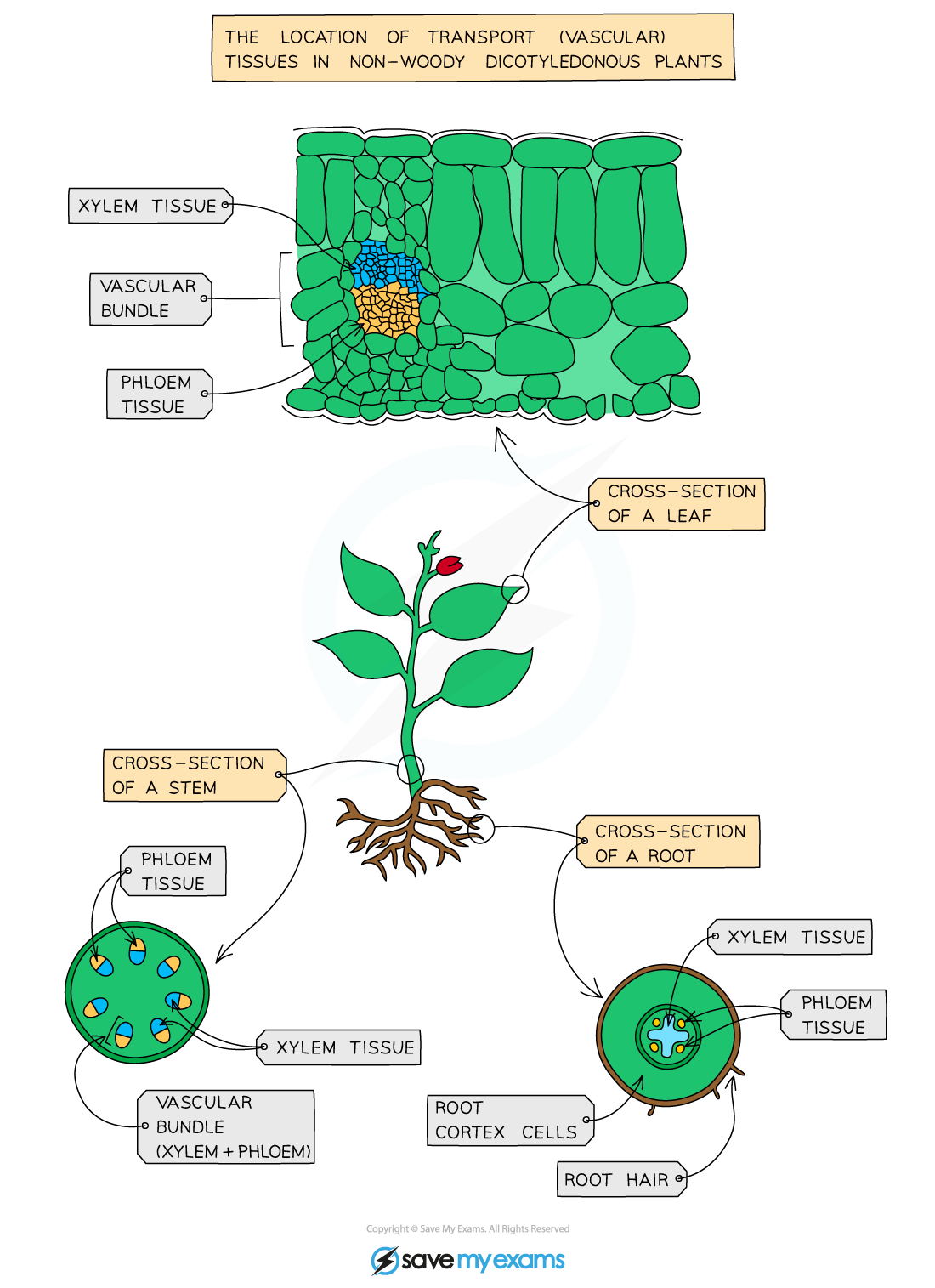
Transport tissue in a dicotyledonous plant
Exam Hint If you are asked to identify the xylem or phloem in a diagram showing a cross-section of a root, stem or leaf just remember that xylem is always on the inside and phloem is always on the outside.
Adaptations of Xylem Vessels: Extended
Spec point —
8.1.1· Relate the structure of xylem vessels to their function, limited to: (a) thick walls with lignin (details of lignification are not required) (b) no cell contents (c) cells joined end to end with no cross walls to form a long continuous tube
Adaptations of xylem vessels: Extended
-
Function: transport tissue for water and dissolved mineral ions
-
Adaptations:
- Cells joined end to end with no cross walls to form a long continuous tube
- Cells are essentially dead, without cell contents, to allow free passage of water
- Outer walls are thickened with a substance called lignin, strengthening the tubes, which helps support the plant
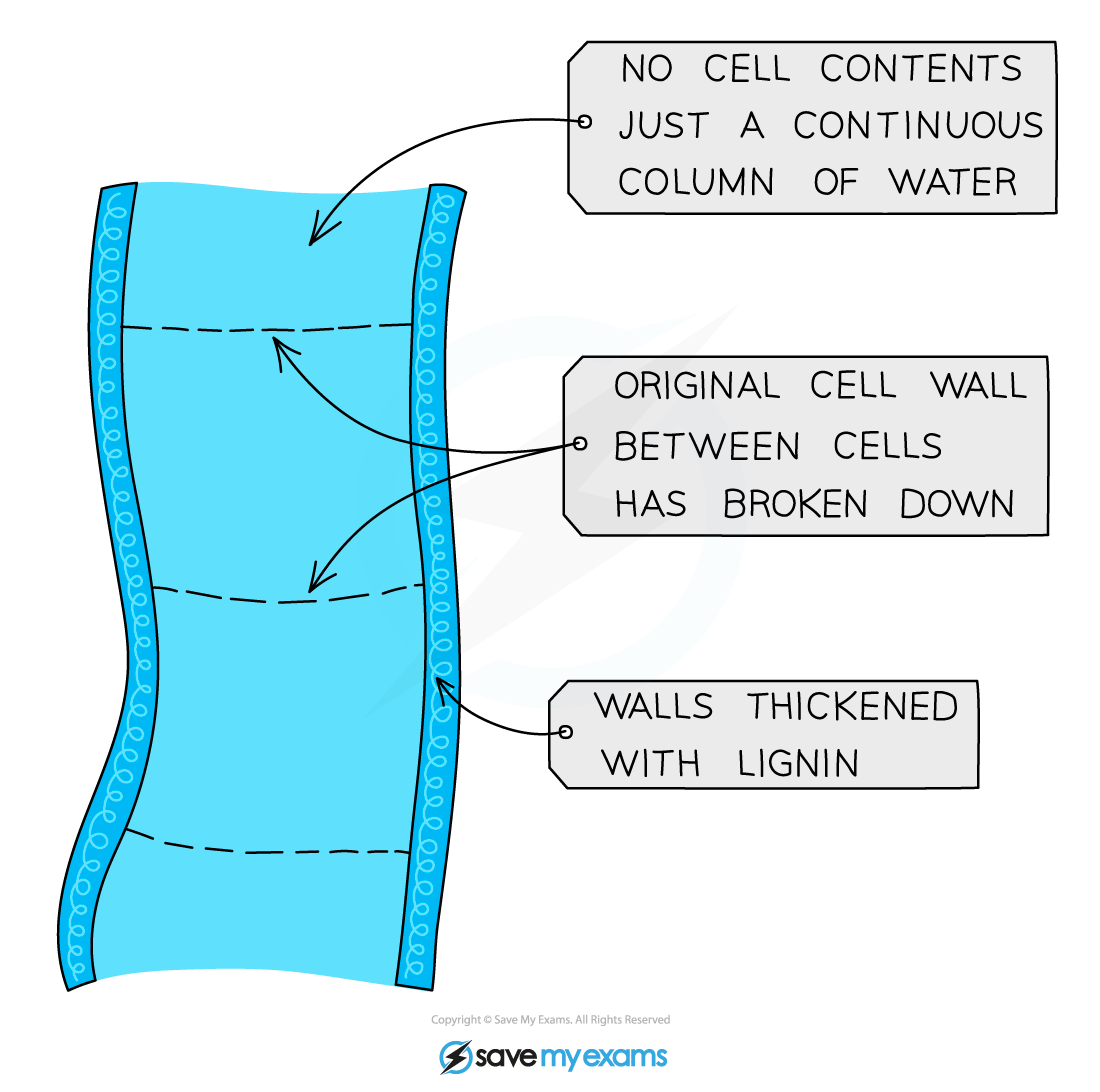
Xylem cells lose their top and bottom walls to form a continuous tube through which water moves through from the roots to the leaves
Was this revision note helpful?
Build on this topic