Sexual Hormones in Humans (Cambridge International IGCSE Biology)
Secondary sexual characteristics
Spec point —
16.5.1· Describe the roles of testosterone and oestrogen in the development and regulation of secondary sexual characteristics during puberty Describe the menstrual cycle in terms of changes in the ovaries and in the lining of the uterus
Secondary sexual characteristics
-
Secondary sexual characteristics are the changes that occur during puberty as children become adolescents
- Primary sexual characteristics are present during development in the uterus and are the differences in reproductive organs between males and females
-
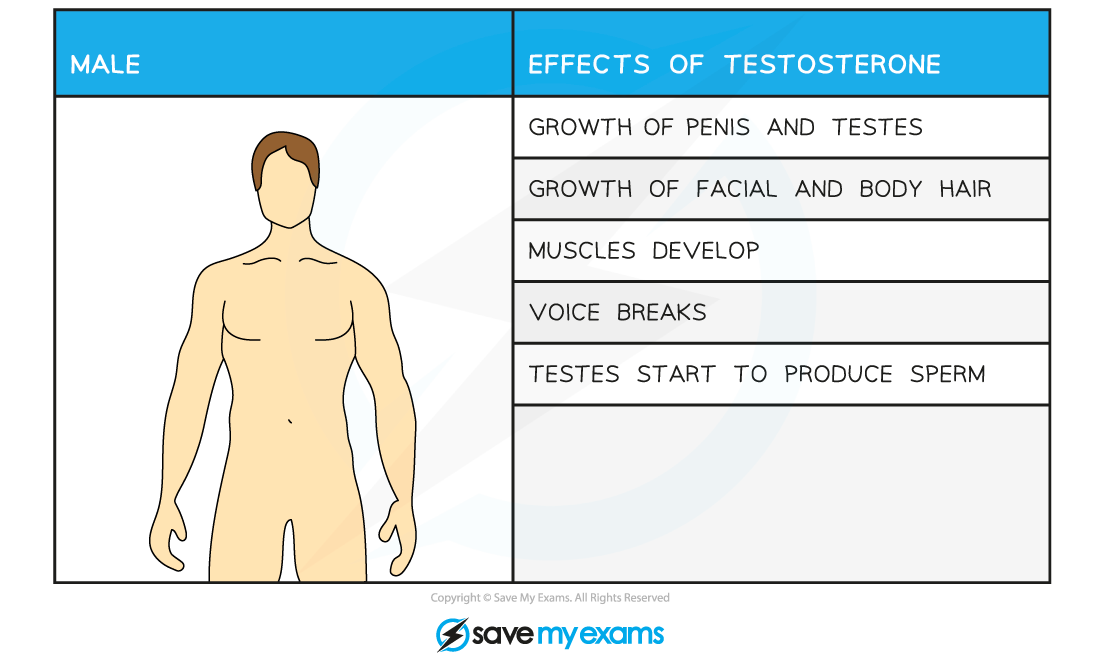
They are controlled by the release of hormones - oestrogen in girls and testosterone in boys
Human secondary sexual characteristics
- Some changes occur to both boys and girls, including growth of sexual organs and growth of body hair
- Emotional changes also occur due to the increased levels of hormones in the body
- These include more interest in sex and increased mood swings
Female secondary sexual characteristics
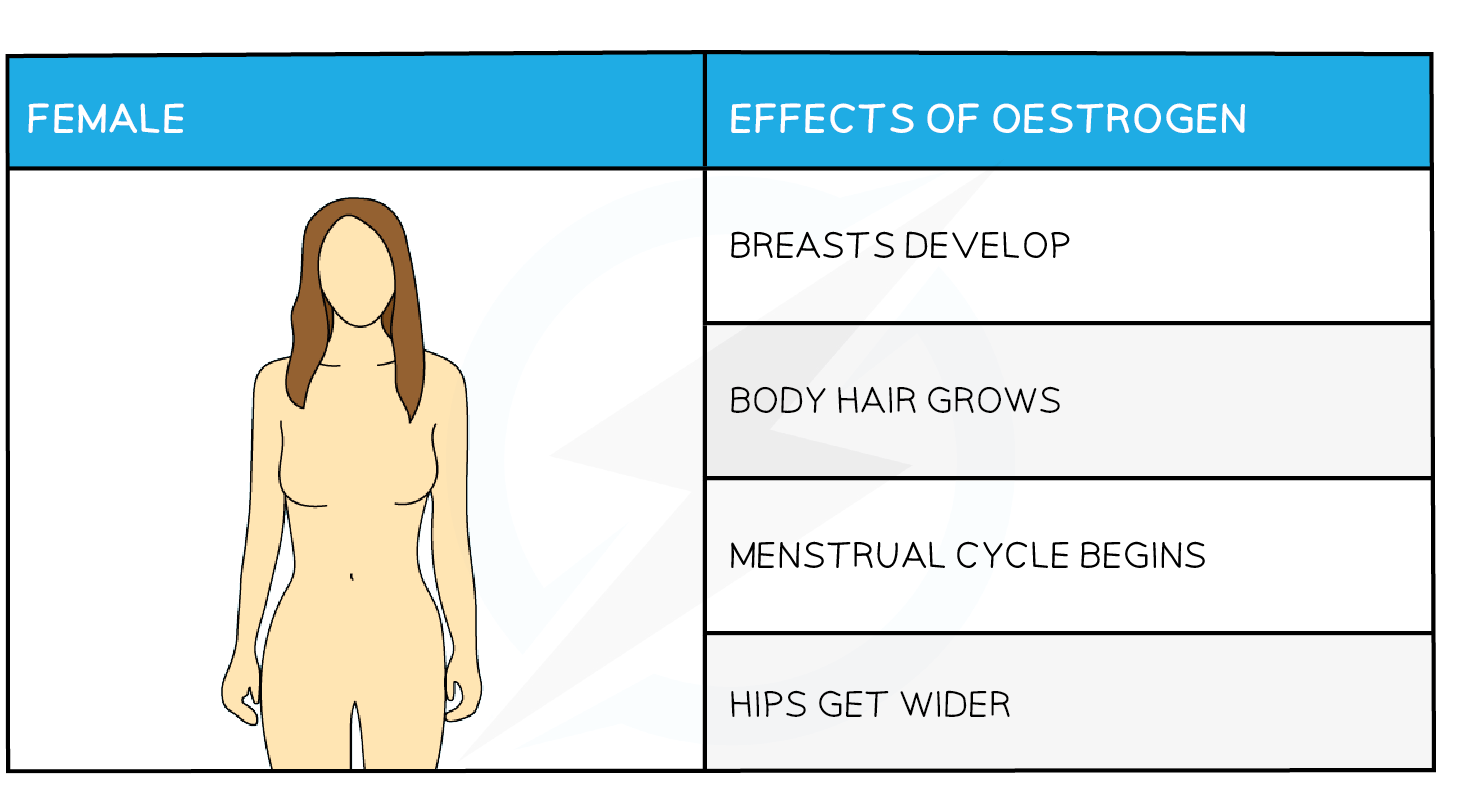
Male secondary sexual characteristics
The menstrual cycle
Spec point —
16.5.2· Describe the menstrual cycle in terms of changes in the ovaries and in the lining of the uterus
- Starts in early adolescence in girls (around age 12) and is controlled by hormones
- The average menstrual cycle is 28 days long
- Ovulation (the release of an egg) occurs about halfway through the cycle (day 14) and the egg then travels down the oviduct to the uterus
- Failure to fertilise the egg causes menstruation (commonly called a period) to occur - this is caused by the breakdown of the thickened lining of the uterus
- Menstruation lasts around 5 - 7 days and signals the beginning of the next cycle After menstruation finishes, the lining of the uterus starts to thicken again in preparation for possible implantation in the next cycle
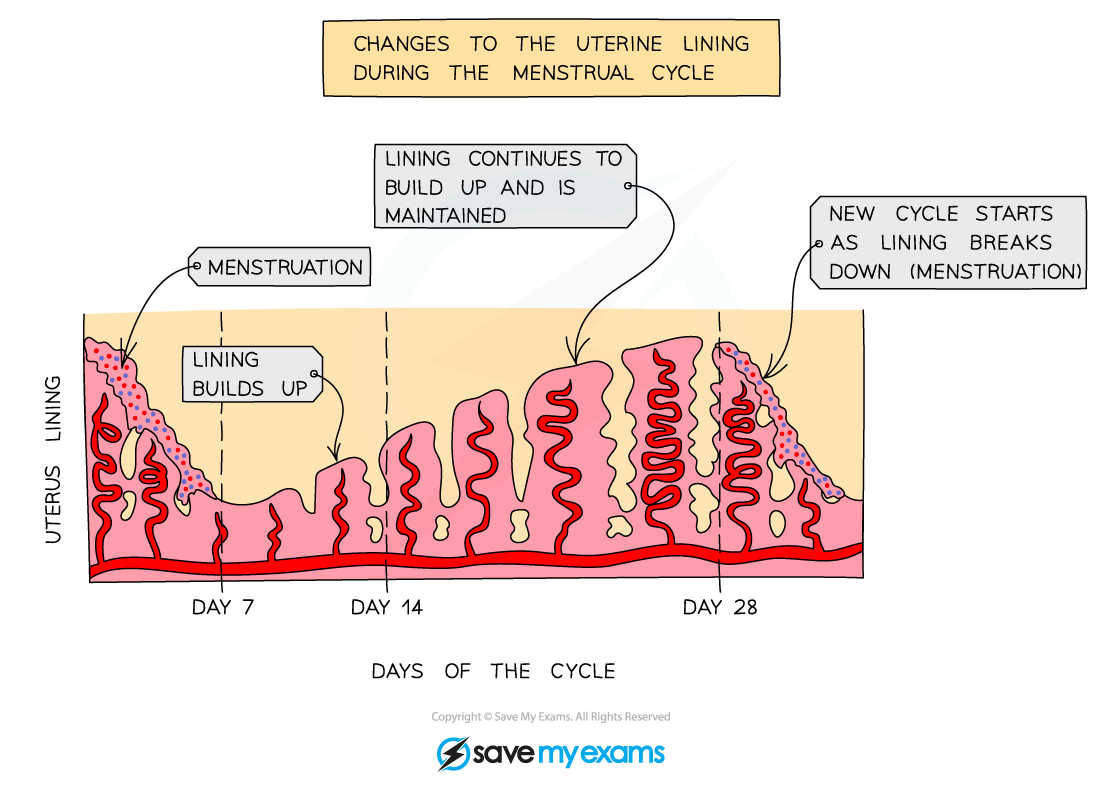
Changes in the lining of the uterus during the menstrual cycle
Changes in the lining of the uterus during the menstrual cycle
Hormones of the menstrual cycle: Extended
Spec point — Describe the sites of production of oestrogen and progesterone in the menstrual cycle and in pregnancy Explain the role of hormones in controlling the menstrual cycle and pregnancy, limited to FSH, LH, progesterone and oestrogen
Hormones of the menstrual cycle: Extended
- The menstrual cycle is controlled by hormones released from the ovary and the pituitary gland in the brain
The roles of FSH and LH
- FSH (follicle-stimulating hormone) is released by the pituitary gland and causes an egg to start maturing in the ovary
- It also stimulates the ovaries to start releasing oestrogen
- The pituitary gland is stimulated to release luteinising hormone (LH) when oestrogen levels have reached their peak
- LH causes ovulation to occur and also stimulates the ovary to produce progesterone
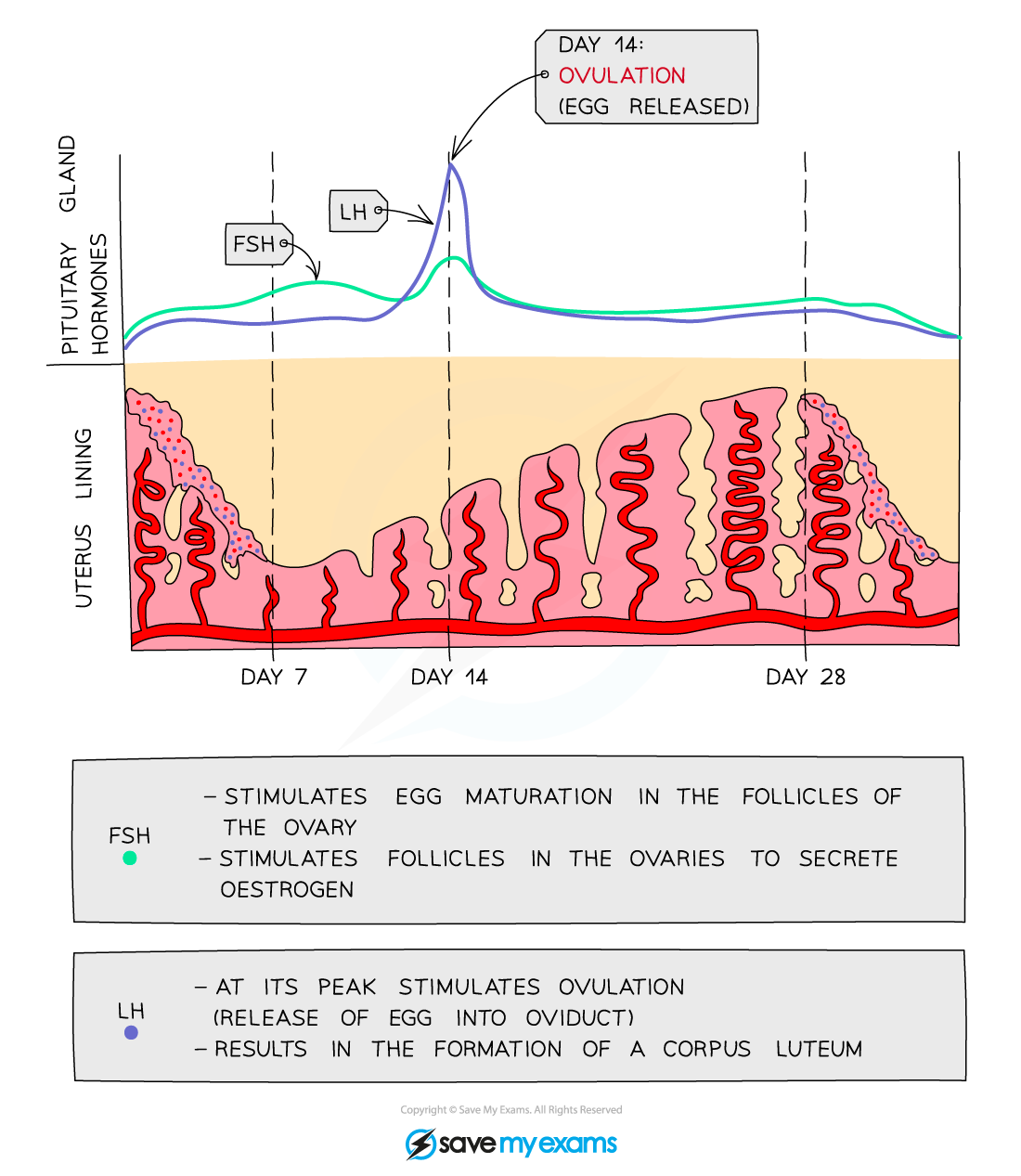
Changes in the levels of the pituitary hormones FSH and LH in the blood during the menstrual cycle
The roles of oestrogen and progesterone
- Oestrogen levels rise from day 1 to peak just before day 14
- This causes the uterine wall to start thickening and the egg to mature
- The peak in oestrogen occurs just before the egg is released
- Progesterone stays low from day 1 – 14 and starts to rise once ovulation has occurred
- The increasing levels cause the uterine lining to thicken further; a fall in progesterone levels causes the uterine lining to break down (menstruation / ‘period’)
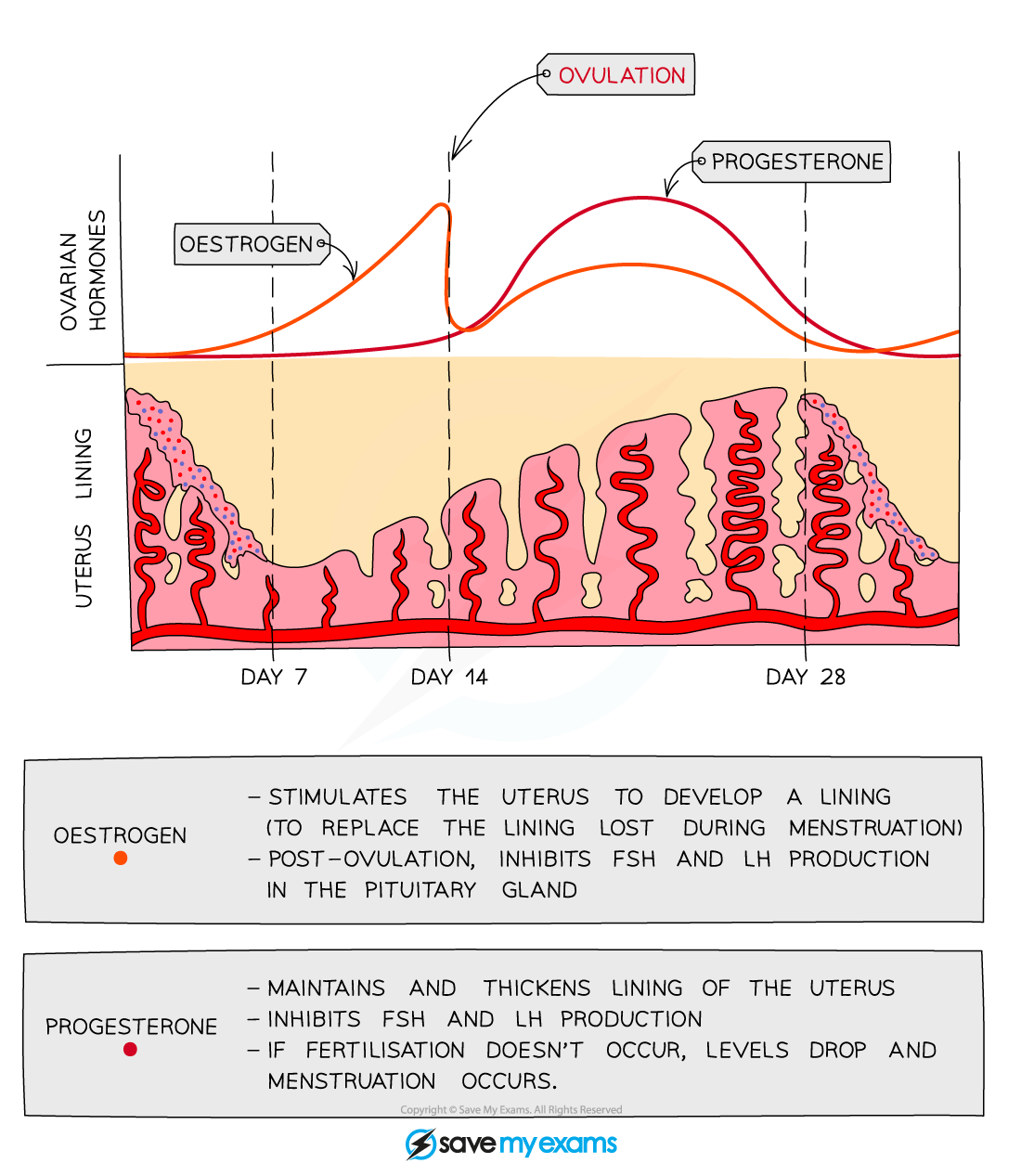
Changes in the levels of oestrogen and progesterone in the blood during the menstrual cycle
Interaction between all four of the menstrual cycle hormones
- The pituitary gland produces FSH which stimulates the development of a follicle in the ovary
- An egg develops inside the follicle and the follicle produces the hormone oestrogen
- Oestrogen causes growth and repair of the lining of the uterus wall and inhibits production of FSH
- When oestrogen rises to a high enough level it stimulates the release of LH from the pituitary gland which causes ovulation (usually around day 14 of the cycle)
- The follicle becomes the corpus luteum and starts producing progesterone
- Progesterone maintains the uterus lining (the thickness of the uterus wall)
- If the ovum is not fertilised, the corpus luteum breaks down and progesterone levels drop
- This causes menstruation, where the uterus lining breaks down and is removed through the vagina - commonly known as having a period
- If pregnancy does occur the corpus luteum continues to produce progesterone, preventing the uterus lining from breaking down and aborting the pregnancy
- It does this until the placenta has developed, at which point it starts secreting progesterone and continues to do so throughout the pregnancy
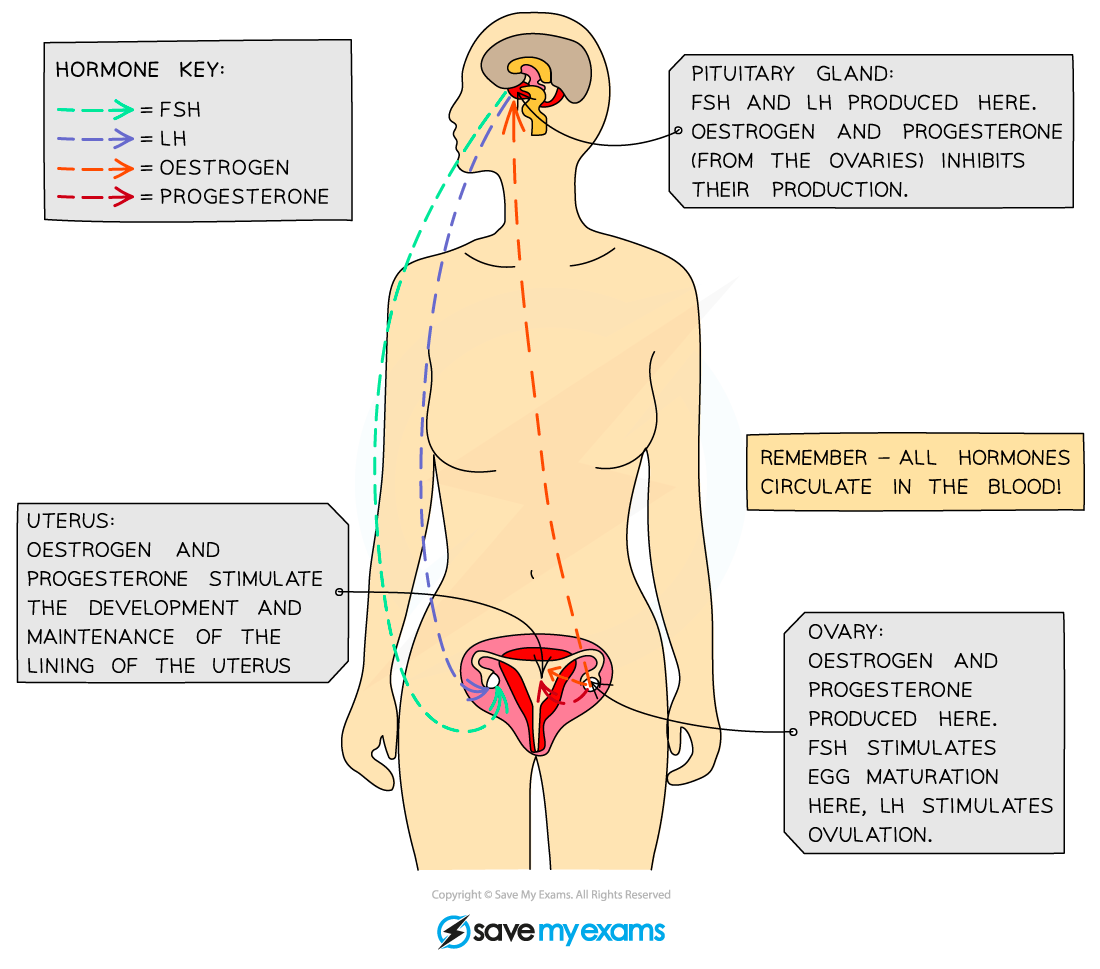
Where hormones involved in the menstrual cycle are made and act
Was this revision note helpful?
Build on this topic