Electronegativity & Bonding of the Period 3 Elements (Cambridge International AS Chemistry)
Trends in Period 3 Electronegativity & Bonding
Electronegativity
- Electronegativity is the power of an element to draw the electrons towards itself in a covalent bond
- Going across the period, the electronegativity of the elements increases
Electronegativity across Period 3 table
| Period 3 element | Na | Mg | Al | Si | P | S | Cl | Ar |
|---|---|---|---|---|---|---|---|---|
| Electronegativity | 0.9 | 1.2 | 1.5 | 1.8 | 2.1 | 2.5 | 3.0 | - |
Graph of the electronegativity of the Period 3 elements
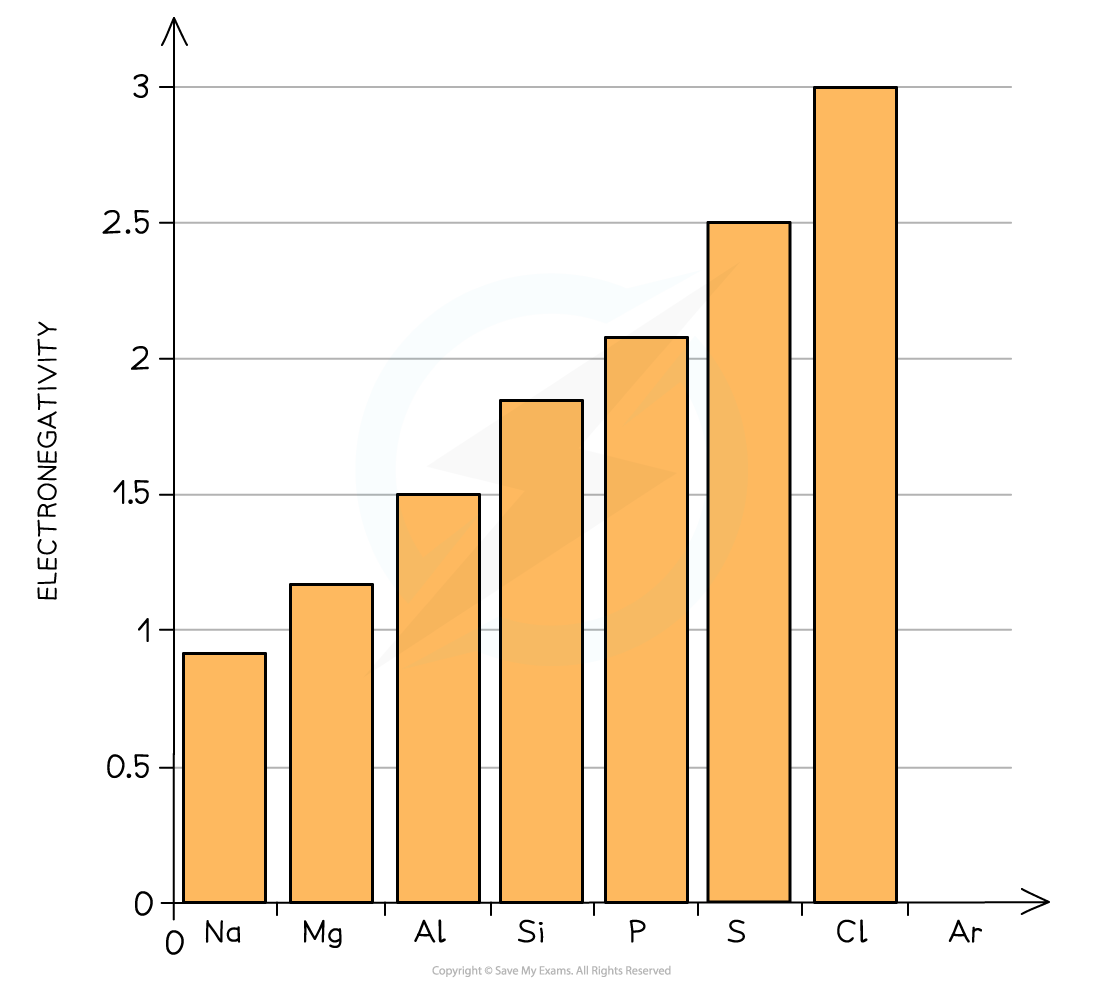
Electronegativity of the Period 3 elements increases from Na to Cl
- As the atomic number increases going across the period, there is an increase in nuclear charge
- Across the period, there is an increase in the number of valence electrons however the shielding is still the same as each extra electron enters the same shell
- As a result of this, electrons will be more strongly attracted to the nucleus causing an increase in electronegativity across the period
Bonding & structure of Period 3 elements table
| Period 3 element | Na | Mg | Al | Si | P | S | Cl | Ar |
|---|---|---|---|---|---|---|---|---|
| Bonding | Metallic | Metallic | Metallic | Covalent | Covalent | Covalent | Covalent | - |
| Structure | Giant metallic | Giant metallic | Giant metallic | Giant molecular | Simple molecular | Simple molecular | Simple molecular | Simple molecular |
Bonding and structure from Al to S
-
As you move across the Periodic Table from aluminium (Al) to sulfur (S), both bonding and structure change:
- Bonding changes from metallic (in Al) to covalent (in Si, P, S, etc.)
- Structure changes from giant lattices to simple molecular structures
-
Sodium (Na), magnesium (Mg), and aluminium (Al) are all metals
-
They form a giant metallic lattice:
- Positive metal ions are arranged in a regular lattice
- They are surrounded by a ‘sea’ of delocalised electrons
- These electrons come from the outer shell (valence shell) of each atom
Delocalised electrons and bond strength
-
Na donates 1 electron per atom
-
Mg donates 2 electrons per atom
-
Al donates 3 electrons per atom
-
As a result:
-
More delocalised electrons = stronger electrostatic forces between the metal ions and the electron cloud
-
Al³⁺ forms stronger metallic bonds than Na⁺, due to:
- Higher ionic charge
- Greater number of delocalised electrons
-
Electrical conductivity
-
Because aluminium contributes more delocalised electrons, it has:
- More charge carriers
- Stronger metallic bonding
- Therefore, aluminium is a better conductor of electricity than sodium or magnesium
A giant metallic lattice
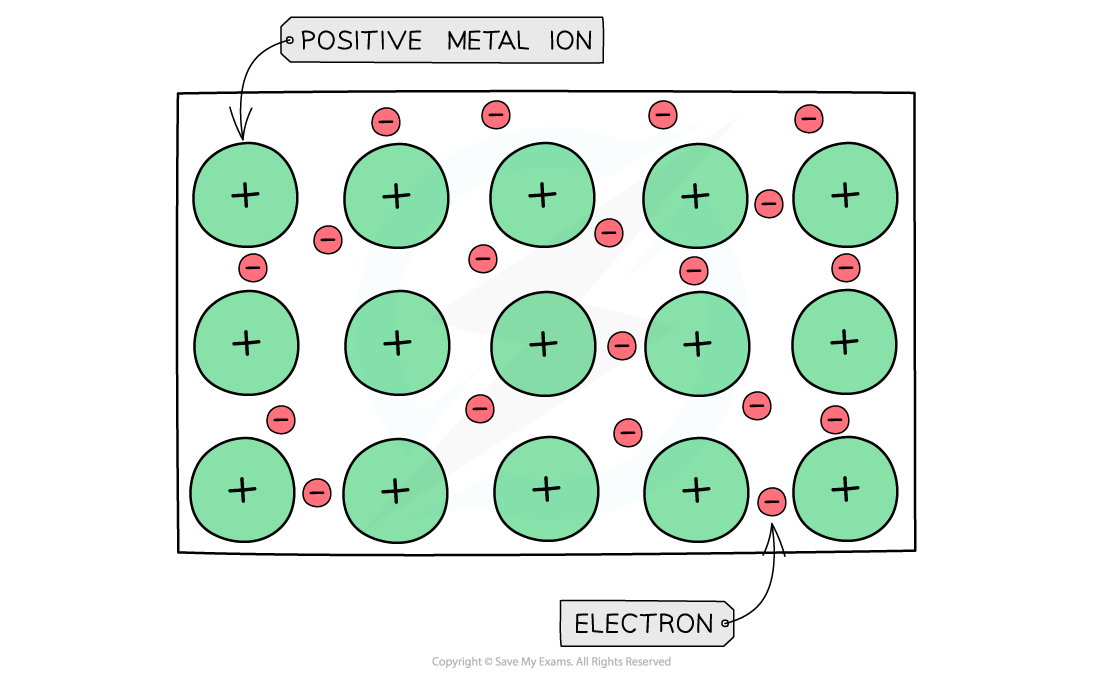
Metal cations form a giant lattice held together by electrons that can freely move around
- Si is a non-metallic element and has a giant molecular structure in which each Si atom is held to its neighbouring Si atoms by strong covalent bonds
- There are no delocalised electrons in the structure of Si which is why silicon cannot conduct electricity and is classified as a metalloid
The giant molecular structure of silicon
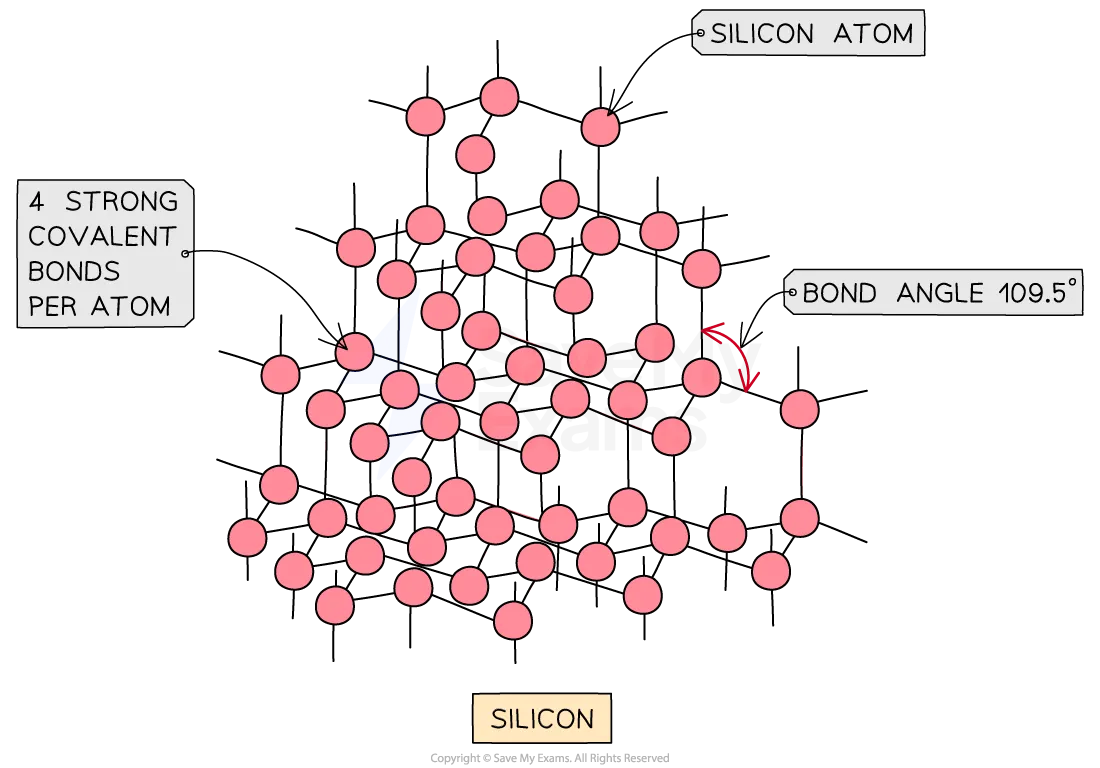
The diagram shows the giant molecular structure of silicon where silicon atoms are held together by strong covalent bonds
Bonding from P to Ar
-
Phosphorus, sulfur, chlorine and argon are non-metallic elements
- Phosphorus, sulfur and chlorine exist as simple molecules (P4, S8, Cl2)
- Argon exists as single atoms
-
The covalent bonds within the molecules are strong, however, between the molecules there are only weak instantaneous dipole-induced dipole forces
-
It doesn’t take much energy to break these intermolecular forces
-
The lack of delocalised electrons means that these compounds cannot conduct electricity
The simple molecular structure of phosphorus
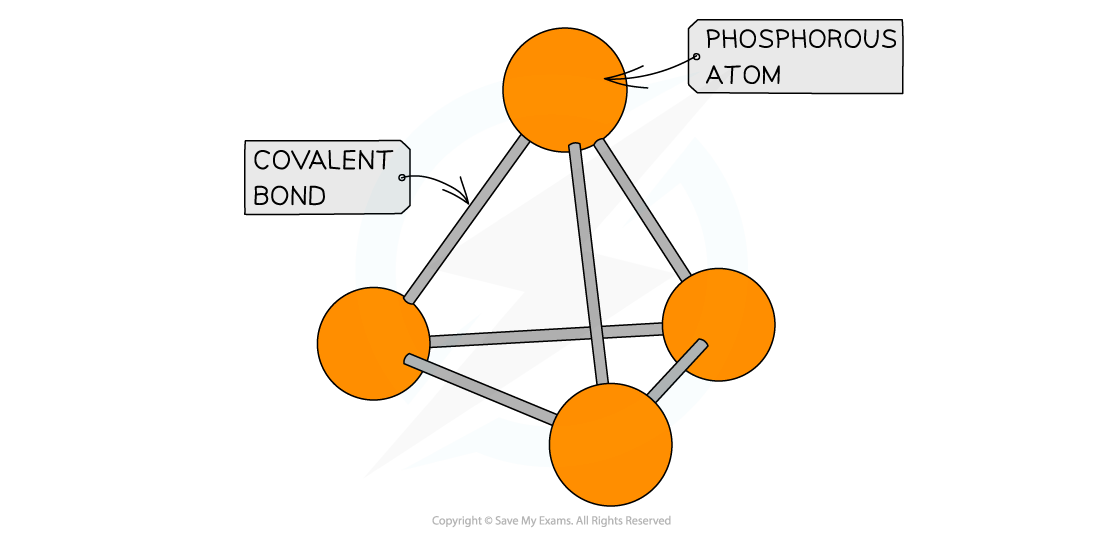
The diagram shows the simple molecular structure of phosphorus with covalent bonds between the atoms
The simple molecular structure of sulfur
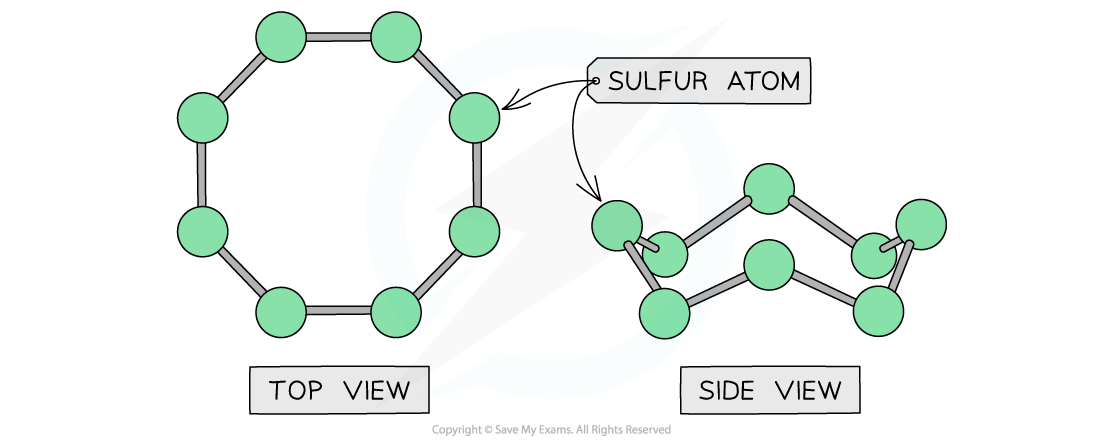
The diagram shows the simple molecular structure of sulfur with covalent bonds between the atoms
Was this revision note helpful?
Build on this topic